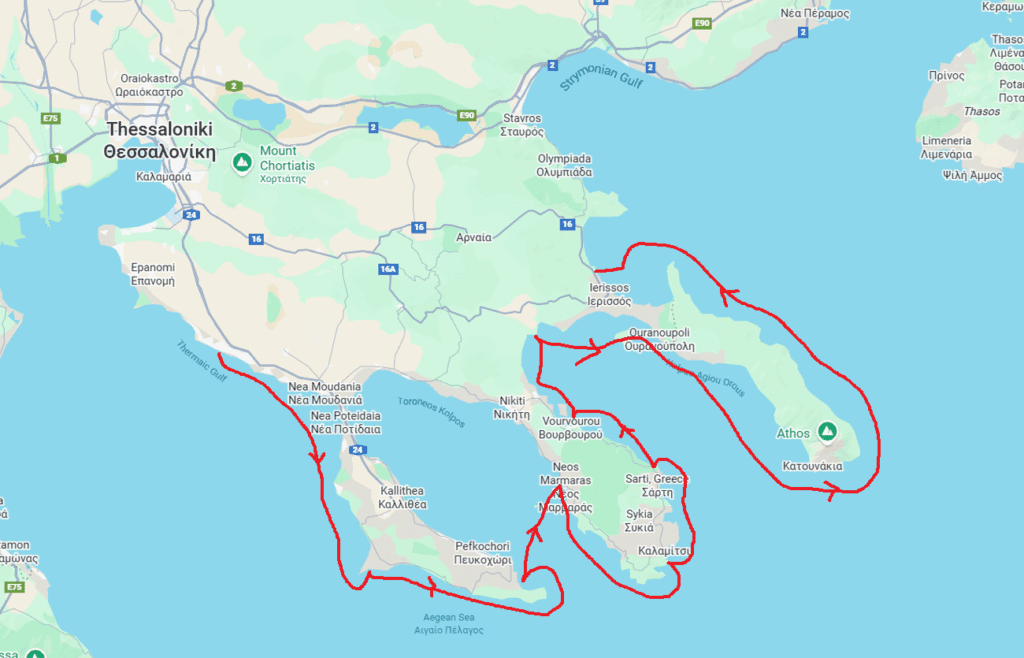
After the beautiful Sporades islands, we headed back to mainland Greece. North of the Sporades lies Chalkidiki. When you look at the map of Greece, its shape immediately stands out. This region consists of three long peninsulas stretching into the deep blue Aegean Sea: the westernmost is Kassandra, followed by Sithonia, and then Agion Oros. Although they are similar in shape, they are very different in character.
Guests on board
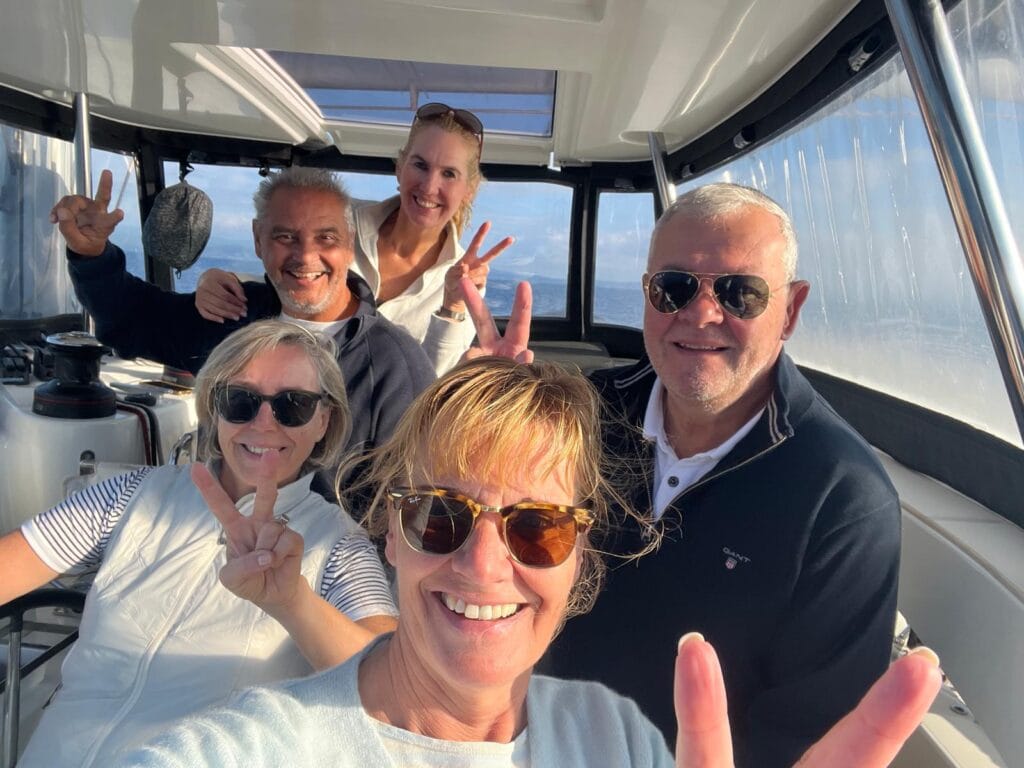
Since 2018, we have known the Felke family from Luxembourg, Birgid, Joe and the kids Anna, Mouritz and Felix. When we were researching which catamaran we wanted to sail around the world with, we booked a sailing holiday in Greece on a Lagoon. You could sign up for one of the four cabins, and in one of the other cabins were Birgid and Joe Felke and Mouritz. We also sailed with them again in 2019 on a Lagoon in Mallorca, and we have stayed in touch ever since. And since 2020, they have been sailing along with us on our Lagoon Horizon 😉.
This time they flew into Thessaloniki. Unfortunately, Joe had sprained his ankles and couldn’t come along. Birgid asked if two of her best friends from Luxembourg could join us instead: Charles and Heike. Of course—great fun!
Nea Kallikrateia
We welcomed them in Nea Kallikrateia, a town on the west coast of the first peninsula, Kassandra. We had now entered a new district of Greece: Macedonia. In Greek, “Macedonian” means “great person.” When we hear the word Macedonia, we often think of the country North Macedonia (formerly the Former Yugoslav Republic of Macedonia) north of Greece. But this is a sensitive topic for the Greeks.
Alexander III of Macedon (Alexander the Great, or Mégas Aléxandros) was born in Macedonia in 356 BC. He became king of Macedon and, by the age of 30, had conquered one of the largest empires of antiquity, stretching from the Ionian Sea to the Himalayas. Naturally, we watched a Netflix documentry about Alexander the Great 😉.
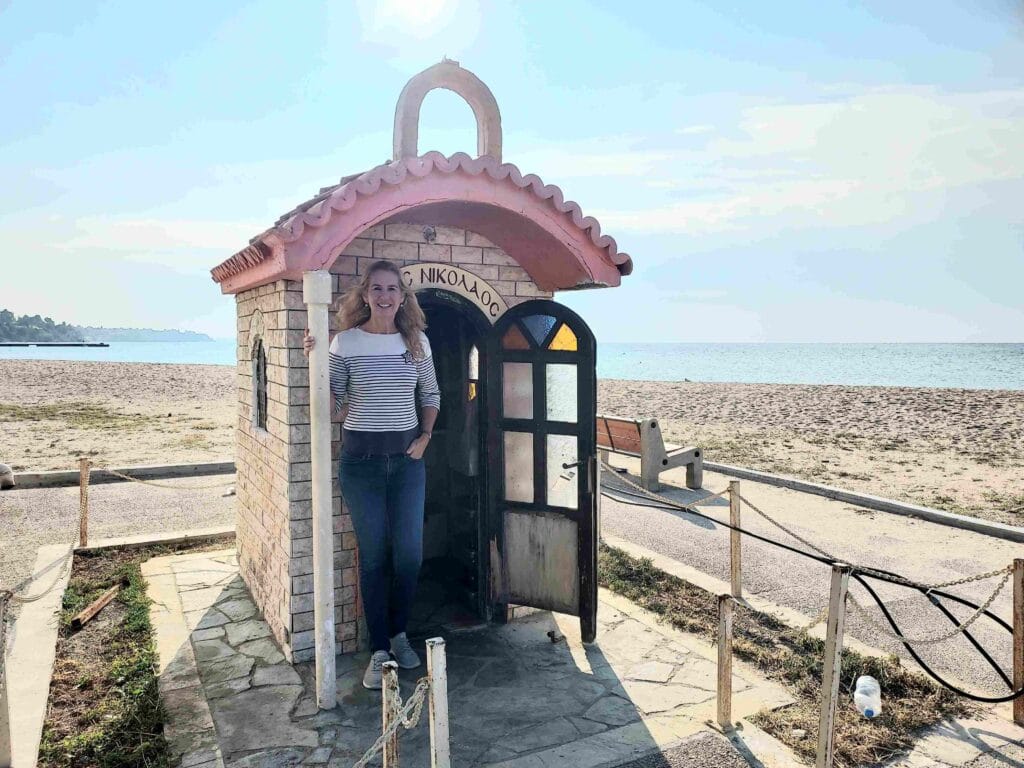
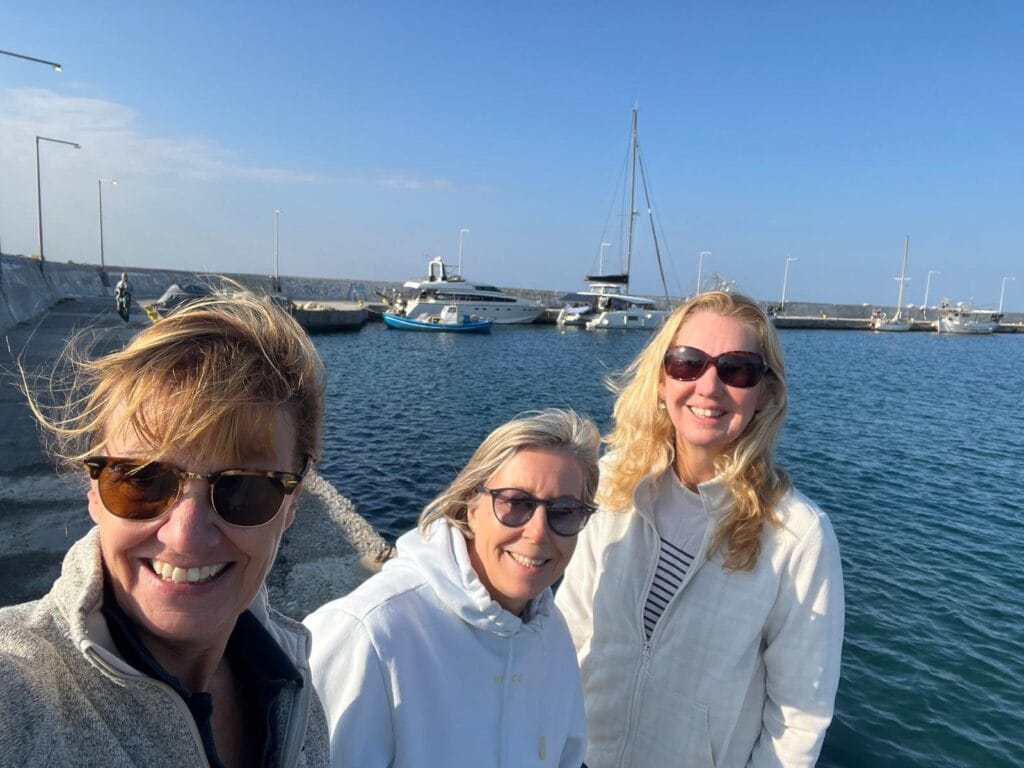
You immediately notice that this part of Greece is less touristy. Nea Kallikrateia, for example, only has a fishing harbor, where people looked somewhat surprised when the catamaran sailed in—but we were simply allowed to berth along the quay. Of course, there were plenty of cats and always little churches nearby. It’s a pleasant coastal town with a wide, long promenade, good facilities, and a relaxed atmosphere. The name “Nea” (new) refers to Greek refugees from Asia Minor who settled here in the early 20th century.

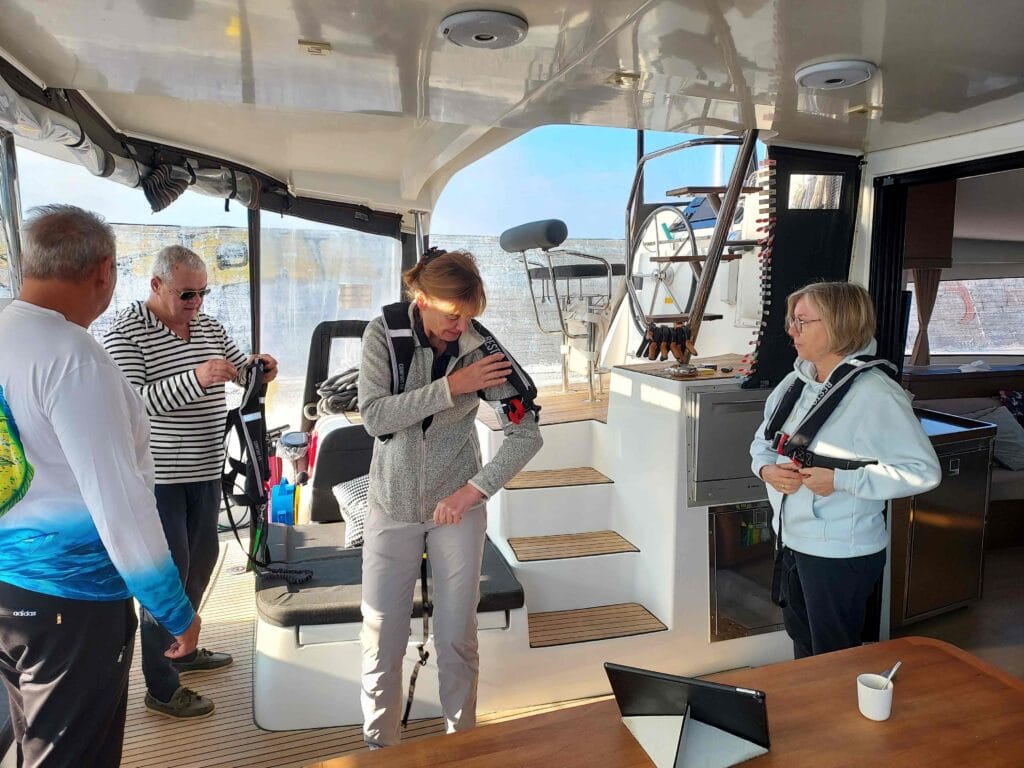
We departed southward along the coast of the first peninsula. As always, we first did a safety briefing and put on our life jackets. Even though the sea was calm and there were hardly any tourists, unexpected things can always happen beyond your control (a collision, someone tripping and falling overboard).
Flying fish
The weather was beautiful as we set off, slowly heading south along the coast. From the sea, you can immediately see the difference between Kassandra and the other “fingers” of Chalkidiki: this part is flatter, more densely populated, and livelier.
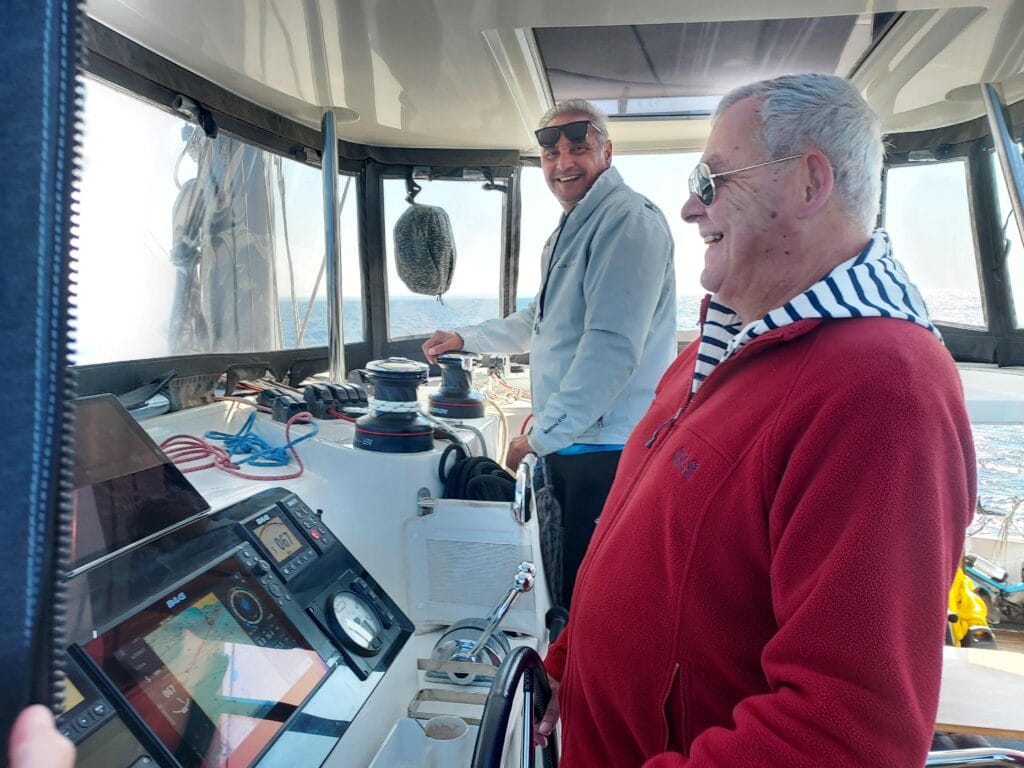
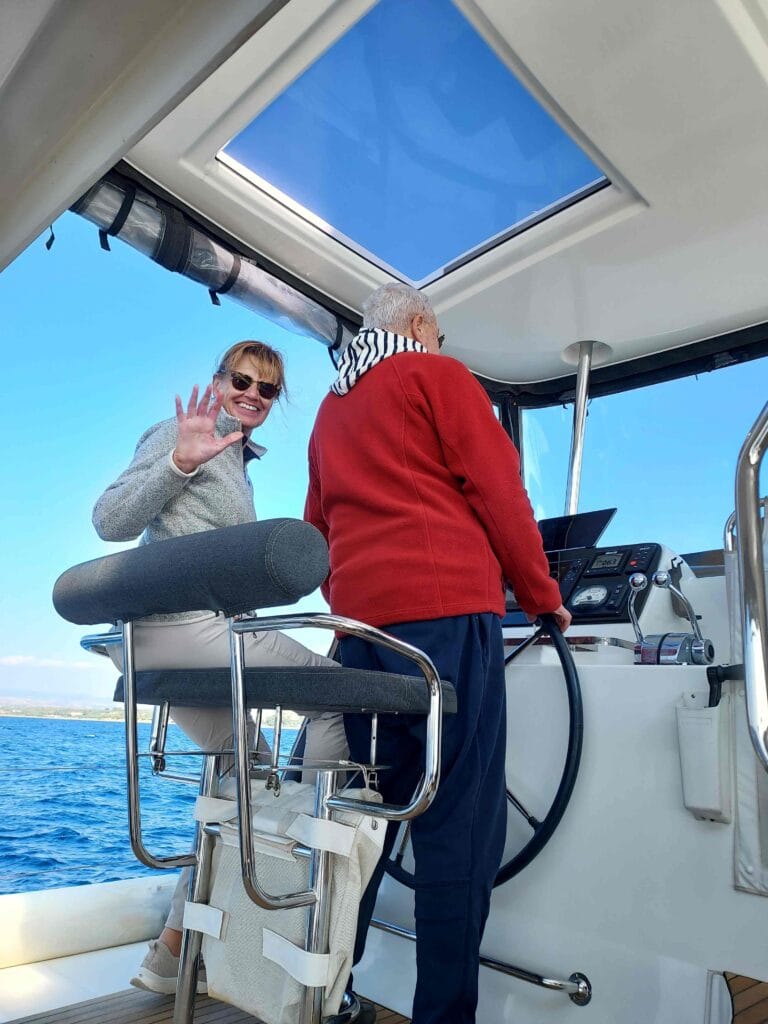
Charles had sailed once before, but that was a long time ago. He had really been looking forward to this sailing holiday and was very interested in how everything worked—navigation, steering, and the sails.
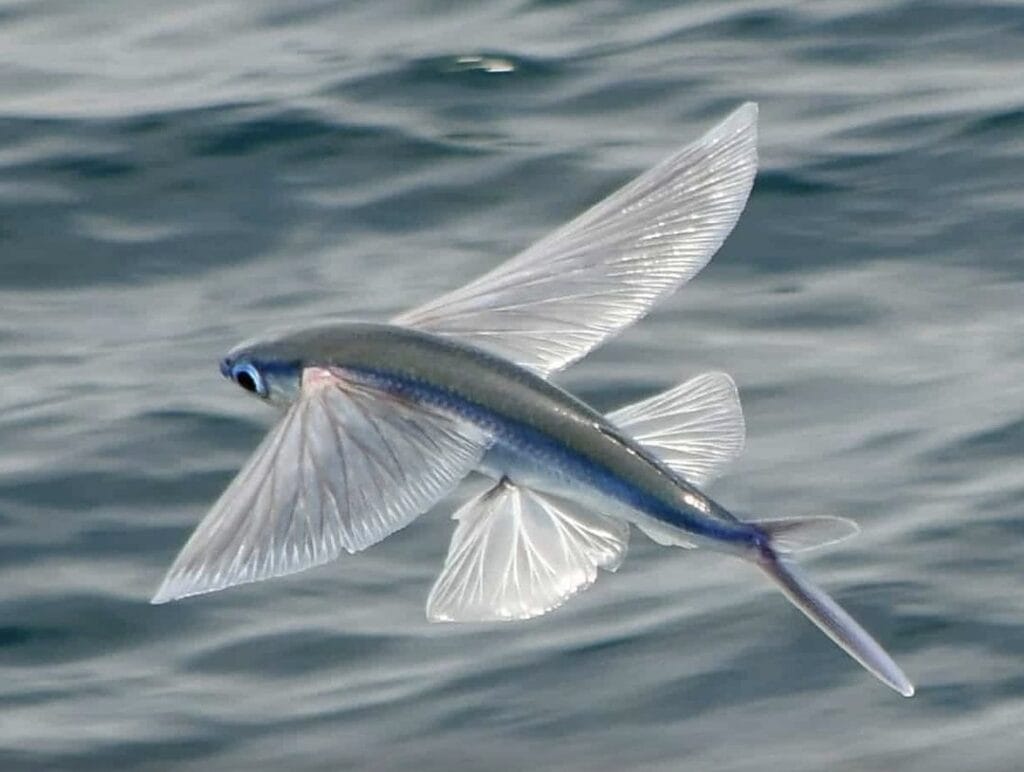
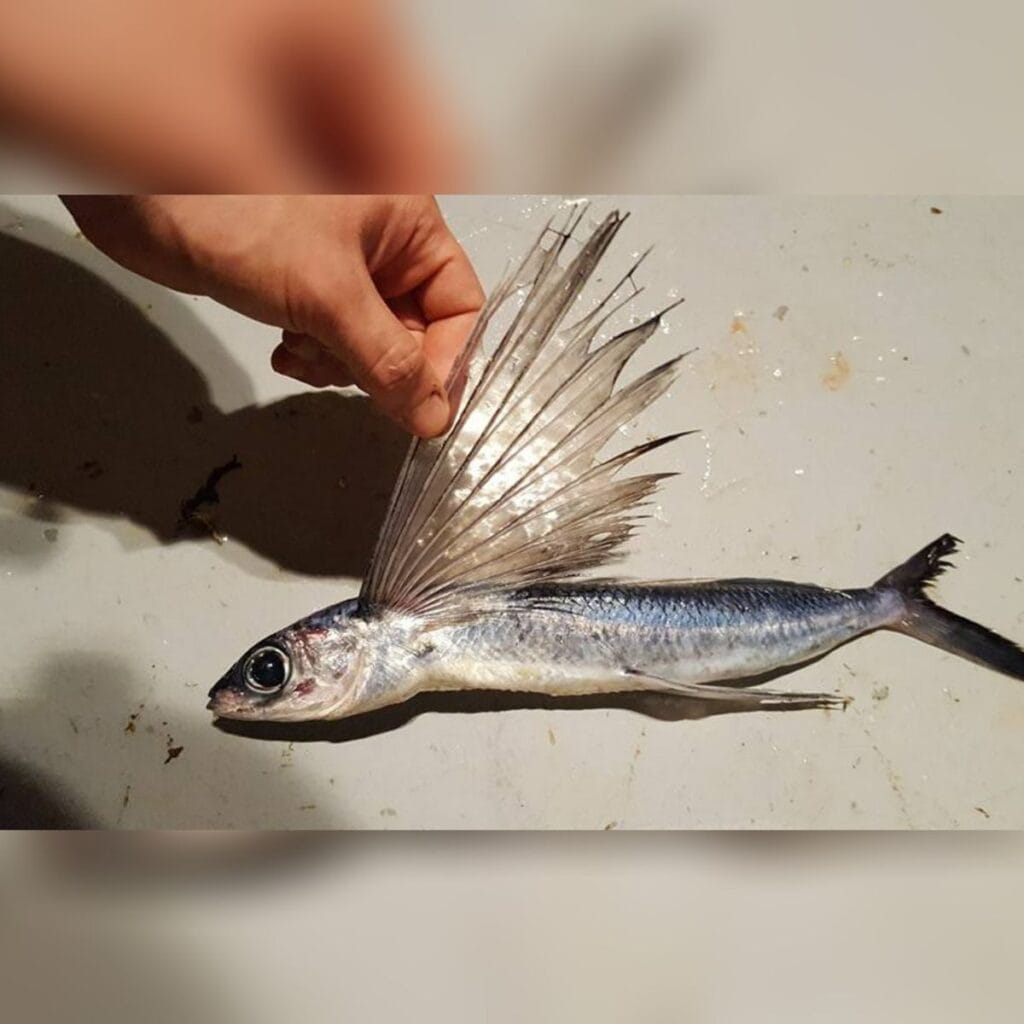
Along the way, we regularly encountered flying fish. What a fascinating phenomenon! These fish are about 15 cm long, have silvery scales, and their front fins are elongated and function like wings, allowing them to glide above the water. I read more about them: underwater they can reach speeds of around 60 km/h; with a powerful flick of their tail, they launch themselves out of the water and can glide for up to about 50 seconds. We often saw them shimmering in the sunlight! Distances of 50 to even 200 meters are possible. It’s a form of escape behavior—they do this when chased by predators such as tuna or mackerel.
Potato salad and BBQ
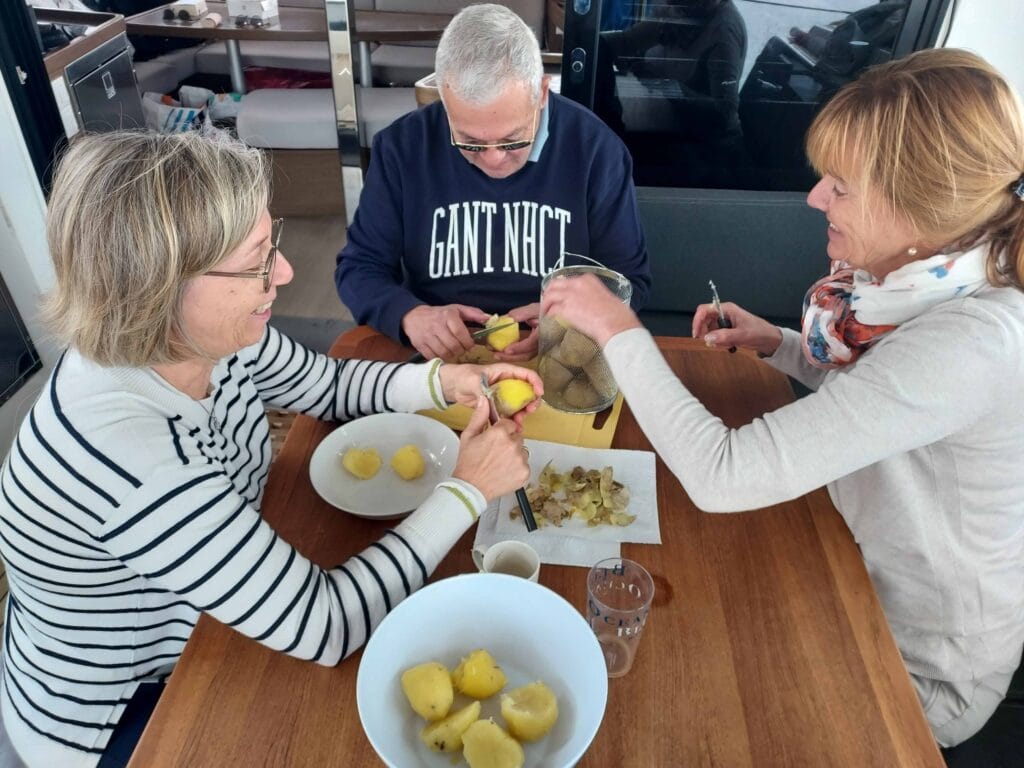
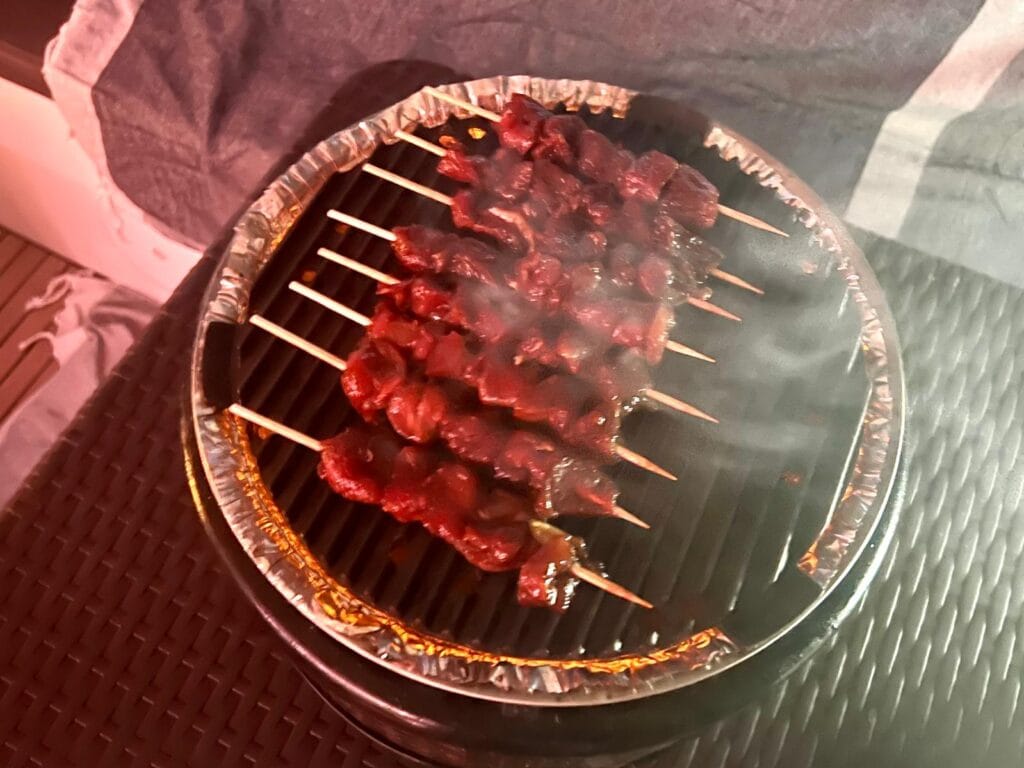
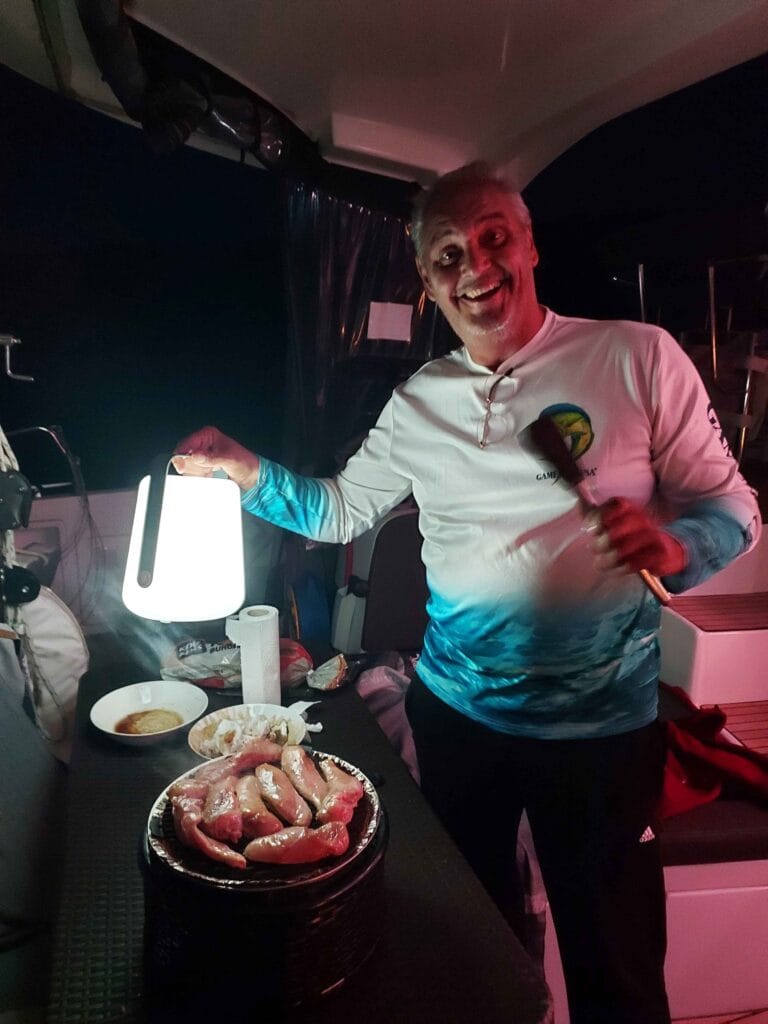
On the first day, as with all guests, we did a full week of grocery shopping. Everyone cooked their favorite dish once during the week, and otherwise we went out for dinner 😉. The first evening was Gilles’ turn, with his famous BBQ and Indonesian satay skewers. Birgid knows that I love potato salad, and she always makes it fresh. So after lunch, the Luxembourgers got to work on the potatoes we had bought, already mixing them with the dressing for the evening.
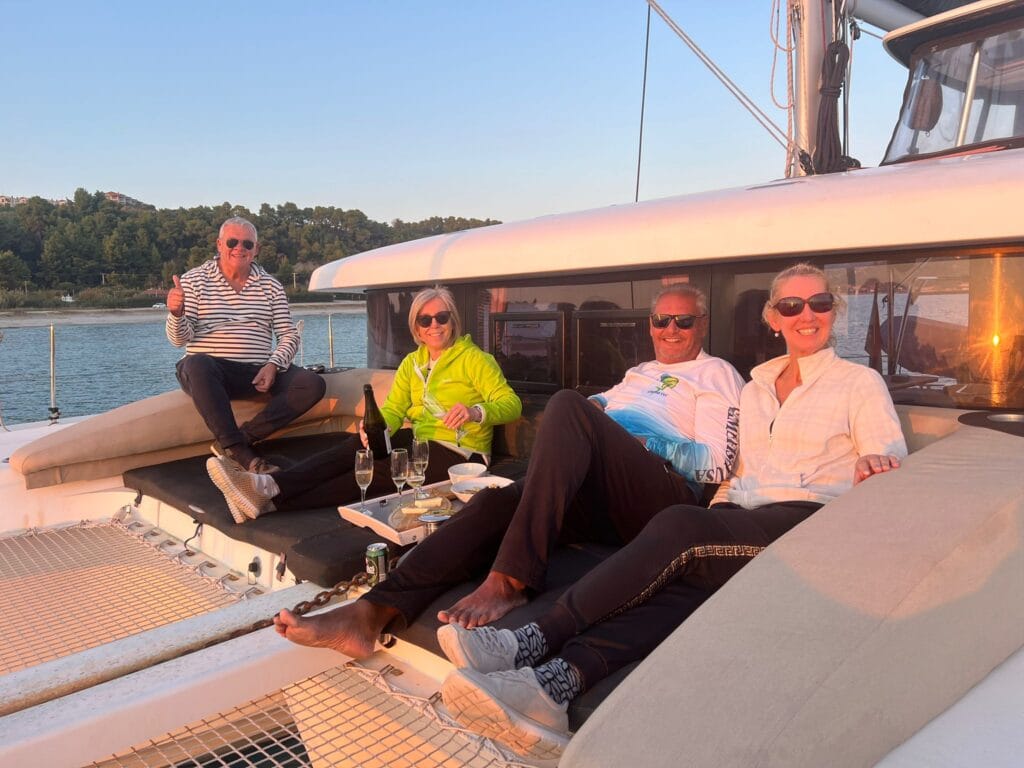
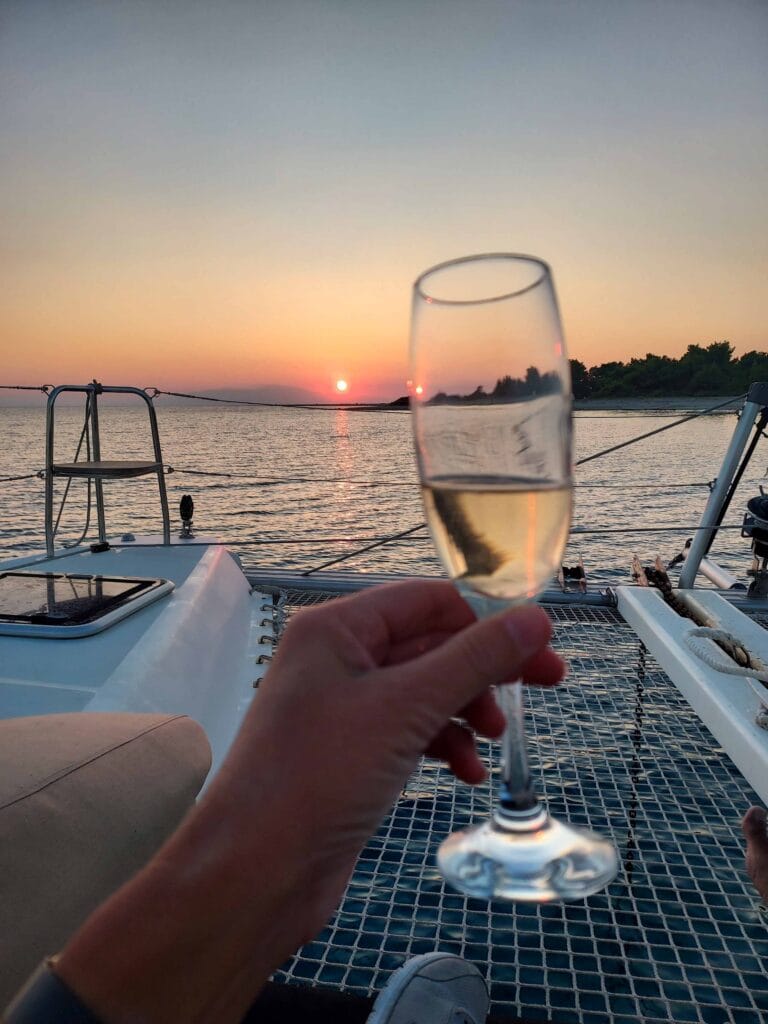
We arrived at the southernmost tip of the first peninsula. The sun was slowly setting, so we settled in for the traditional “anchor beer” 😉. It’s our custom to end the day with an evaluation, some chips, and a drink—while enjoying the beautiful sunset.
And of course, the BBQ in the evening. In the cockpit (the terrace), we brought out the COBB table BBQ, which doesn’t get hot underneath and can be used for grilling, baking, and wok cooking. ‘Grilles’ could really go all out again ;)!
Neos Marmaras
The next day, we crossed over to the middle peninsula, Sithonia. We arrived halfway down the west coast, in the town of Neos Marmaras. It lies sheltered in a bay and is one of the larger towns on this peninsula. The village was founded in the 1920s by Greeks from Marmara (now in Turkey).
Here too, you notice that it’s not really set up for boats and tourists, because we could barely fit the catamaran into the small harbor.
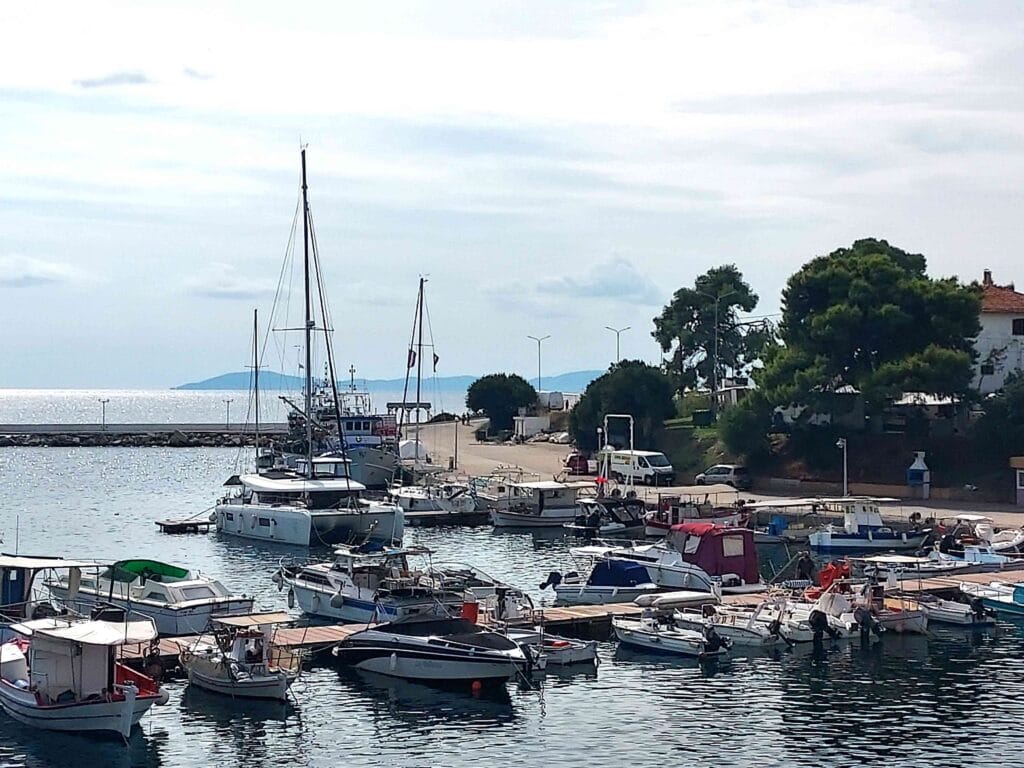
We walked ashore via a wooden jetty and found the place very atmospheric. There was a nice beachfront restaurant where we could also buy electricity cards.

Porto Koufo
We continued sailing south along this peninsula. The sea was calm, so everyone could relax and enjoy the sunshine or read a book.
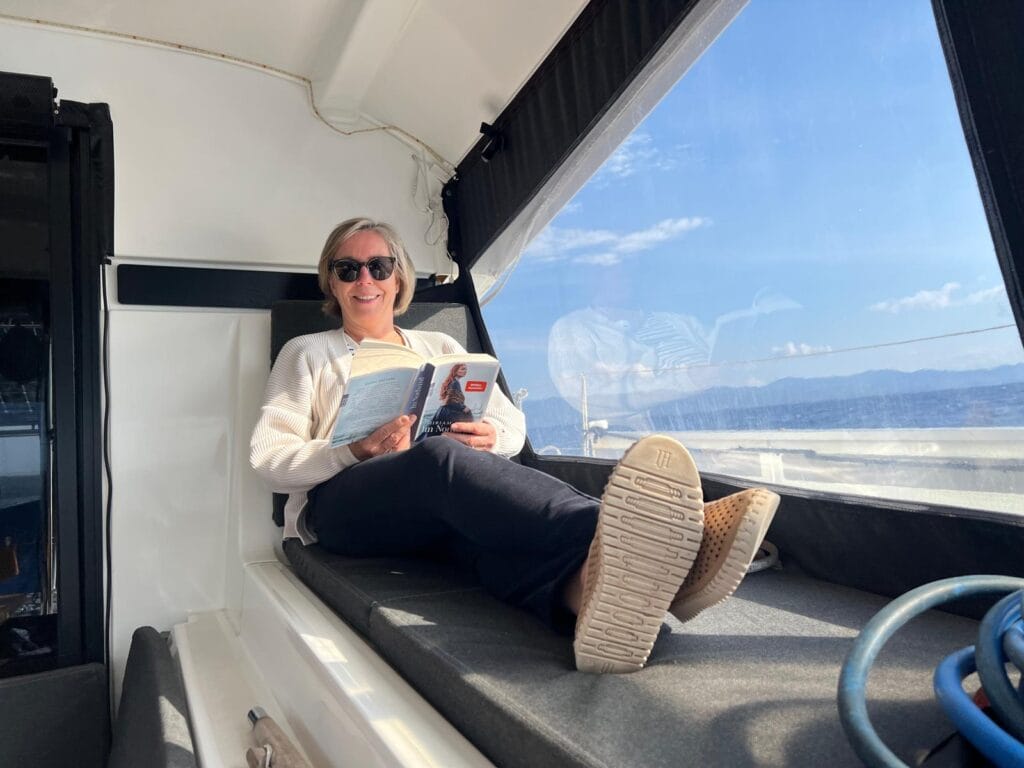
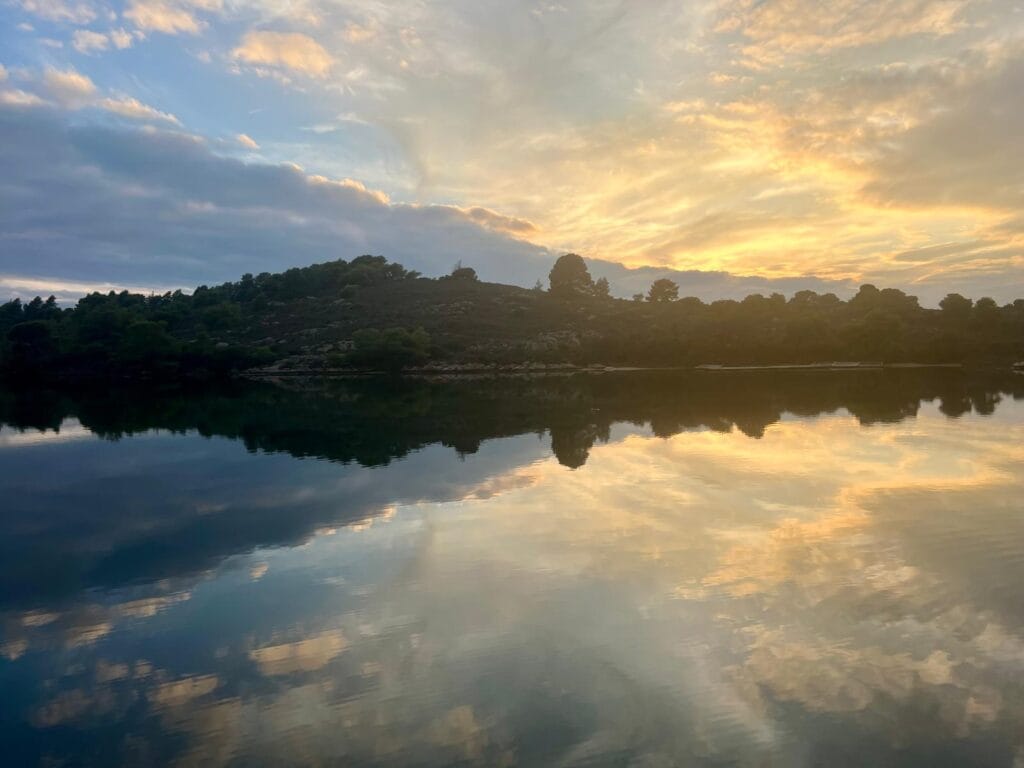
We arrived at the southernmost point of the peninsula: Porto Koufo. This almost completely enclosed bay is a natural harbor. Even in ancient times, this spot was used as a shelter; the narrow entrance makes the bay virtually invisible from the sea. We were able to anchor here perfectly.
Vourvourou
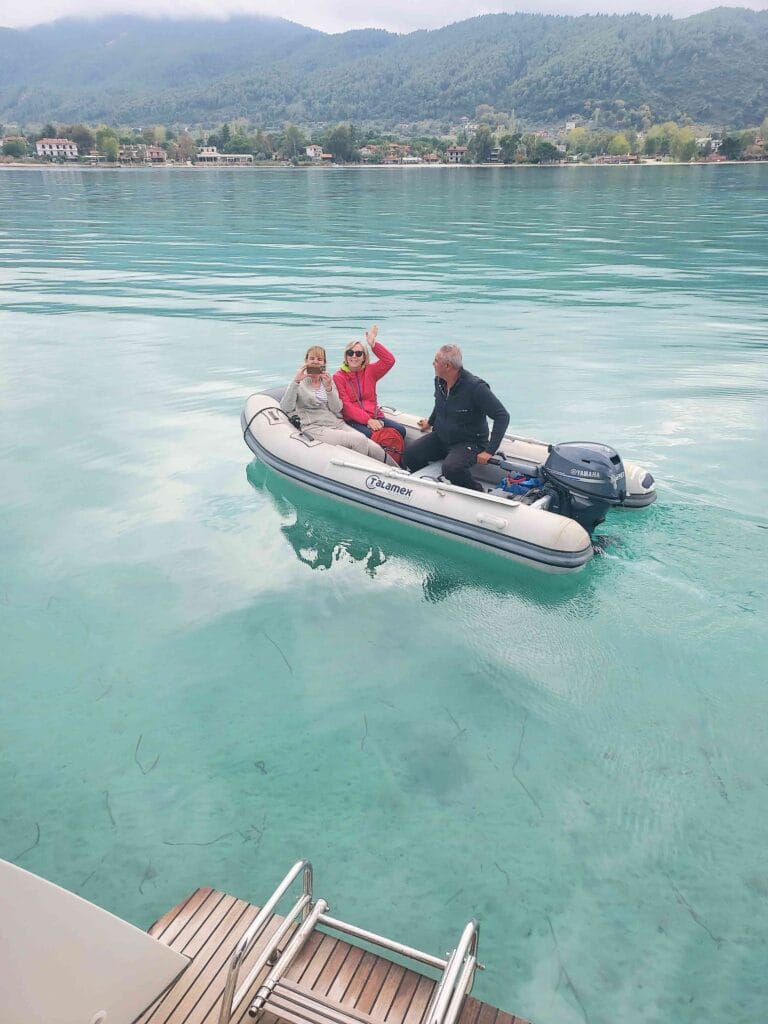
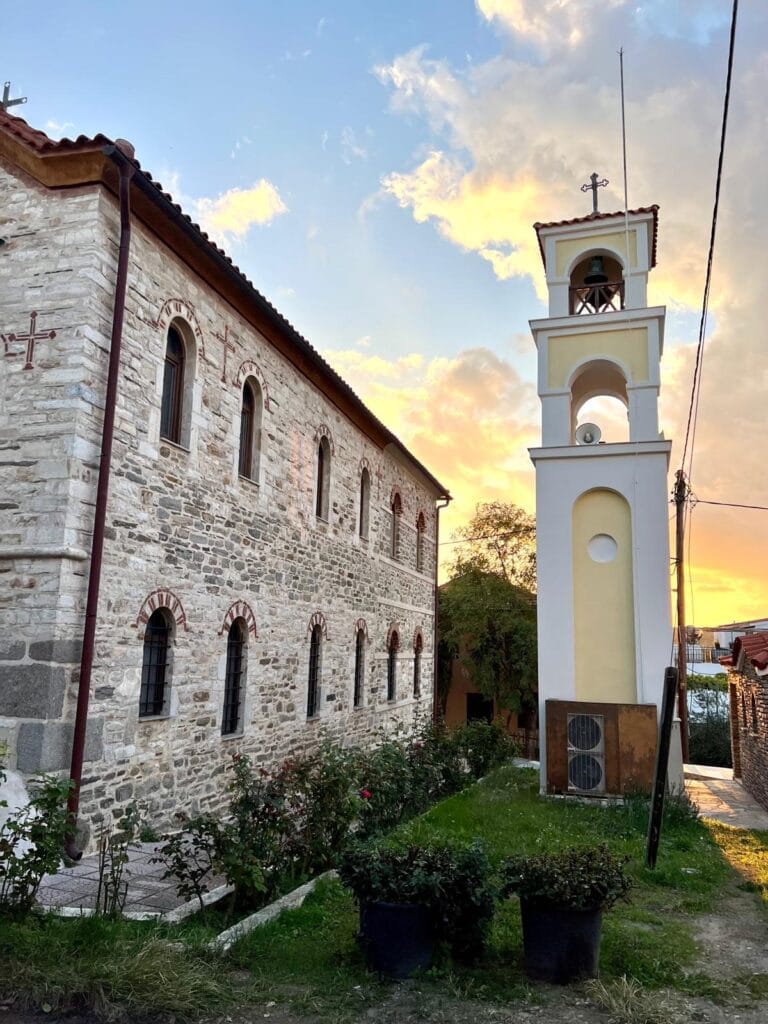
We now reached the east coast of the second peninsula. It became a bit busier again, with picturesque places including Vourvourou. This area is known for its lagoon-like waters. We took the dinghy ashore, and indeed the catamaran lay in a shallow bay with beautiful light-blue water. Once again, charming Greek spots to explore.
Diaporos Island
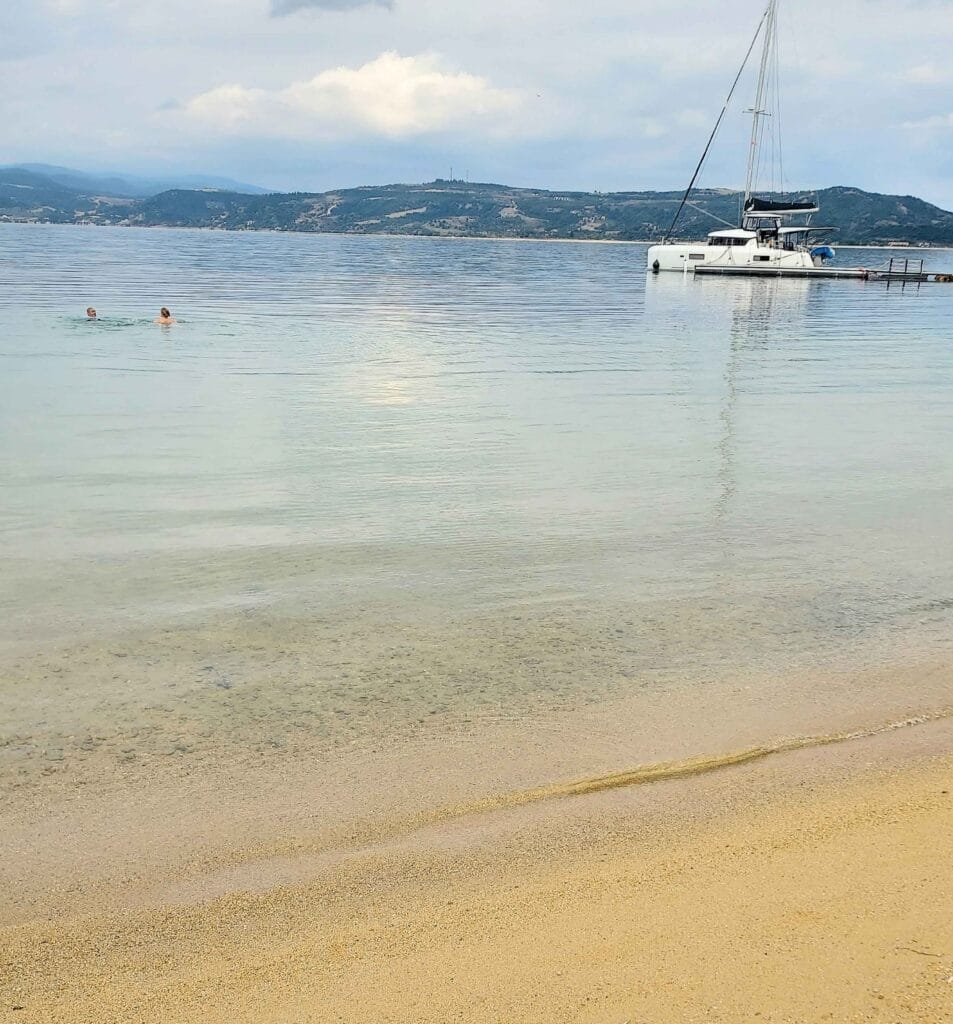
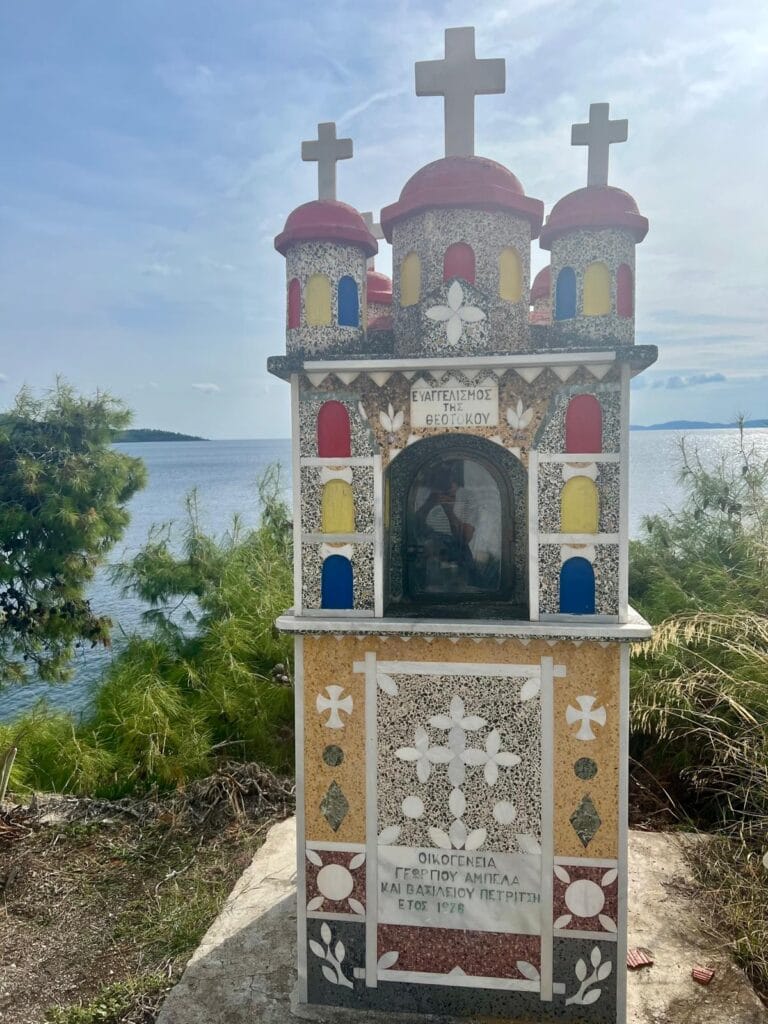
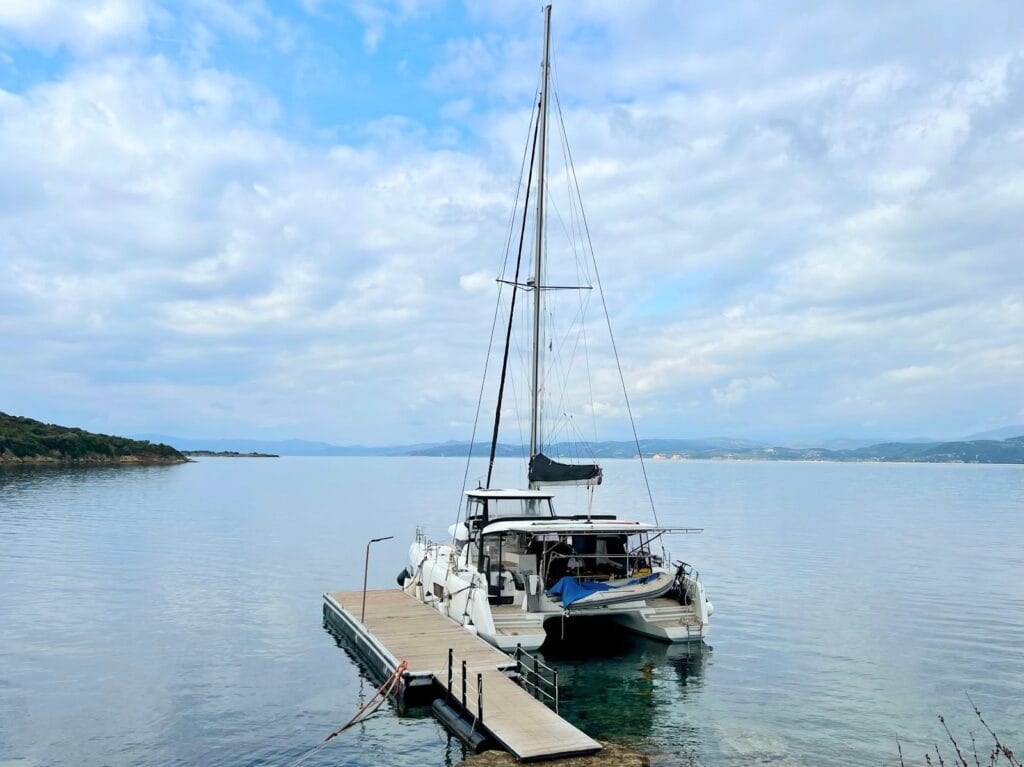
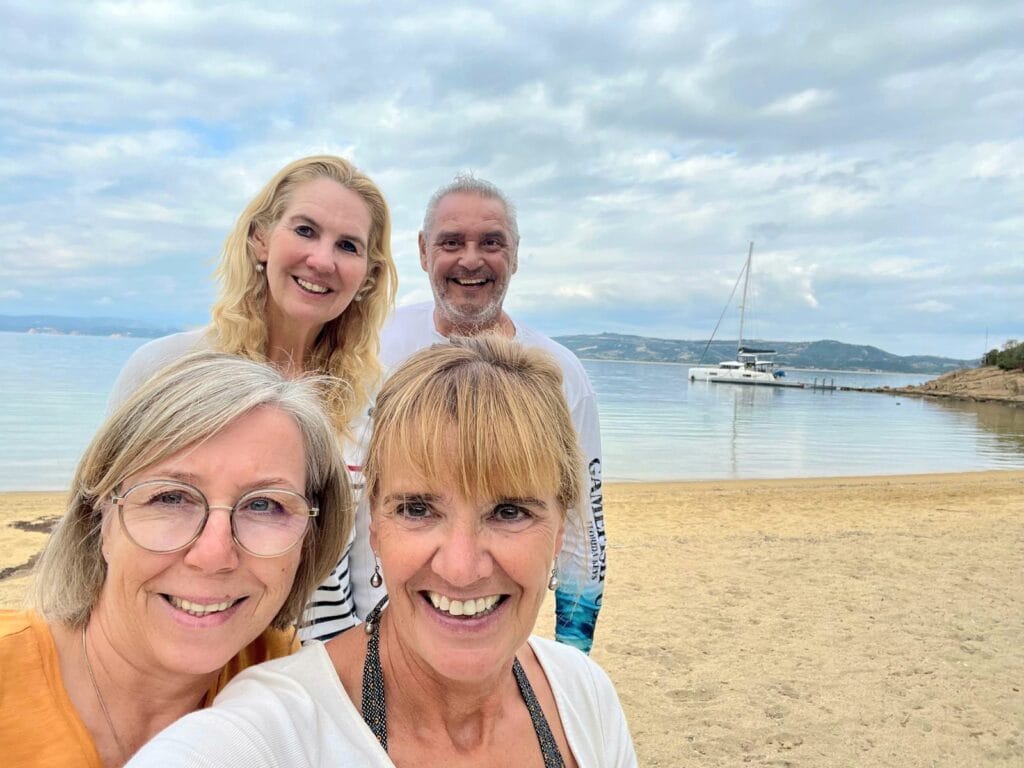
Nearby is the island of Diaporos, with many inlets, pine forests reaching all the way to the water, white sandy beaches, and hardly any development. We sailed around it and stopped several times to anchor and enjoy the beautiful bays—or to go ashore via a small jetty on the beach.
Ouranoupoli
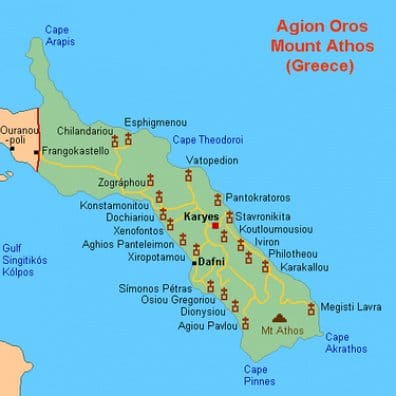
We then made the crossing to the last peninsula: Agion Oros. In the northeast lies the town of Ouranoupoli. Its name literally means “city of heaven” and it is the last place where everyone is welcome before the border of Mount Athos. Because what we discovered is that this third peninsula is not accessible.
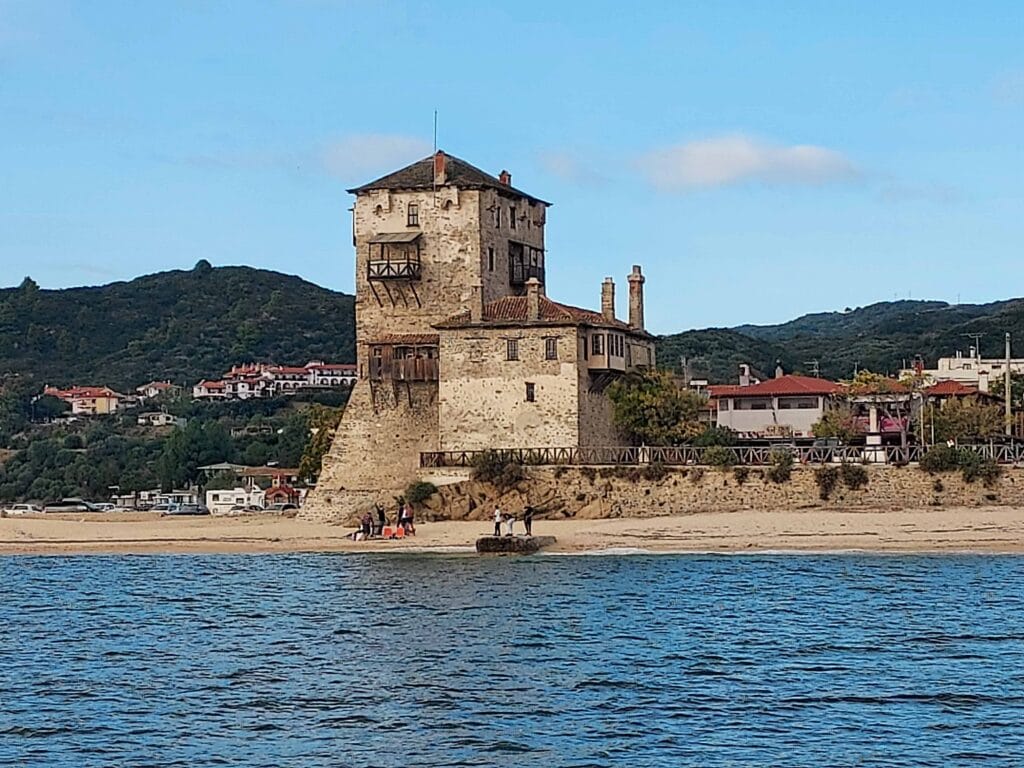
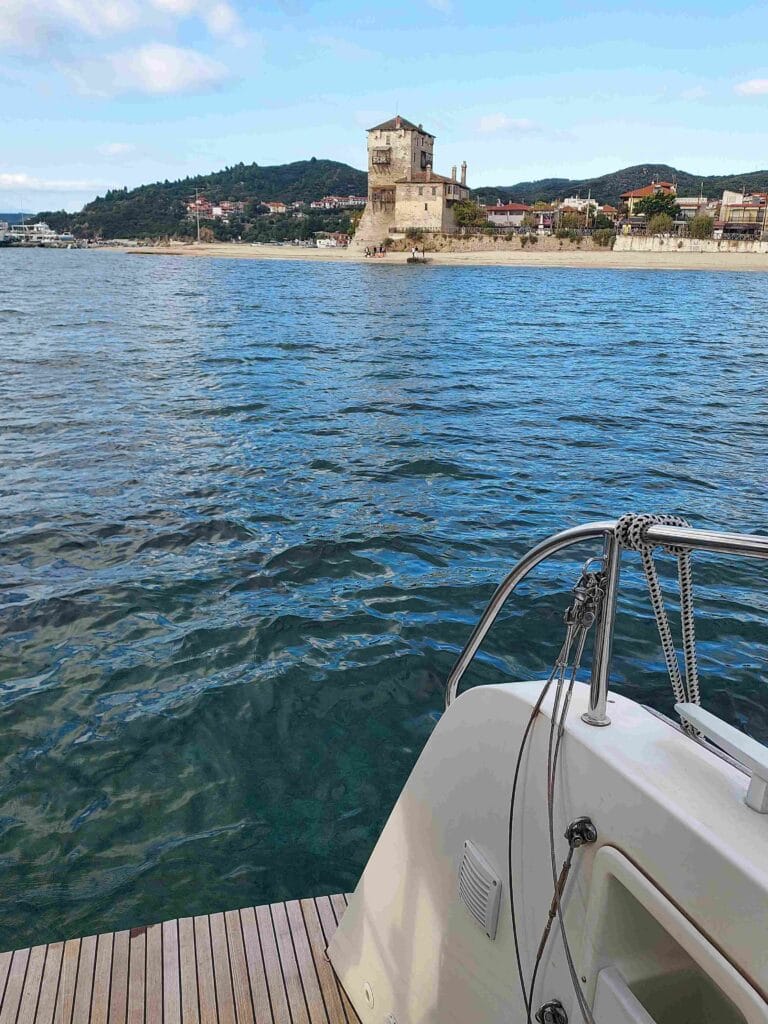
What immediately catches the eye is the 14th-century Byzantine tower, once part of a monastery’s defenses.
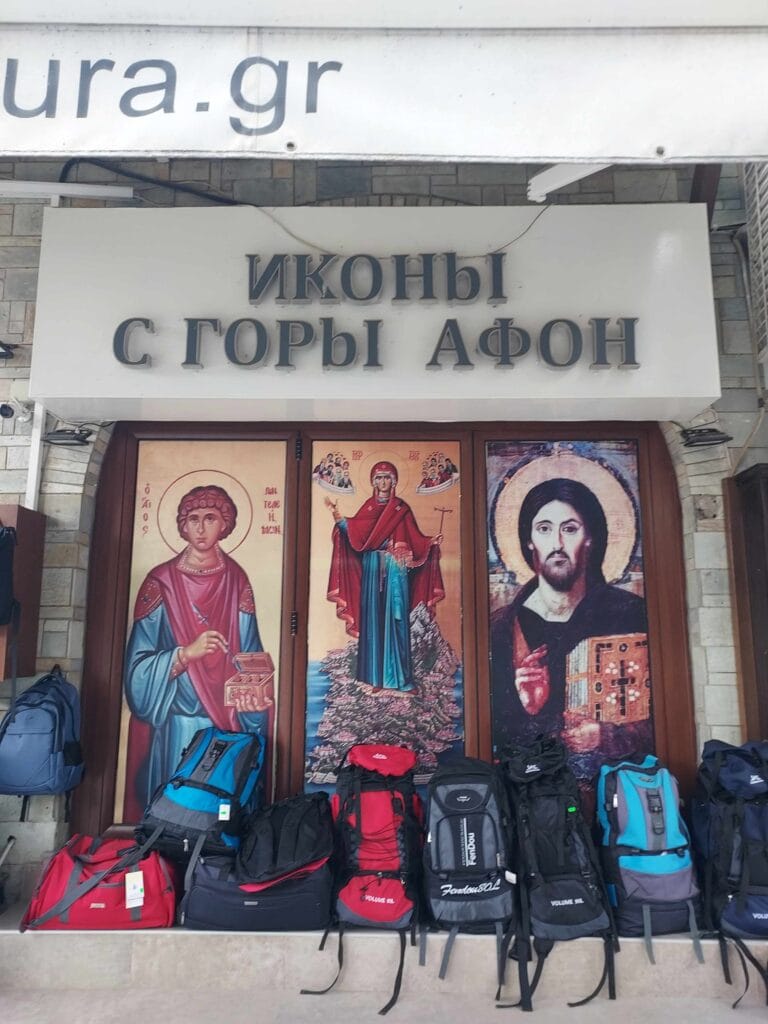
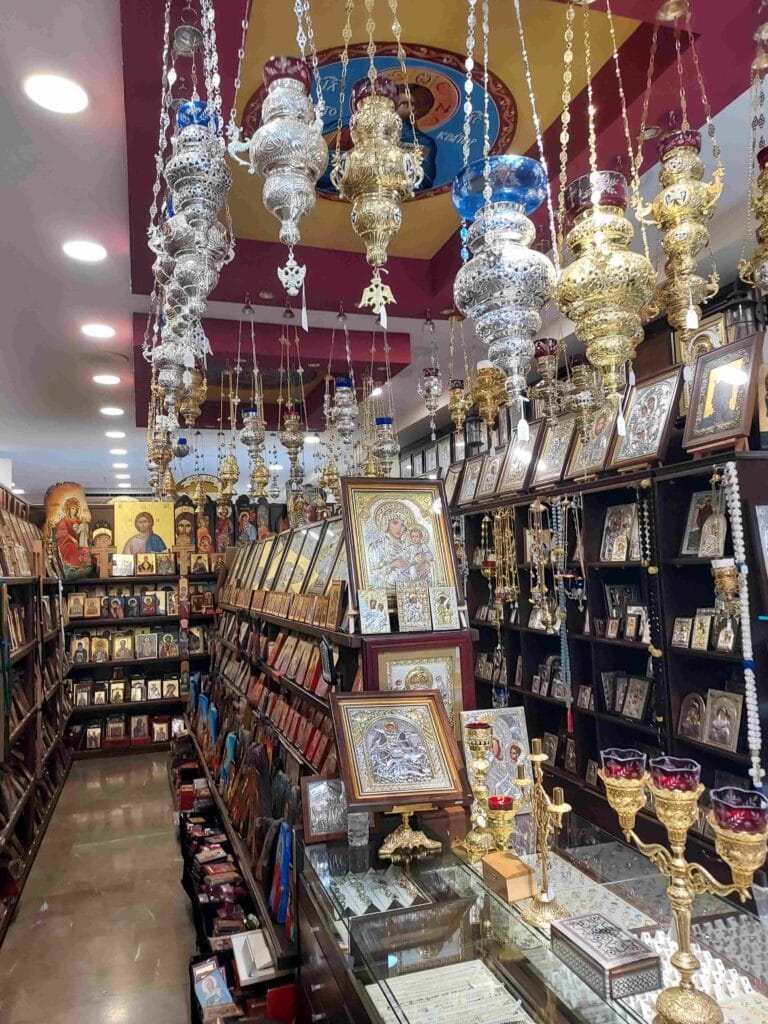
Because many monks arrive here or prepare for a stay in one of the monasteries on Mount Athos, you see many religious shops.
Monastery of Zygos
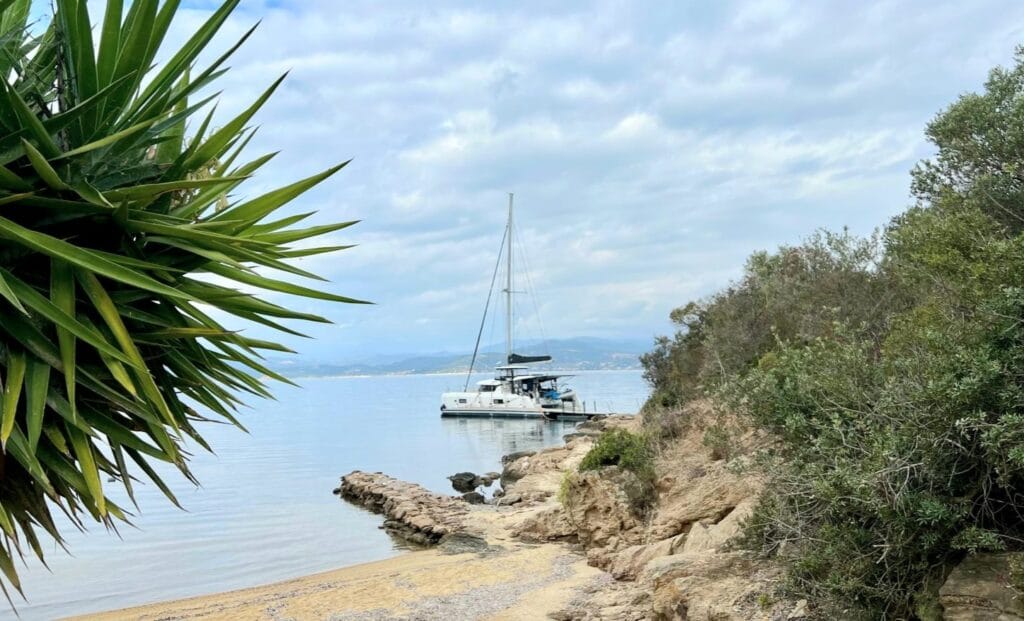
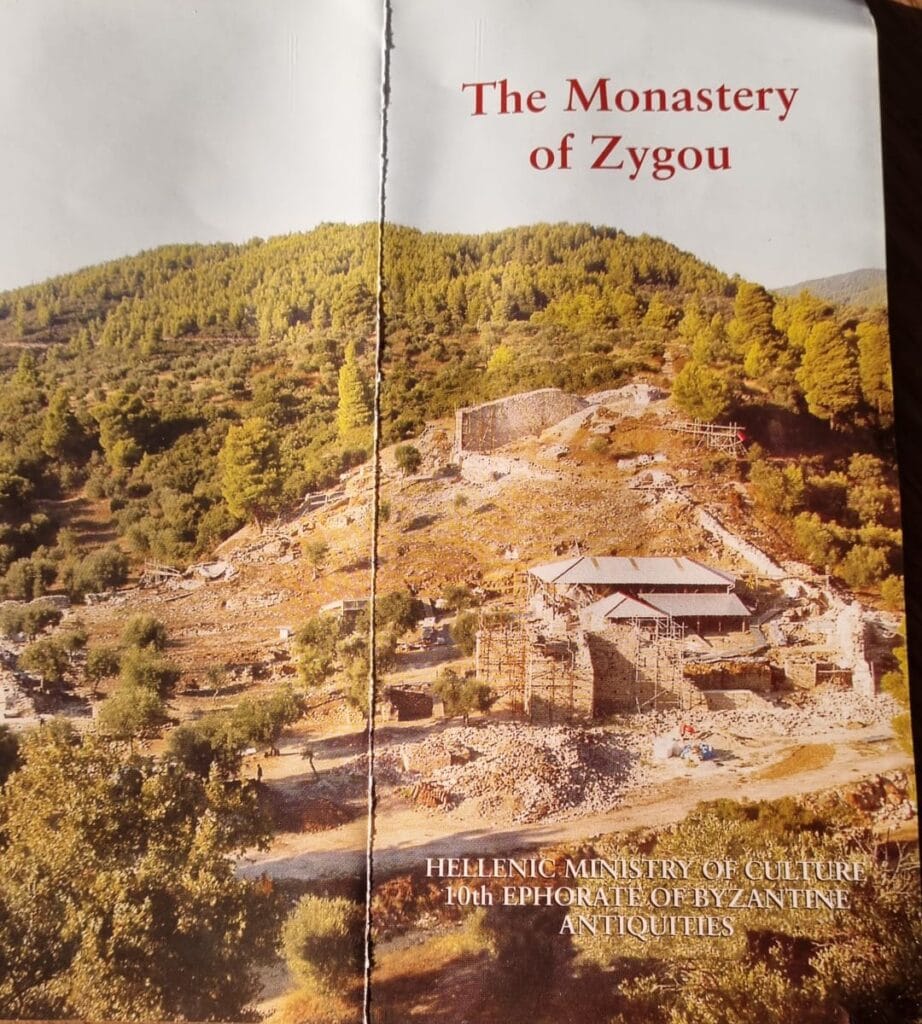
Just outside Ouranoupoli lie the remains of the Monastery of Zygos, also known as Frangokastro. This is the only Athos monastery located outside the holy boundary and therefore accessible to everyone. We took a lovely walk of about half an hour through green nature high on the cliffs along the sea and eventually reached the ruins of the monastery.
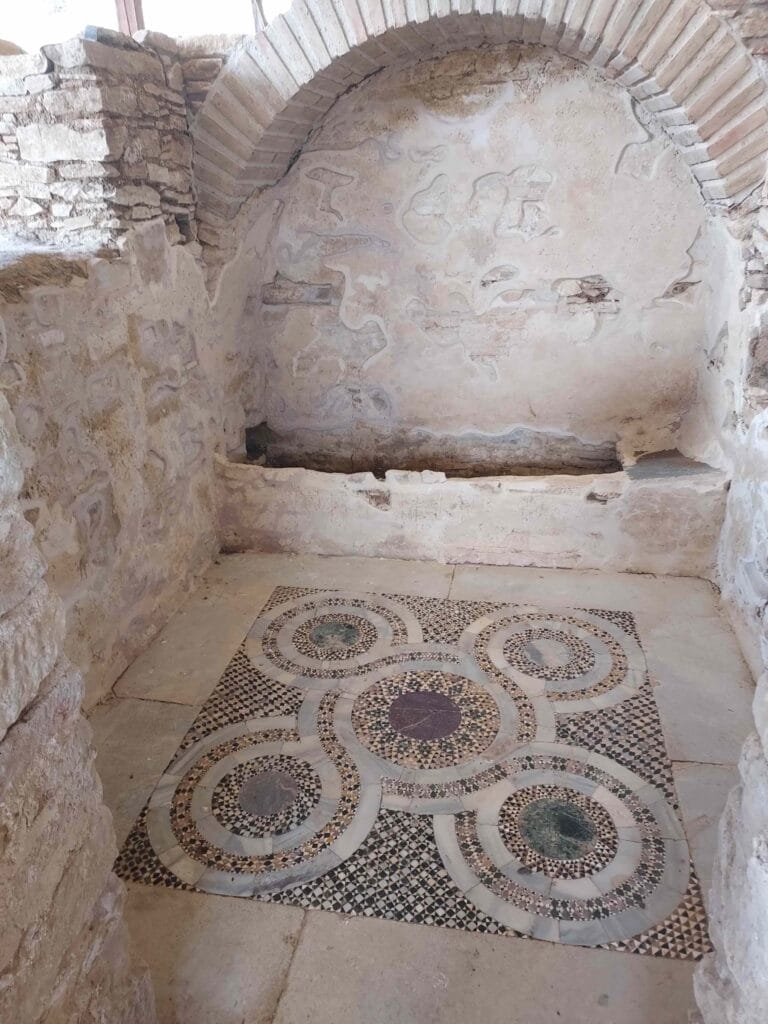
Beautiful mosaic floors were still visible, and walking along the wooden walkways of the monastery gave an interesting impression of monastic life in the Middle Ages. The monks made their own wine and beer and lived very simply and in isolation.
Pyrgadikia
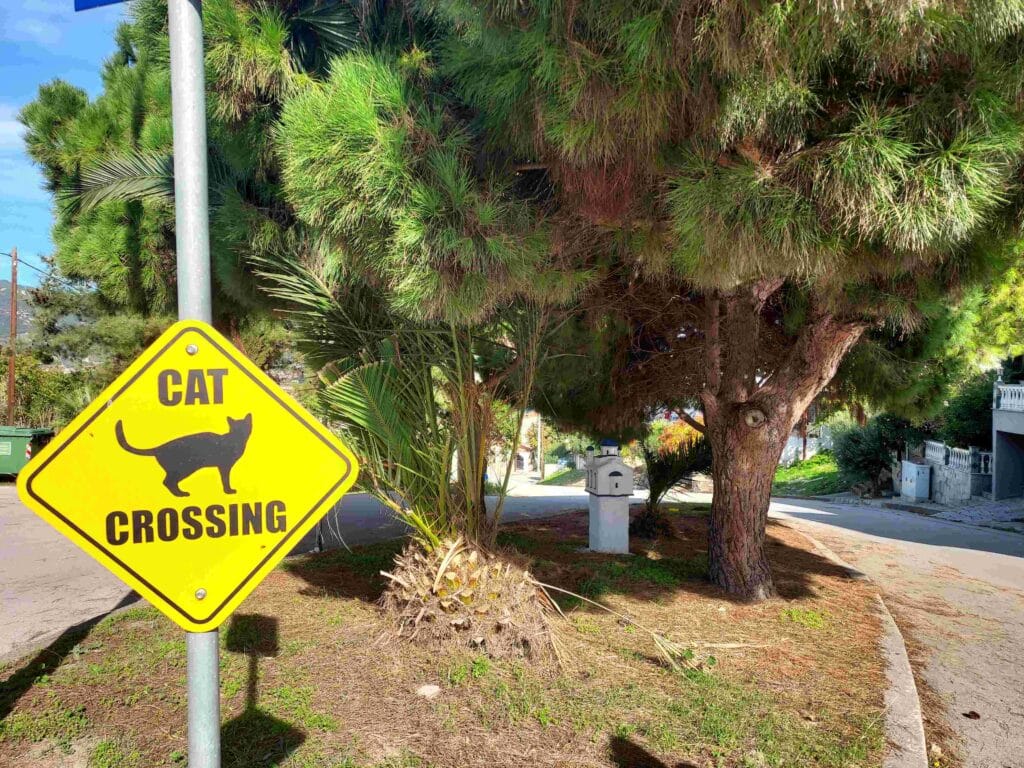
After a week of sailing, we arrived at the final stop for the Luxembourgers: Pyrgadikia. We moored in a small marina along the quay—once again with plenty of cats. We bought a large bag of cat food at the supermarket, because the cats sometimes look so skinny. That’s how we make new friends again 😉.

Pyrgadikia turned out to be a lovely place, and we took a walk around the village.
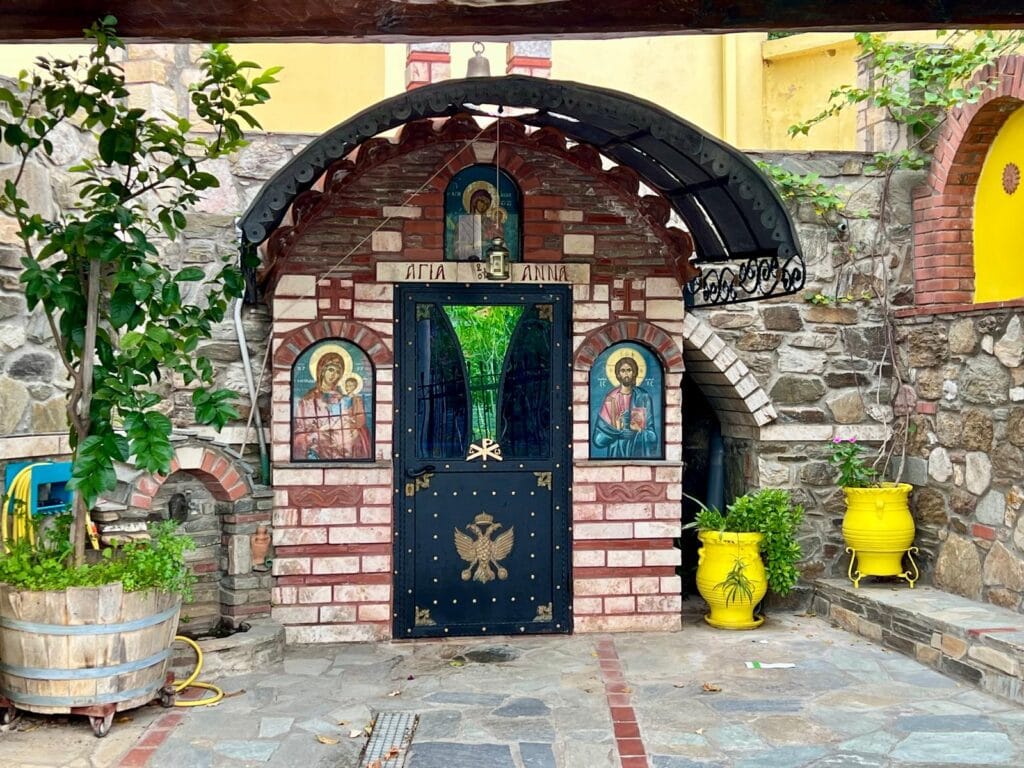
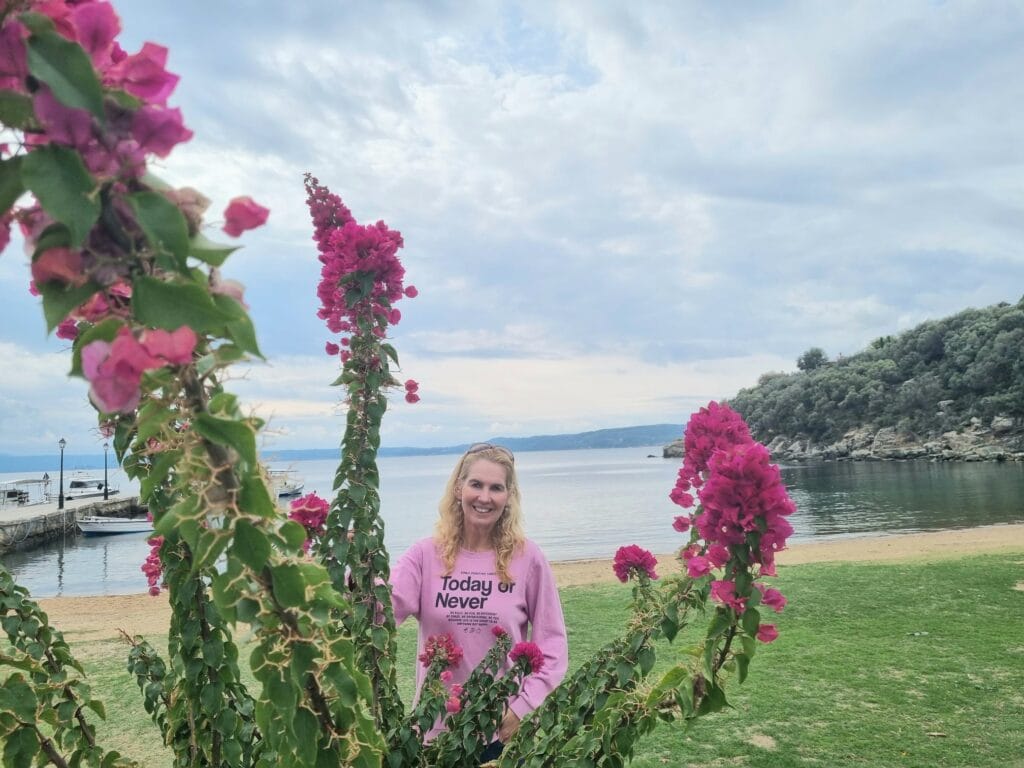
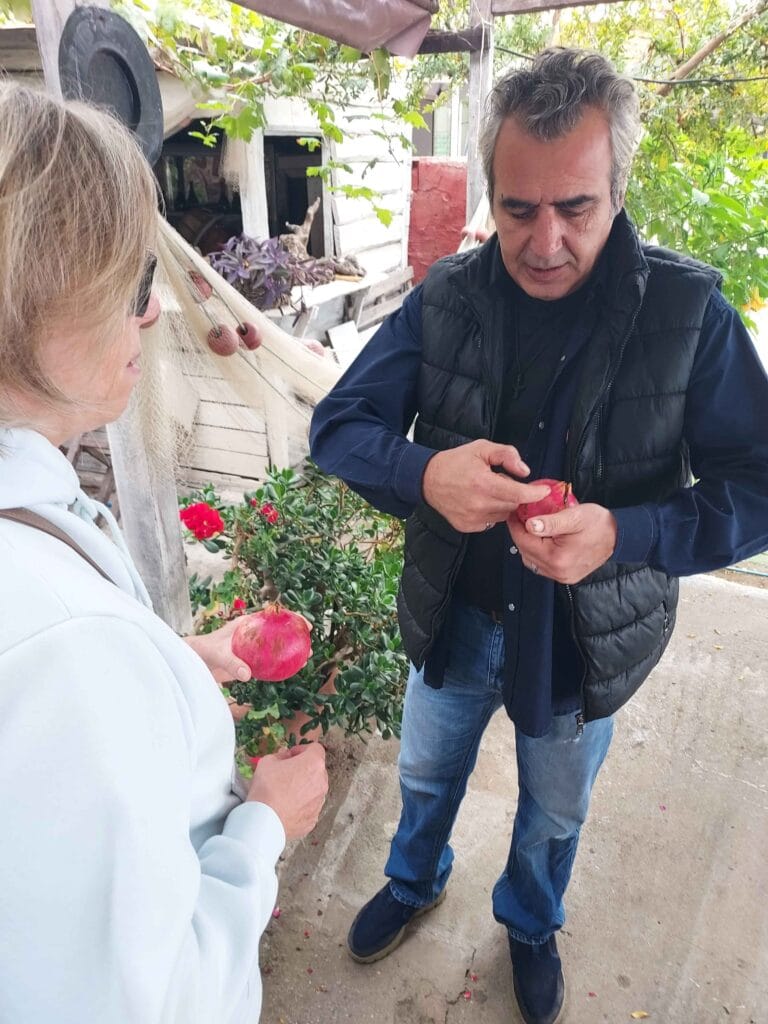
We saw a beautiful restaurant with a colorfully decorated terrace. The owner chatted with us, and we complimented him on his restaurant. He picked a pomegranate and gave it to us—to bring good luck.
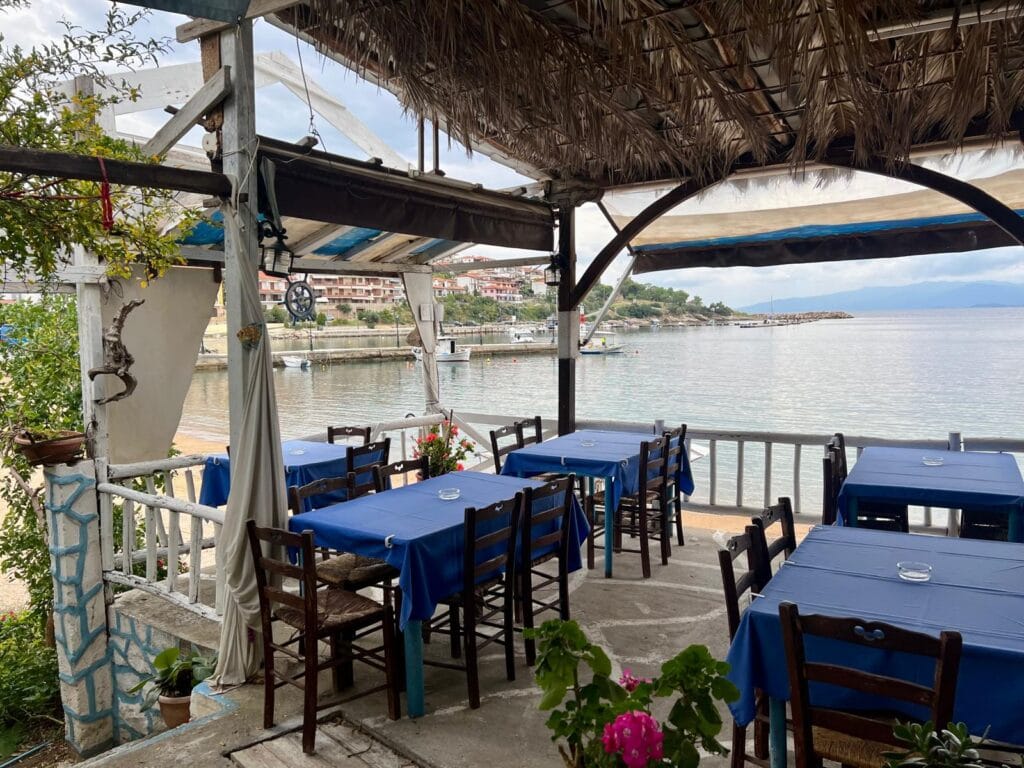
That evening, we also went out for dinner at a restaurant with delicious fish and wine. We were the only guests, the owner was very friendly, and we had a wonderful meal.
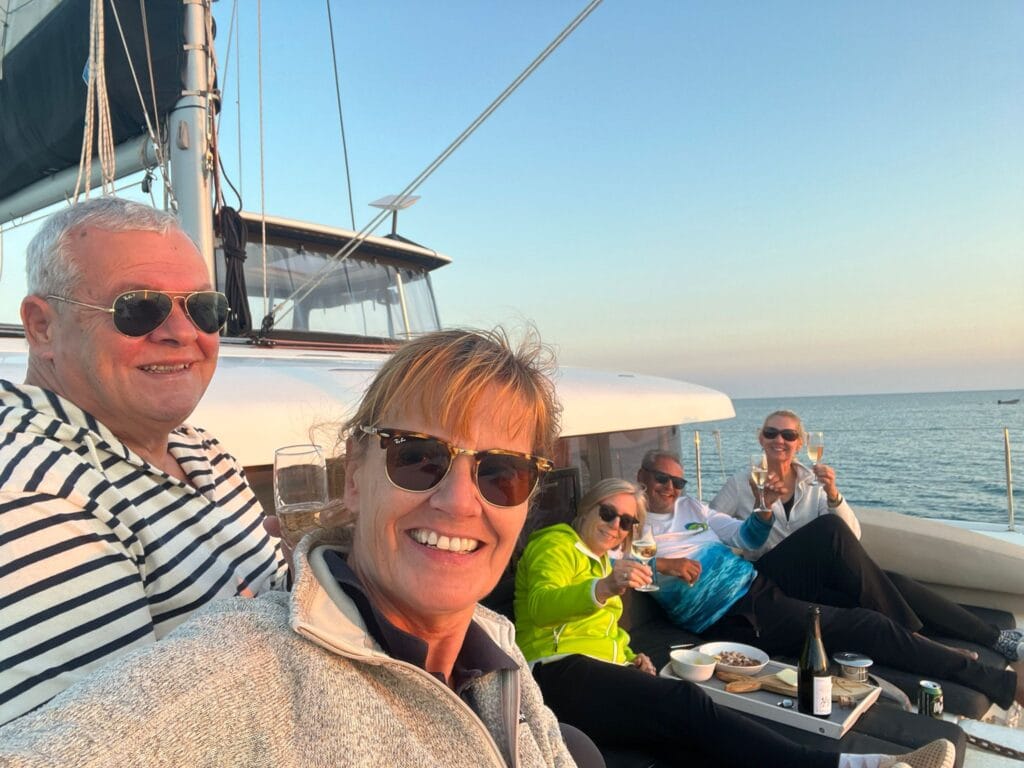
The next morning, we said goodbye to the Felkes. From here, it was about a 1.5-hour taxi ride back to Thessaloniki Airport, and via a transfer in Frankfurt, they would arrive back in Luxembourg that evening.
We really enjoyed spending a week together, and for Charles and Heike it was their first time on a catamaran. They wrote about their experience themselves on our guest page!
Mount Athos
We then set out to explore this third peninsula, which already looked impressive from the north—high, rugged mountains and almost uninhabited.
Mount Athos is without a doubt one of the most extraordinary places in Europe. This autonomous monastic territory consists of 20 Orthodox monasteries, spread across a rugged, mountainous peninsula. The highest peak, Mount Athos itself, rises to over 2,000 meters above sea level and can be seen from far away.
A millennium of monastic life
Monks have lived here continuously since the year 963. Mount Athos has its own administration, its own rules, and falls directly under the Ecumenical Patriarchate of Constantinople. Daily life is entirely focused on prayer, work, and silence.
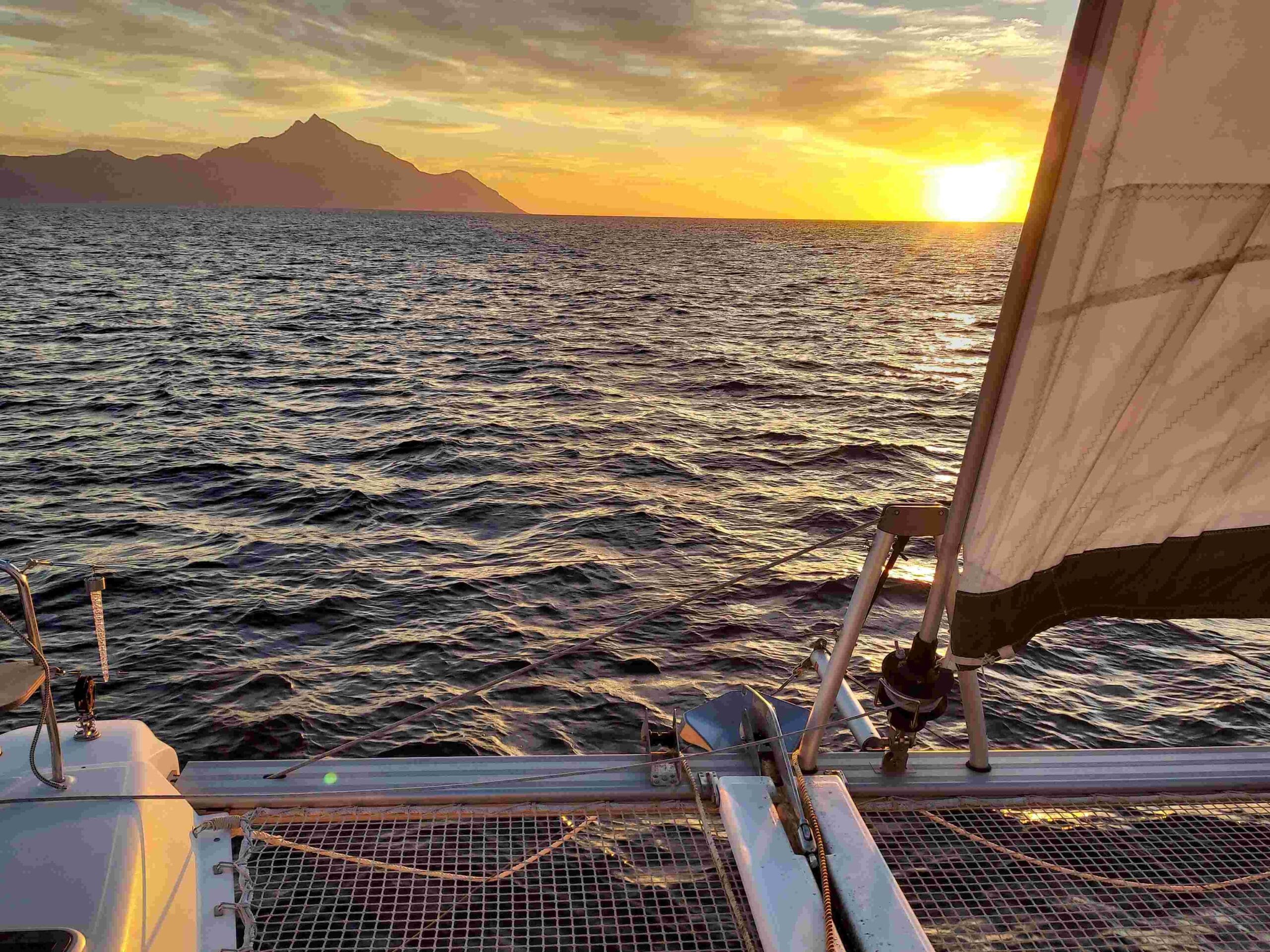
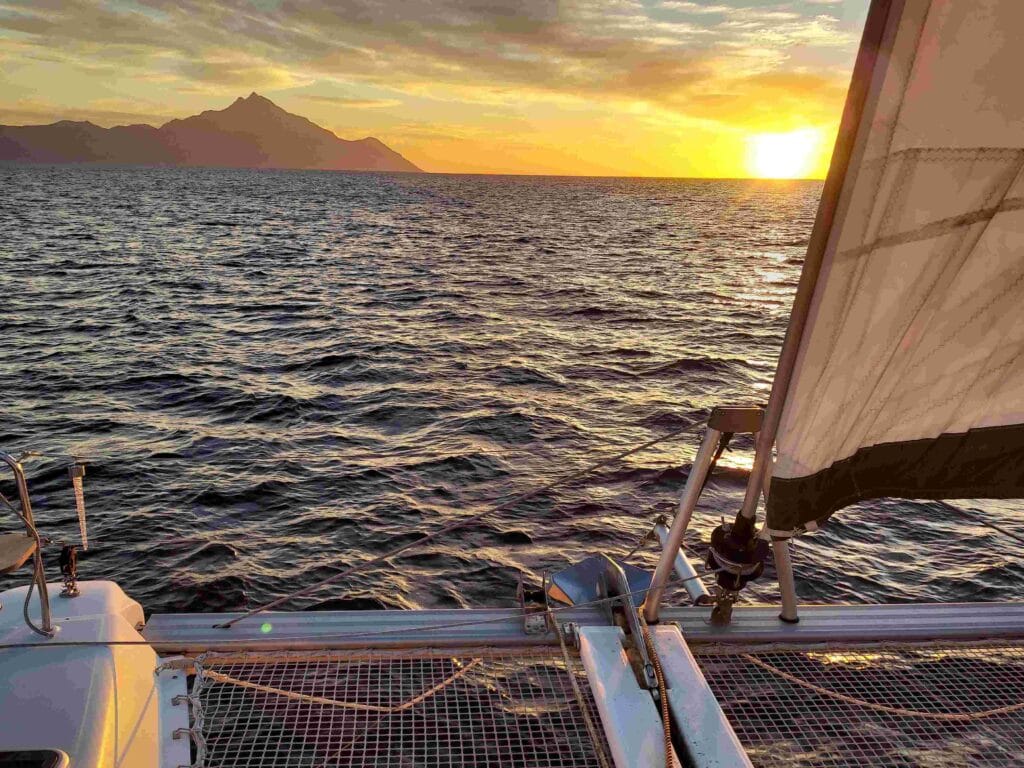
Tourists are not allowed to go ashore. So there was nothing else to do but leave early in the morning and make the roughly eight-hour sail around the peninsula, since landing was not permitted. It was a beautiful start to the day, with the sunrise and Mount Athos in the distance.
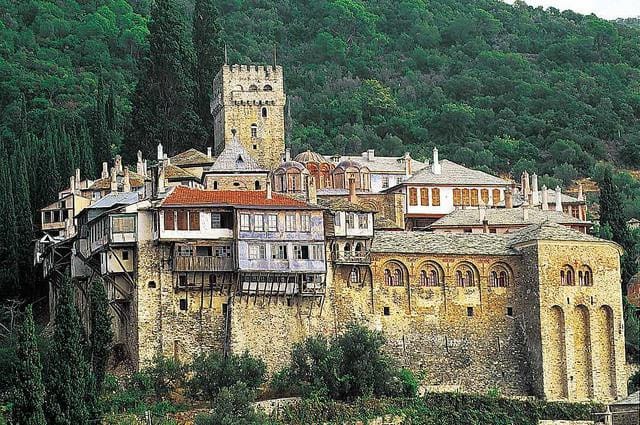
With binoculars, we could see the many monasteries. They seem to grow directly out of the rocks, high above the water. Truly magnificent buildings, some of them up to a thousand years old—and it’s such a shame that you’re not allowed to visit them or walk through them.
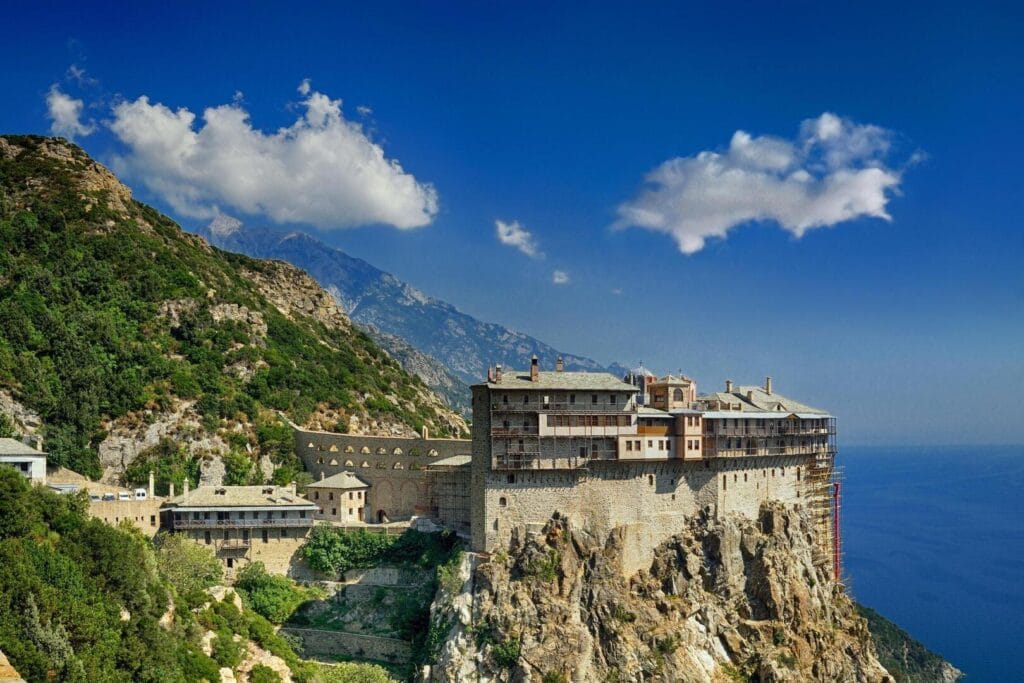
Only accessible to men
It goes even further: there is an absolute ban on women (the so-called avaton). This ban has been in place for more than a thousand years and is intended to enable complete devotion to monastic life. Even female animals are officially not allowed.
There is also a minimum distance at sea (about 500 meters). When I read online that women were not even supposed to be visible from the coast at that distance, it felt a bit extreme to me. Especially in such beautiful weather, I wasn’t going to sit inside the boat’s salon for eight hours.
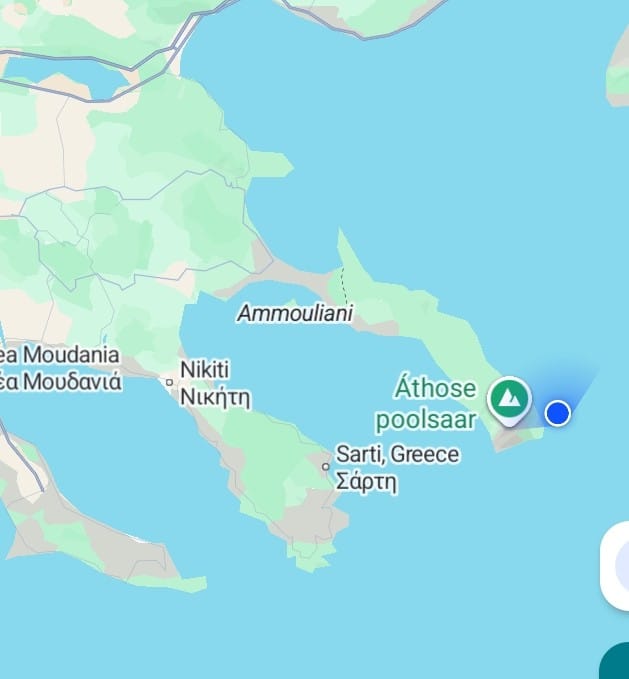
Nea Roda
At the end of the day, just before dark, we moored in a small fishing harbor near the village of Nea Roda. We had made it—we had successfully sailed all the way around the third peninsula. Here, it was “normal” Greece again.

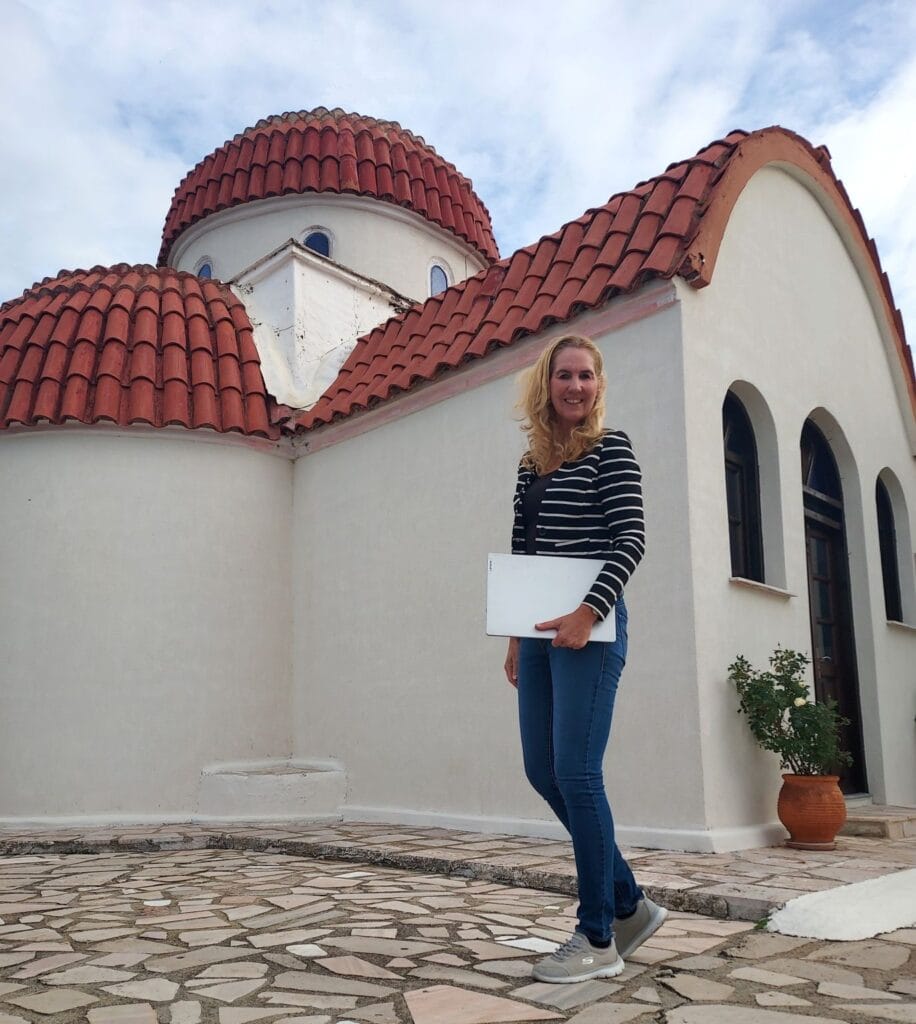
Nea Roda turned out to be a pleasant place. And after a week with guests on board, now it was time for laundry, clean the boat, and for me a new series of online trainings started, which I would be giving from on board.
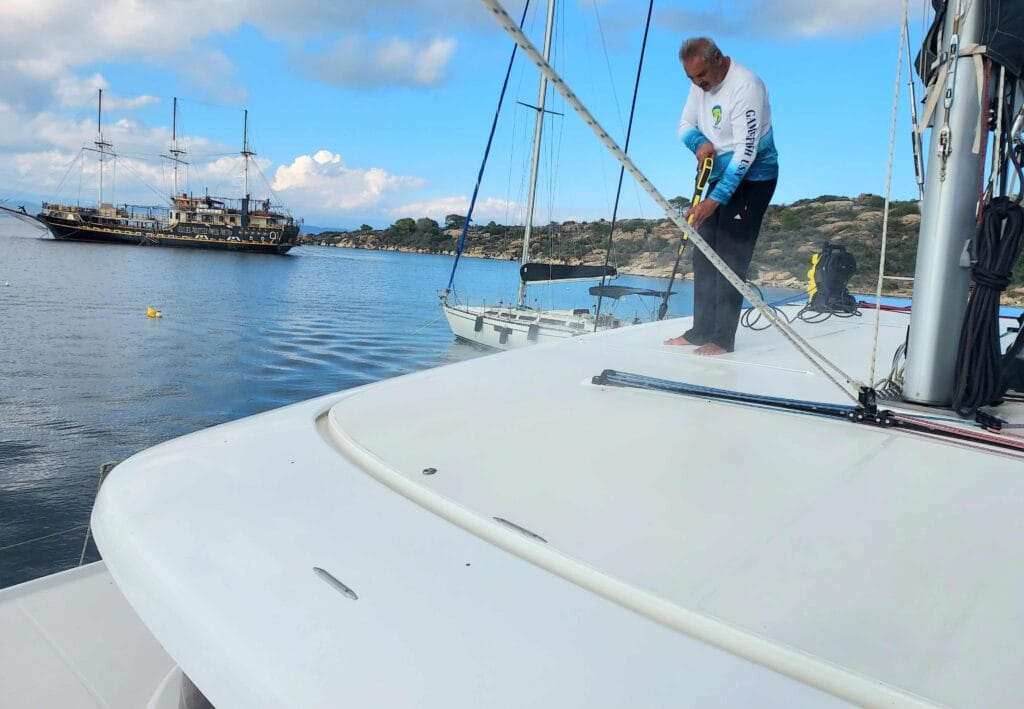
At the last anchorage, Charles pointed out that our anchor light wasn’t working. Apparently, after six years the battery was dead. So we managed to buy a spare anchor light, and I went up the mast to replace it. So I thought. Just replacing the light or the battery—but it turned out more was needed. The anchor light had to be unscrewed and the two wires had to be reconnected in the terminal block. And all of that at 22 meters up, right on top of the mast.
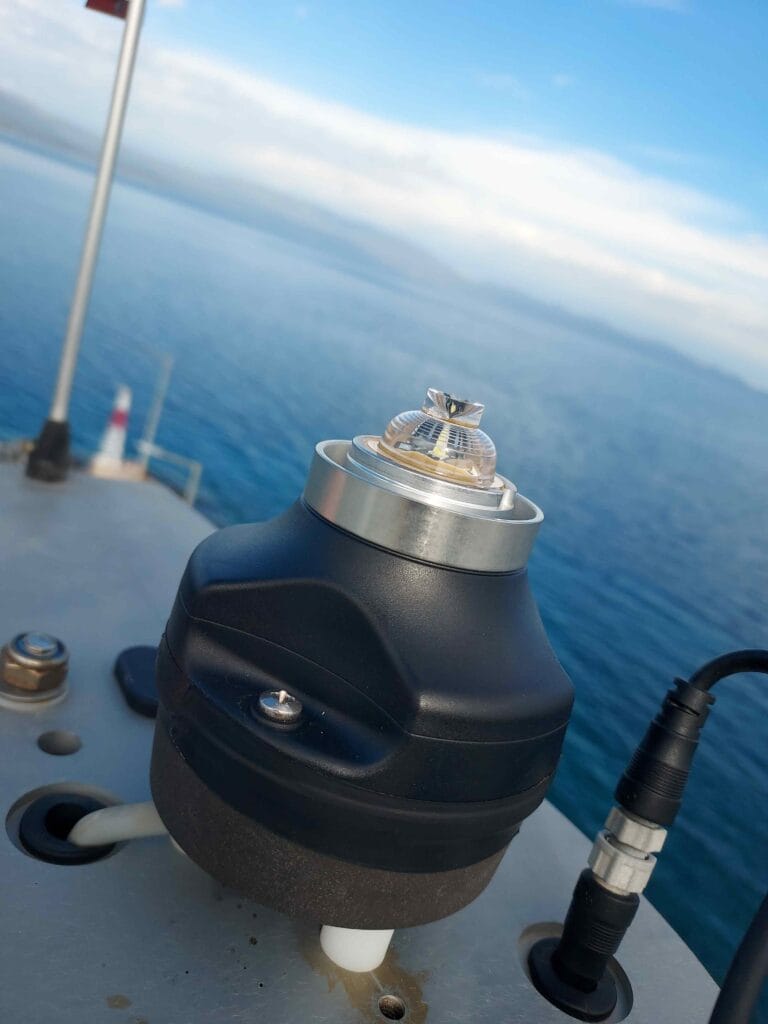
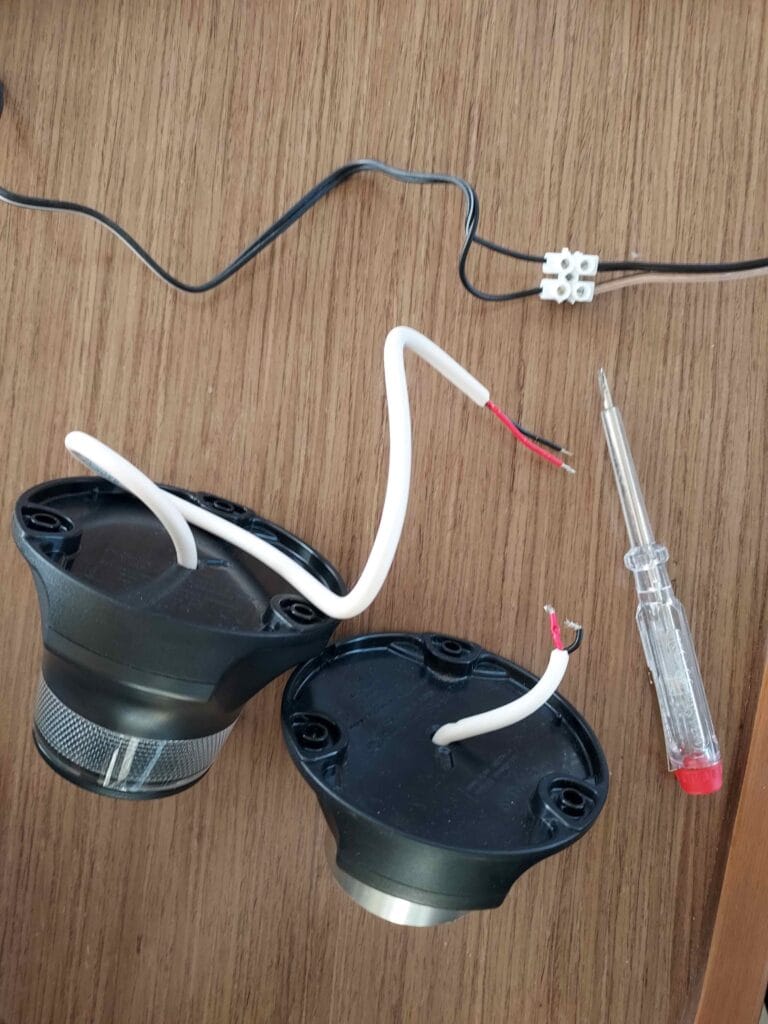
So after instructions from Gilles, I went up the mast again, taking tools with me in the side pockets of the “chair” (bosun’s chair) used to hoist you up. It worked, and the anchor light was shining brightly again at the top of the mast! Now I had some time to make a short movie of the anchor light and what it looks like when you are hanging at the top of the mast: