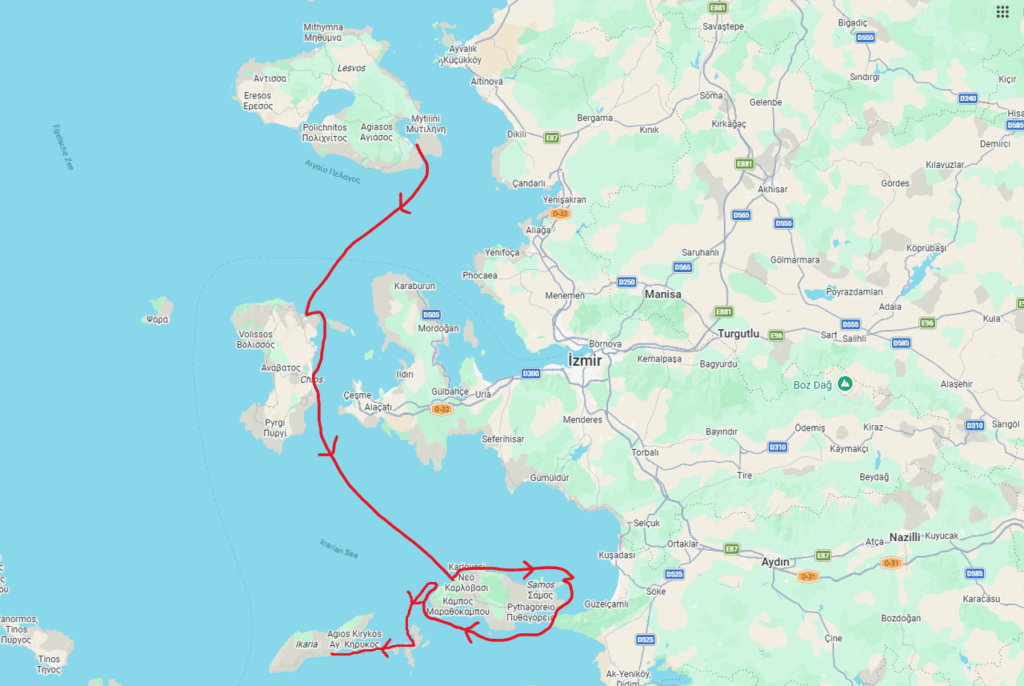
After a wonderful time on the surprisingly diverse island of Lesbos, we sailed further south in the Aegean Sea to the islands of Chios and Samos. Here are the highlights of both islands from our perspective.
Chios
This island is not as well known as, for example, Lesbos and Samos. It is about 50 kilometers long and 30 kilometers wide, with a landscape of hills, mountains, citrus groves, and small bays.
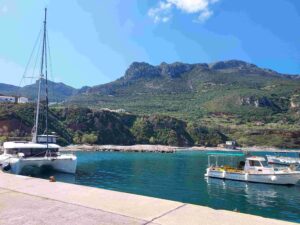
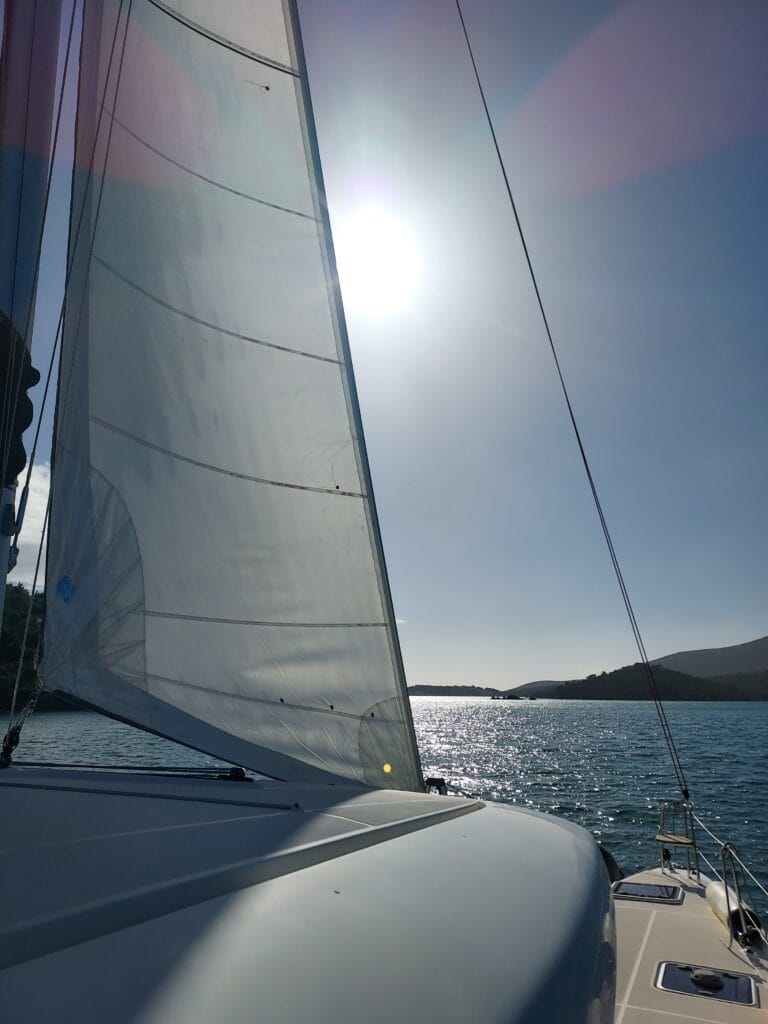
After a pleasant sunny sail from the south of Lesbos, we arrived in the northeast of Chios, in the small village of Lagkada, in a sheltered bay alongside a quay.
Sundried octopus
We were the only boat at the quay, as has often been the case in recent months. The first sailors usually arrive again in April, and it becomes busier in June. On the quay, we noticed a kind of rack extending over the water. It turned out we had moored right in front of the only restaurant that was open, and their specialty was “sun-dried octopus,” which was hanging there to dry in the sun.
Despite the sunny weather, we still needed some extra electricity—for example, to run a load of laundry. During the low season, electricity is often switched off for sailors, and that was the case here as well. We asked the restaurant owner if we could run our 50-meter power cable to the restaurant for two days of electricity. Of course, we were willing to pay for it. But Greeks are often so hospitable and kind—there was no need.
Win-win situation
It was lunchtime, so we showed our gratitude by having lunch with drinks there. A win-win situation! I filmed the restaurant and how our electricity cable was laid out—funny to see!
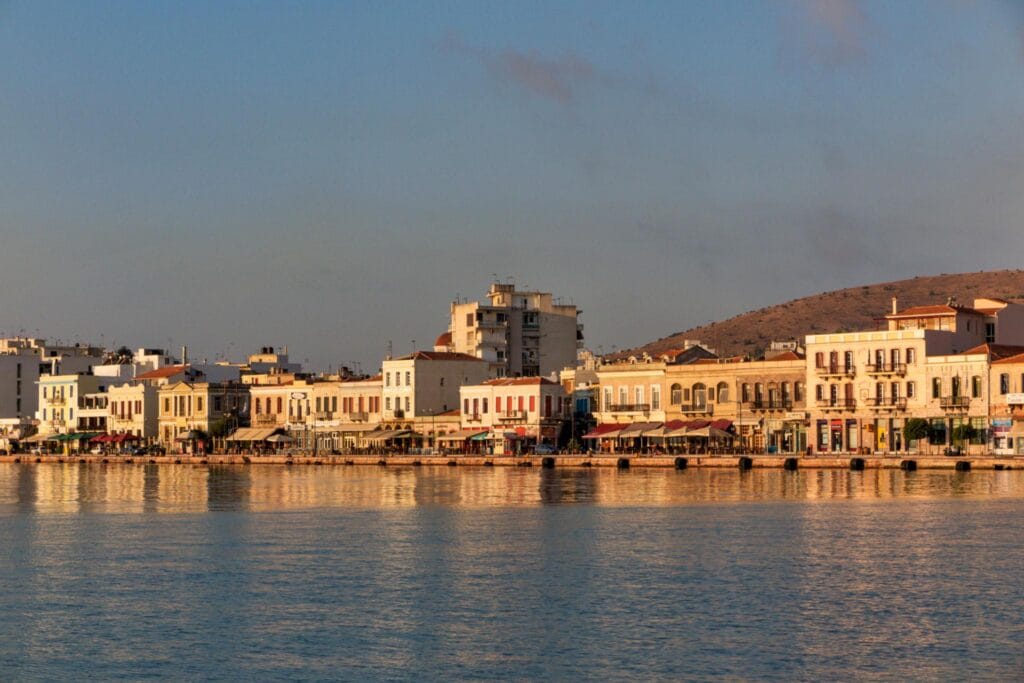
We continued sailing along the east coast towards the south and ended up in Chios Town, the small and cozy capital. By the way, capitals of islands are often called “Chora.”
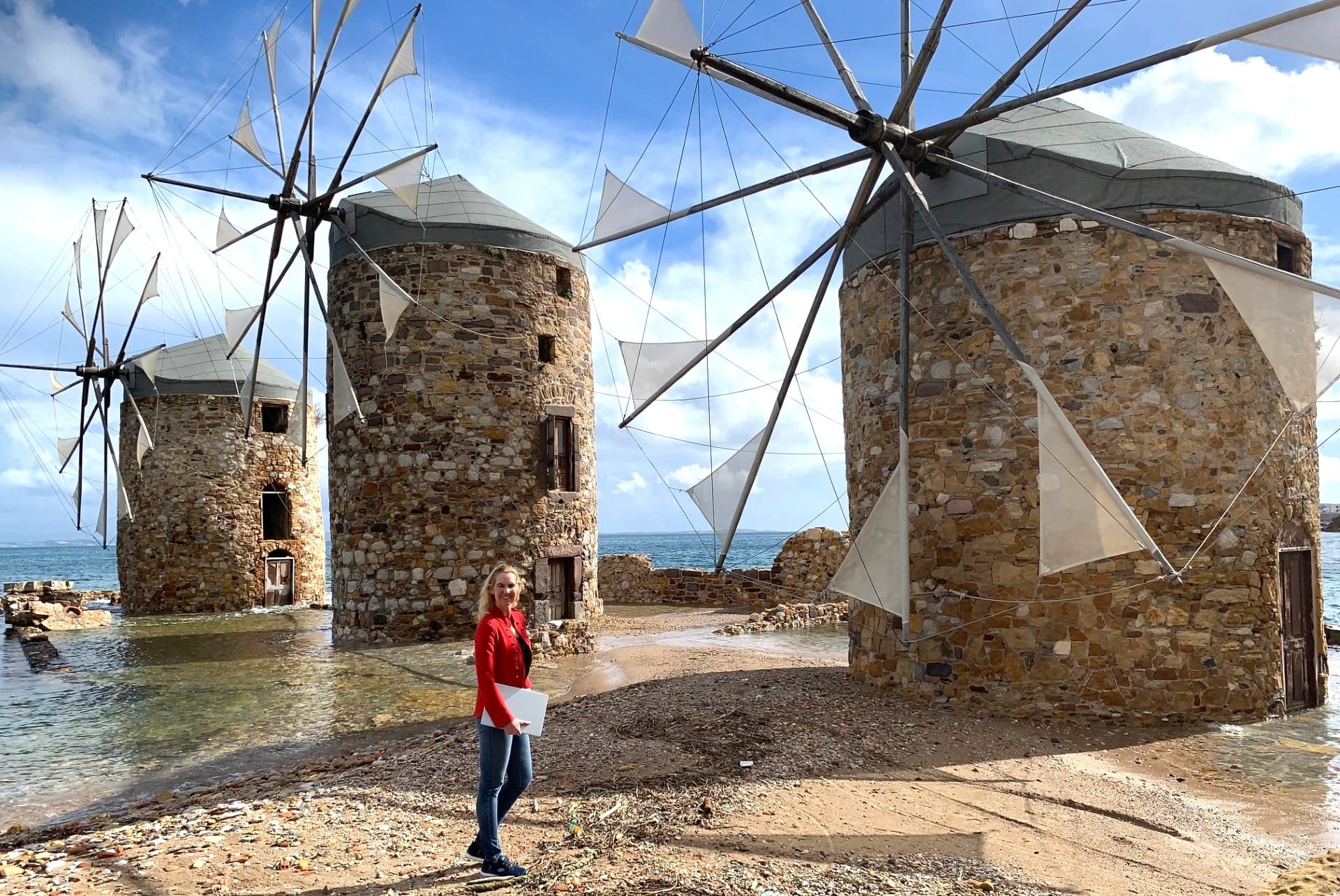
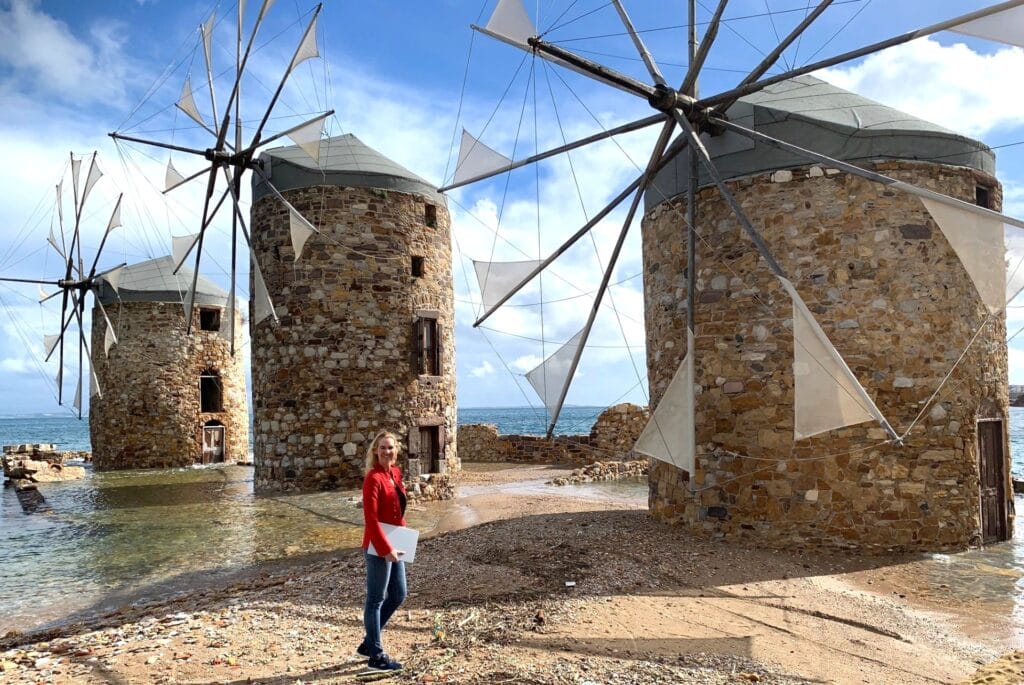
Just outside the city, you’ll find one of the most photographed spots on the island: on a small peninsula stand the four Windmills of Chios.
Mastic tree
Chios is world-famous for the mastic tree (Pistacia lentiscus). This tree is found only in the south of the island and produces a unique resin known as the “tears of Chios.”
When the bark is incised, a clear resin drips down and hardens into small crystals. Mastic has been used for more than 2,500 years:
- as chewing gum (the first natural chewing gum in the world)
- in liqueurs and desserts
- in cosmetics and perfumes
- in medicine (for example, for stomach complaints)
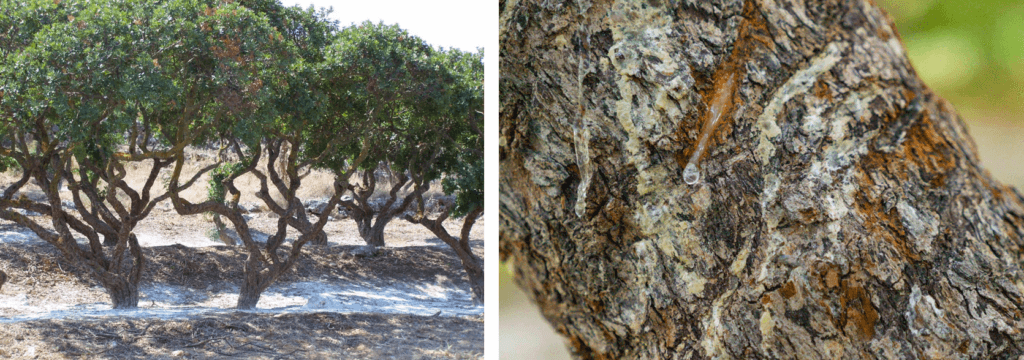
The production is so unique that mastic is recognized by UNESCO as intangible cultural heritage. The villages where mastic is produced are called the Mastichochoria. These villages were historically fortified to protect the valuable resin from pirates.
Xysta
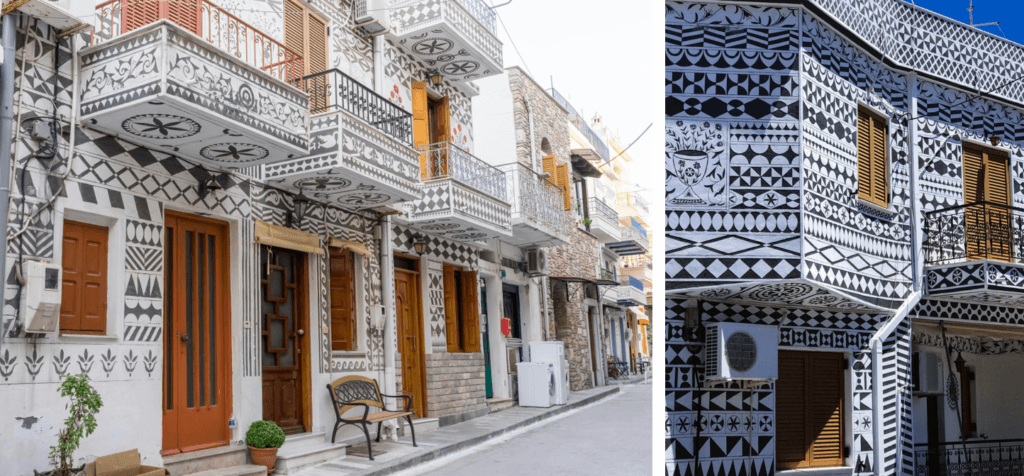
The village of Pyrgi is perhaps the most remarkable village on Chios. The houses are decorated with geometric black-and-white patterns called “xysta.”
This decorative plasterwork is unique in Greece and gives the village an almost graphic appearance. The narrow streets, arches, and small squares show that the village was once built as a defensive fortress against pirates.
Chios feels different from many other Greek islands. It is less touristy, has a strong local culture, and unique traditions such as mastic production and decorative plasterwork on houses.
Samos
On our way from Chios to Samos, we were treated halfway by a group of dolphins swimming alongside the boat. That remains magical—what beautiful animals!
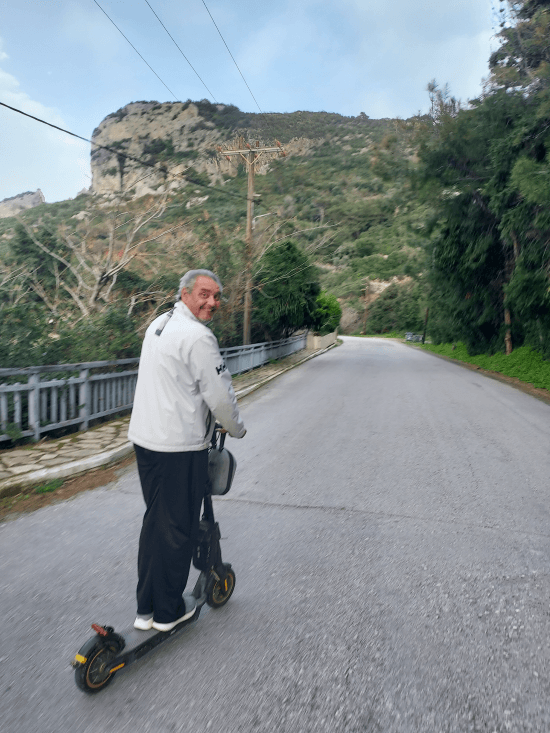
We arrived in the northwest of the island of Samos, in the town of Karlovasi. We had read that Samos is known as one of the greenest islands in Greece, thanks to its relatively high mountains and fertile valleys—and we noticed that immediately. We hopped on our e-bike and e-scooter to explore the surroundings.
Potami Waterfalls
After a 15-minute ride through the mountains, we reached a small waterfall. A nice path led us there.
Agios Nikolaos Chapel
Nearby, there was a small chapel, often used for weddings because of its picturesque location on a cliff overlooking the sunset. We parked our bikes and took a look inside.
We often come across the name “Agios Nikolaos” during our travels through Greece—it means Saint Nicholas, the patron saint of sailors.
At the harbor, we also saw a beautiful blue church high on a hill. It was quite difficult to reach by bike or scooter, but luckily—long live the drone—we could take a look anyway 😉. It turned out to be the Church of the Holy Trinity, beautifully positioned on an elevated location above the port, offering excellent panoramic views.
Samos wine
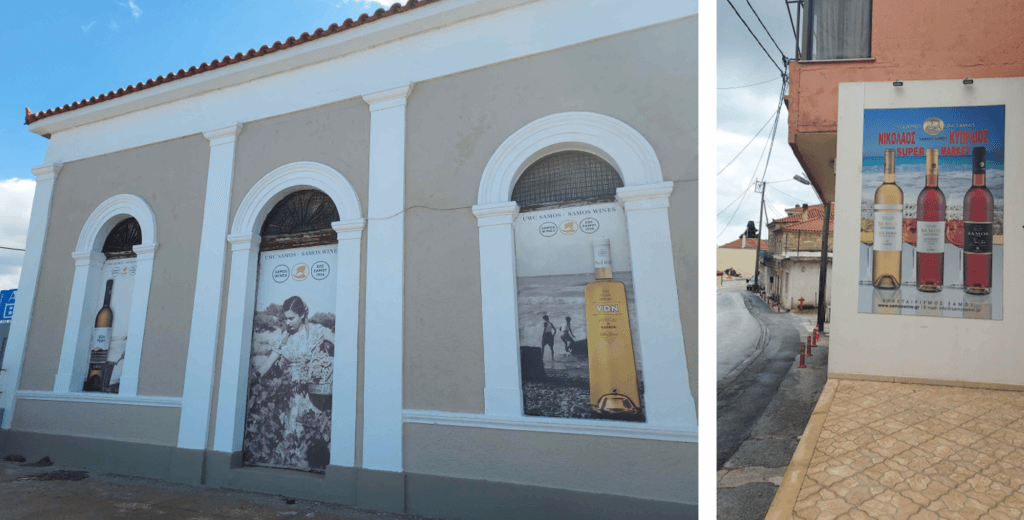
We were also excited to arrive on Samos because, at the start of our sailing trip in western Greece (Corfu), we had discovered a wine we really liked. We didn’t know that Samos is world-famous for its sweet muscat wine.
The wine is made from the Muscat Blanc à Petits Grains grape, which grows on terraces along the mountain slopes. Samos wine is to Greece what Champagne is to France or Port is to Portugal: its signature iconic drink.
Wine has been produced on Samos for more than 2,000 years and was already exported throughout the Mediterranean in ancient times. Many small wineries on the island offer tastings with views over the vineyards and the sea.
Our harbor master recommended a small organic winery, so we headed to the east of the island and rented a car.
Winery “Hatziioannou Estate”
Hatziioannou Estate, located in the area of Mytilinioi in Samos, is a family-run business dedicated exclusively to producing high-quality organic wines. We called ahead and were able to visit at 11:00 a.m.—quite early for a wine tasting 😉. But we were happy to go, especially since the owner was willing to receive us outside the season.
The winery was beautifully located in the green hills on the eastern side of Samos. We received a warm welcome and were invited to sit at a large table overlooking the vats and wine barrels. The inspiring owner shared his story of starting the winery with his wife and sons. They aim to produce organic wines without additives and export many of them, including to the Netherlands via a contact in Maastricht.
The tasting was fantastic, and of course, we bought a few bottles 😉.
Pythagoras
Samos is the birthplace of the famous mathematician Pythagoras (ca. 570–495 BC). He became famous for the Pythagorean theorem, still taught in schools worldwide. In the harbor town of Pythagoreio, there is a large statue of Pythagoras on the quay.
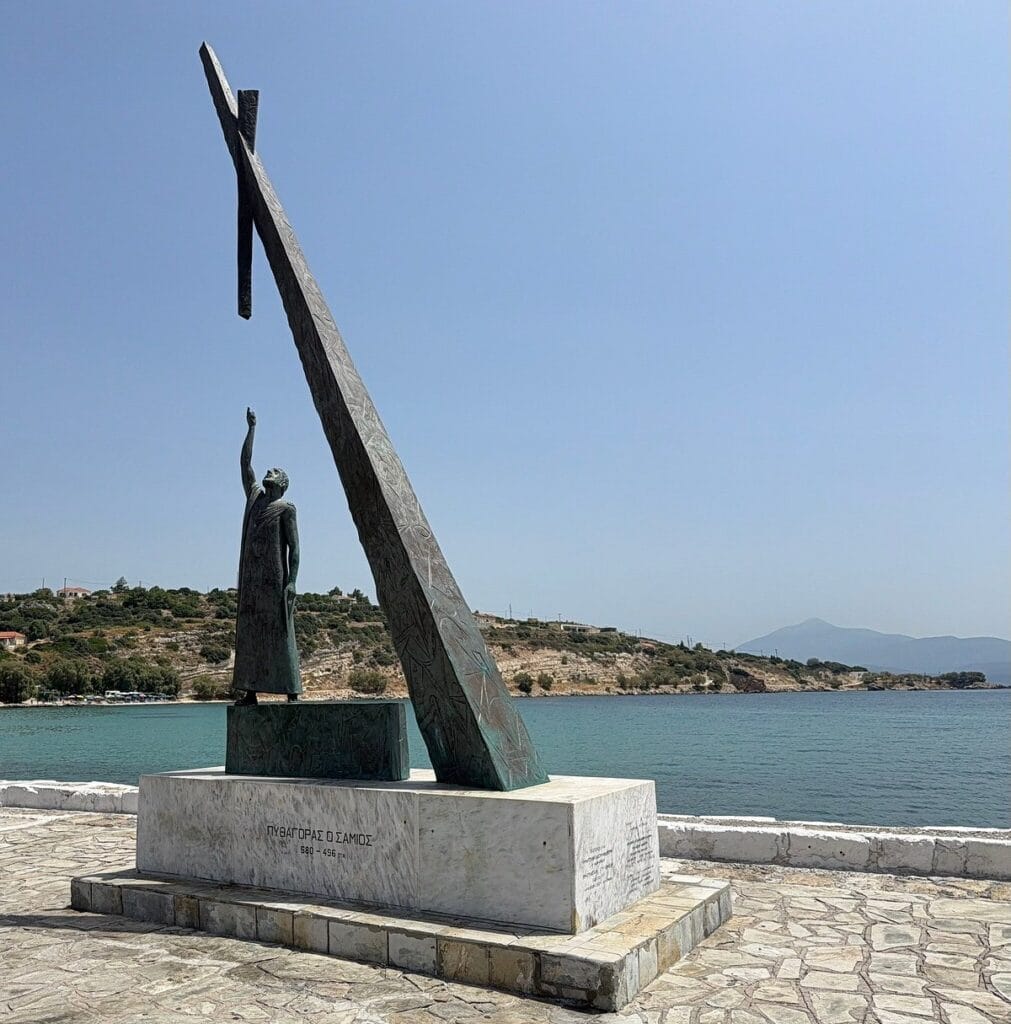
The philosopher and astronomer Aristarchus of Samos also came from Samos. As early as the 3rd century BC, he proposed that the Earth revolves around the Sun—centuries before Copernicus.
Kokkari
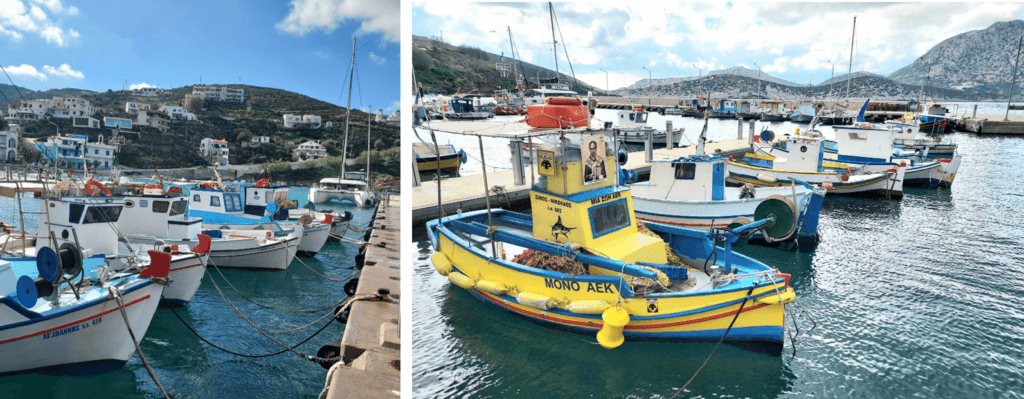
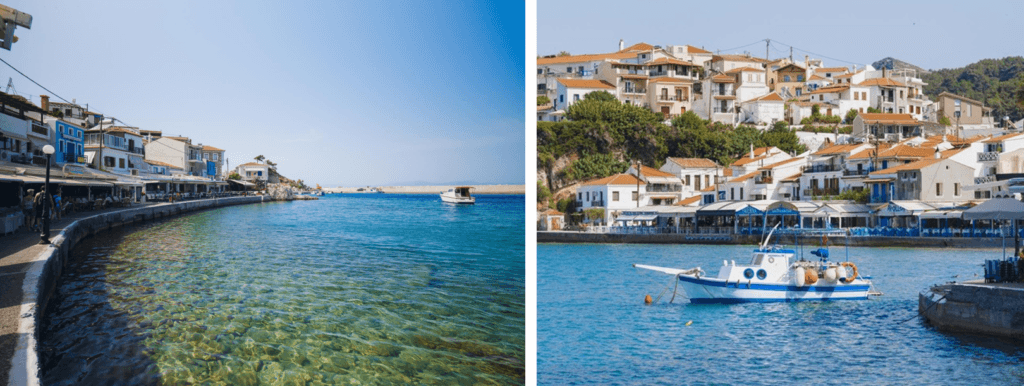
The village of Kokkari is one of the most beautiful villages on the island. It has a lively promenade with tavernas and a small harbor filled with fishing boats.
Vathy
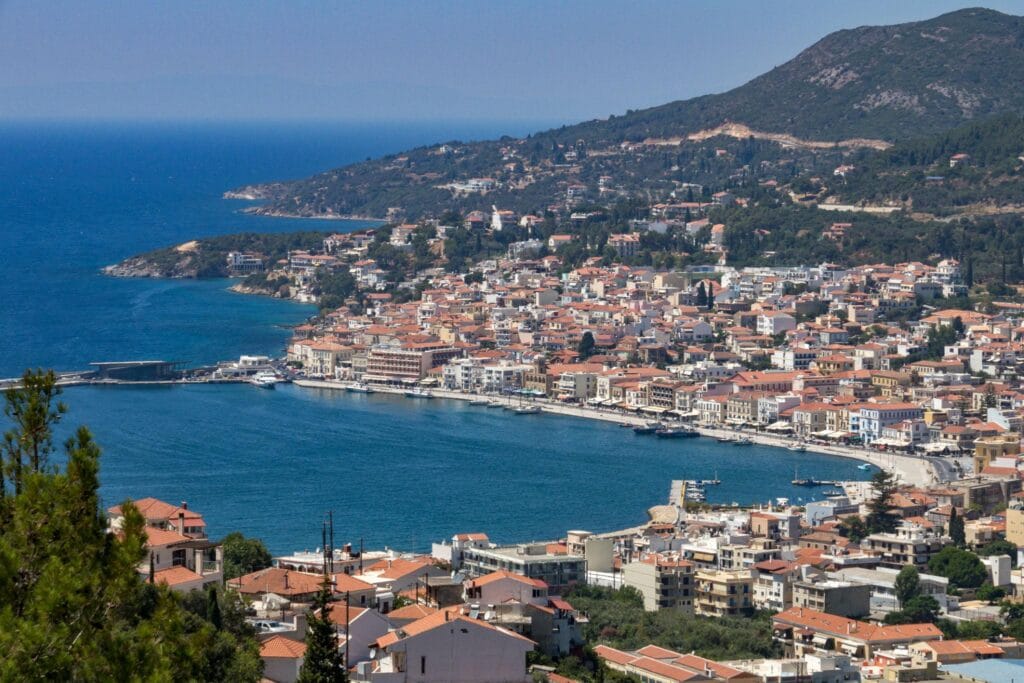
But the most impressive place for us was the capital, Vathy. It is beautifully situated in a crescent-shaped bay.
- The town is built almost like an amphitheater against the hills, with colorful houses rising in terraces
- The harbor is wide and lively, with ferries, fishing boats, and yachts
Refugees
Because the east coast of Samos lies only 1.5 kilometers from the Turkish west coast, many refugees have arrived on Samos in hopes of continuing their journey to the rest of Europe. We saw the tents of refugee camps while driving around. The camp is located about 8 km outside the capital, Vathy, and is a so-called “closed controlled access centre,” meaning a secured and restricted facility.
Island of Fournoi
West of Samos lies an archipelago of 21 small islands, only a few of which are inhabited. Fournoi is one of them, and we wanted to stop there on our way to the Cyclades.
We arrived on Fournoi, a quiet and small island, where we met Joost, a Dutch teacher who has been living in Greece for about 30 years. From Athens to Crete—wherever there are schools for (partly) Dutch children—he has worked. We invited Joost onto our boat—such a nice moment!
Meanwhile, we looked out over the cozy harbor of Fournoi, filled with small fishing boats.