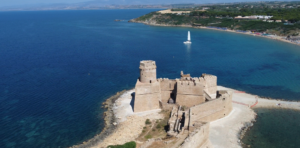
We entered Turkey from Greece — I previously wrote a blog about the procedure of checking in as a yacht in Turkey.
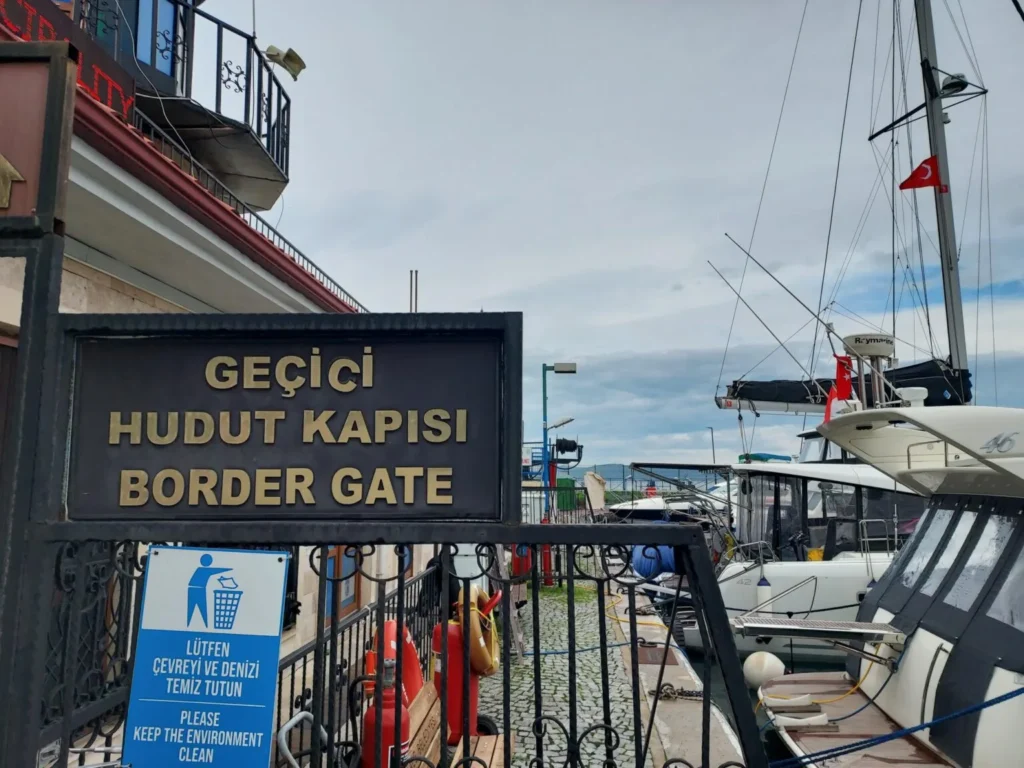
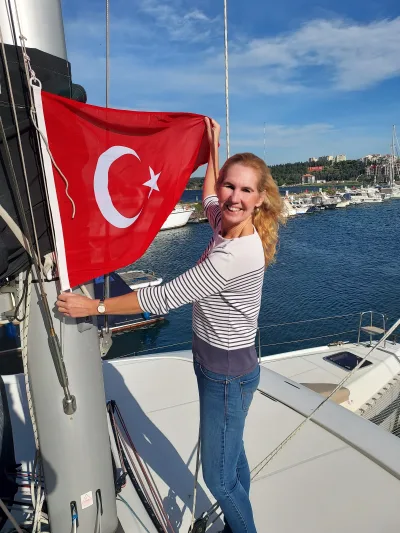
Now I would love to take you along to one of Turkey’s most impressive waterways.
The Dardanelles
The Dardanelles (known in Ancient Greek as the Hellespont) is a narrow and highly impressive strait in north-western Turkey that connects the Aegean Sea with the Sea of Marmara. The passage is approximately 61 km long and between 1.2 and 6 km wide, with an average depth of around 55 meters and depths reaching over 100 meters in the narrowest sections.
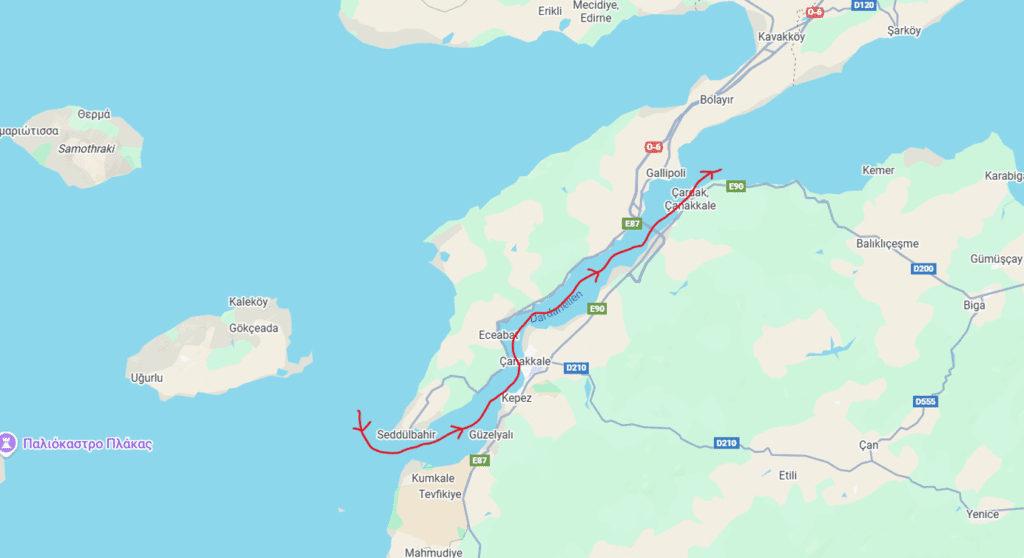
It forms a natural boundary between Europe and Asia, making it one of the most strategic waterways in the world. Ships from the Black Sea pass through here via the Sea of Marmara to reach the Mediterranean and beyond — which explains why the Dardanelles has played such a crucial role in trade and military history for thousands of years.
We had slightly underestimated the Dardanelles. It is the gateway to Istanbul (home to more than 16 million people!) and the Black Sea, so we encountered a lot of cargo ships and ferries at the southern entrance. We had to carefully time our crossing through this very busy shipping lane to reach the eastern side.
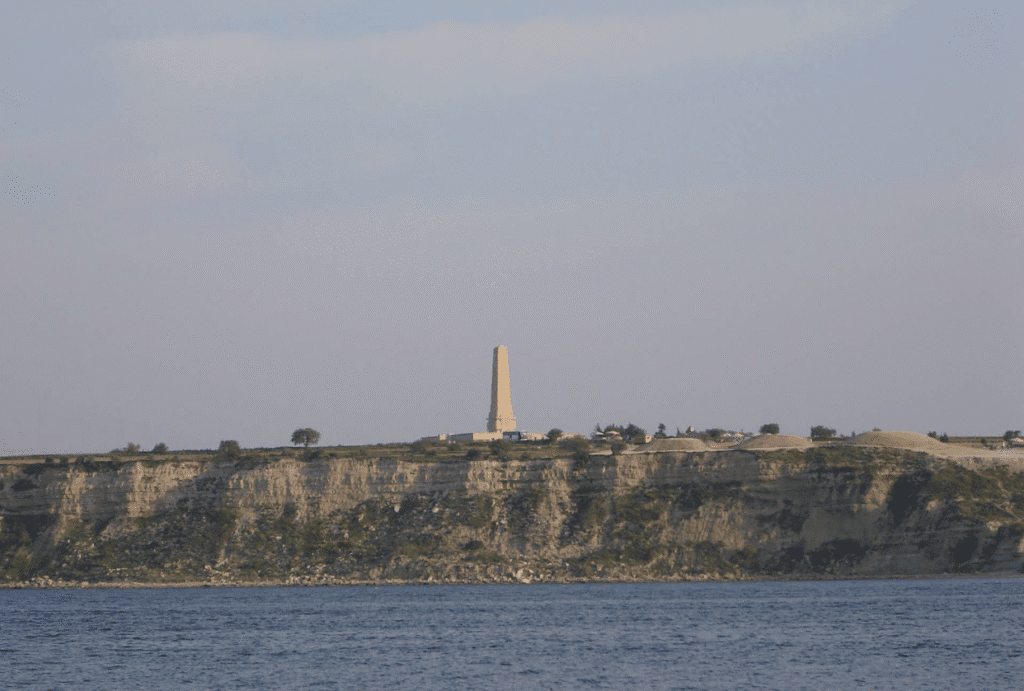
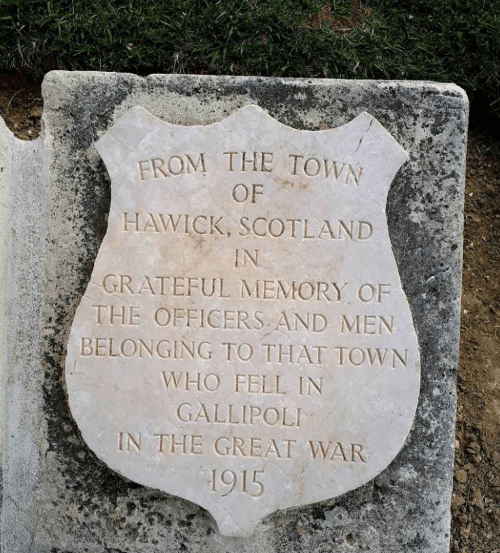
Along the coast we noticed many villages and countless monuments high on the cliffs. In 1915, one of the most infamous campaigns of the First World War took place here. Allied British, French, Australian and New Zealand troops attempted to seize the Dardanelles in order to open a route to Constantinople (Istanbul). The fighting was extremely fierce and resulted in enormous losses. On the sailors’ app Navily we even read warnings about numerous shipwrecks lying on the seabed.
Rainbow and Dolphins
We were amazed by the activity along the coastline — ferries, trains, towns and monuments everywhere. You almost forget to look at the water… until suddenly large dolphins began leaping in front of our bow and diving through the bubbles created by the front of our catamaran hulls.
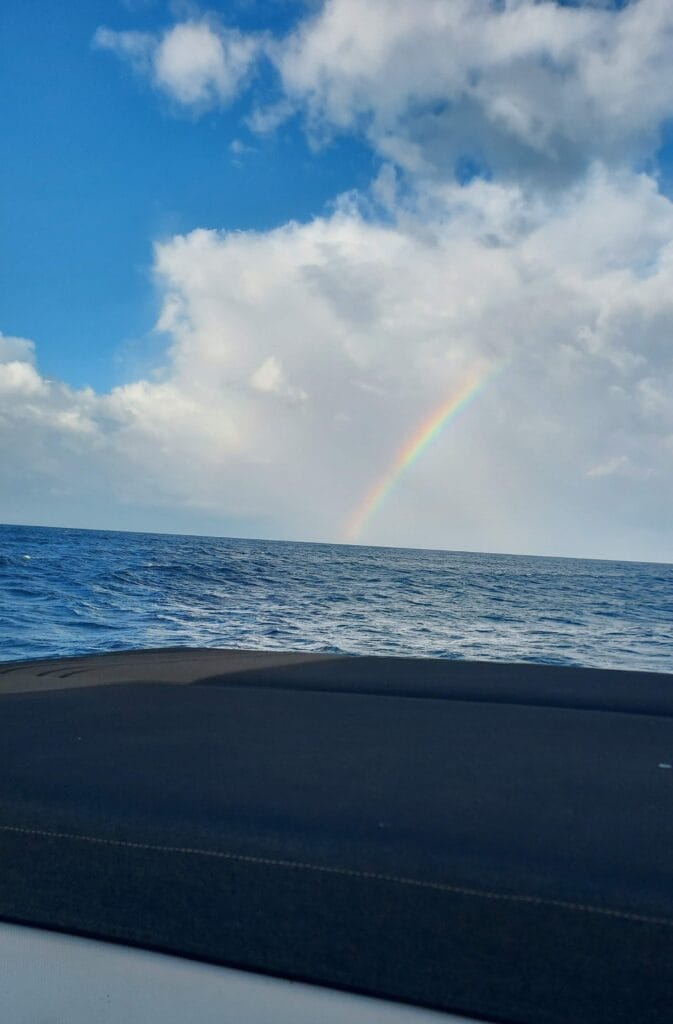
And then, as if that wasn’t enough, a beautiful rainbow appeared in the sky 😉.
Çanakkale
This was our first Port of Entry coming from Greece. After three days we were finally allowed to go ashore in Çanakkale. We cycled through the city and immediately noticed the many tea gardens and coffee houses. People love drinking çay here — a moment to relax, talk and connect.
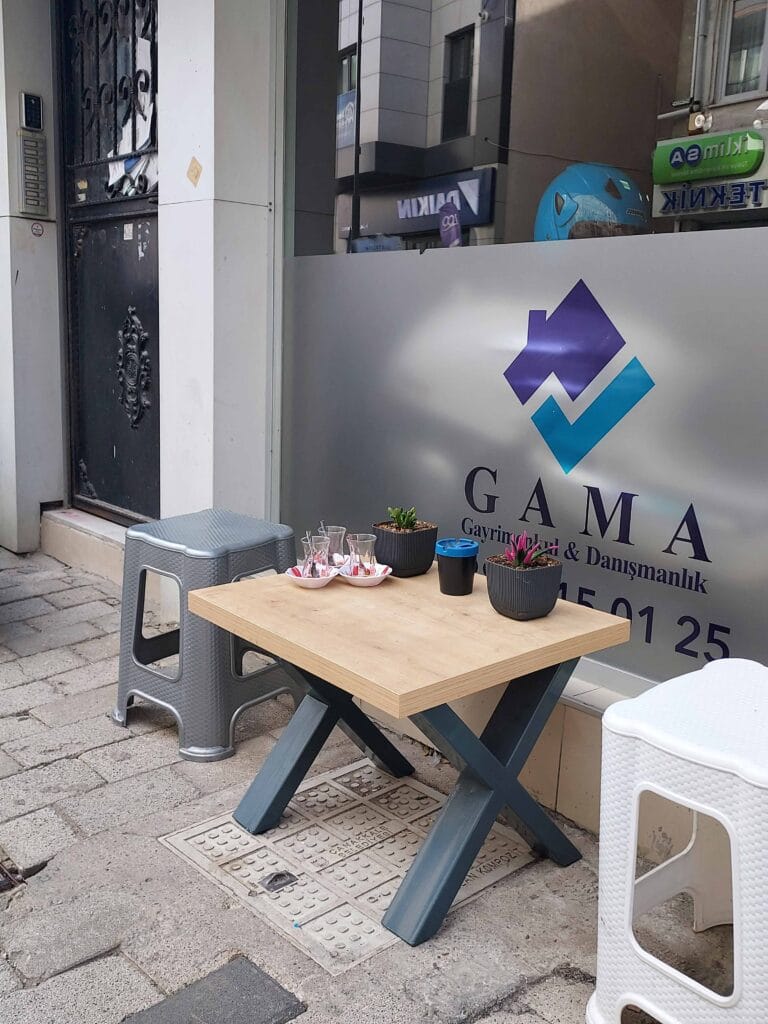
We were also struck by how modern the city is, how inexpensive everything was, how few women wear headscarves, and how little English is spoken. Later we learned that this region is more oriented towards Russian tourism, especially in northern Turkey. In the south (Bodrum, Antalya) you see far more European visitors. Although many Turks live in countries like the Netherlands and Germany, English is surprisingly rarely spoken here.
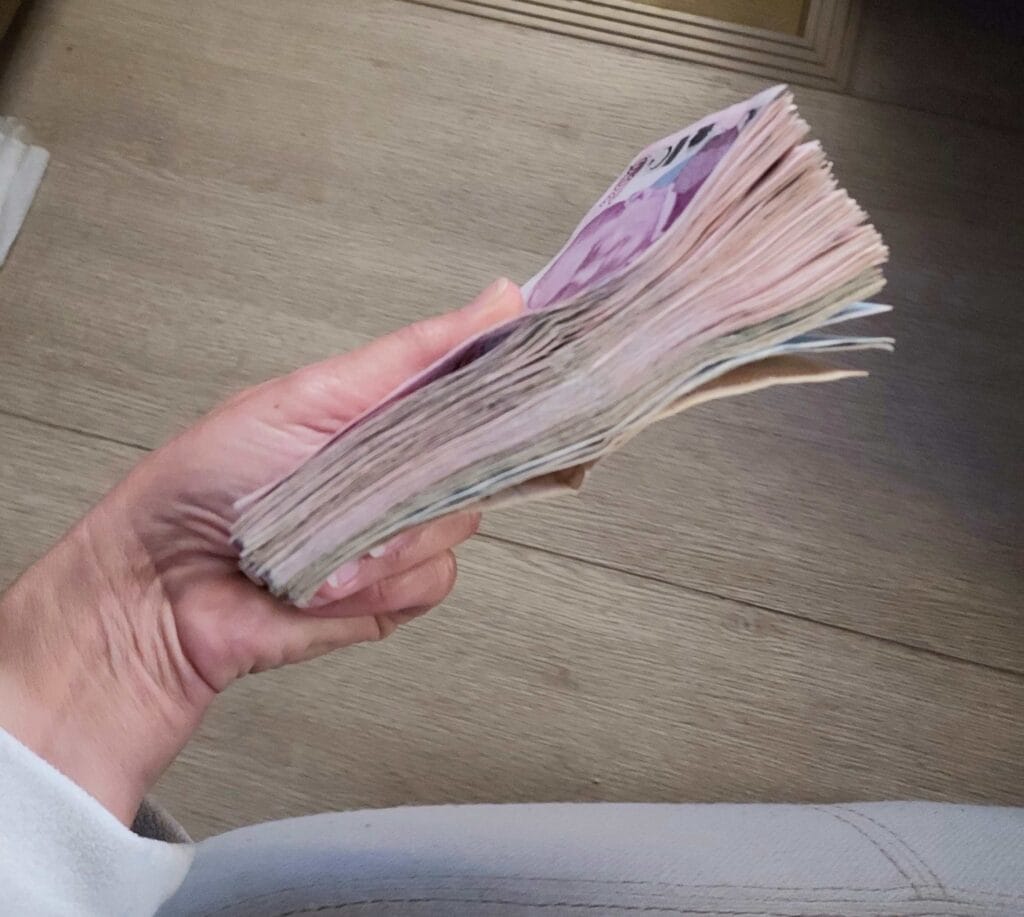
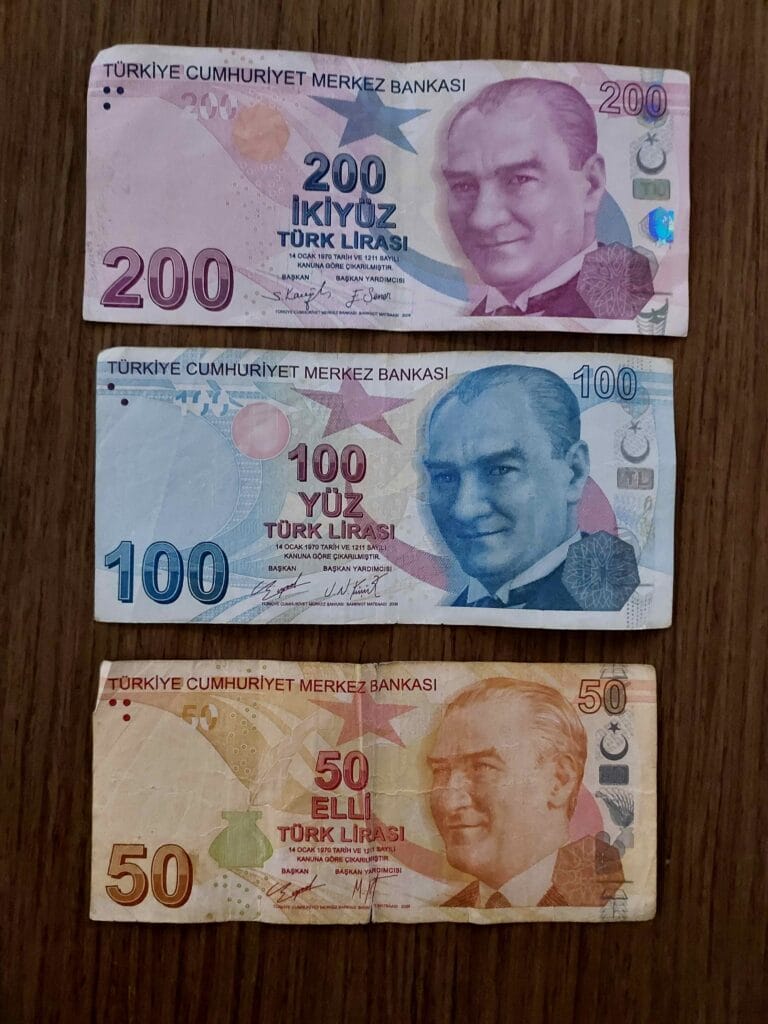
The local currency is the Turkish Lira. Due to inflation, prices involve large numbers — 1,000 lira is roughly €20. I withdrew €400 and received a thick stack of 200 and 100-lira banknotes.
The Trojan Horse
What I never knew before is that the ancient city of Troy is located in present-day Turkey — formerly part of the ancient Greek world. Just south of Çanakkale, near the Dardanelles, lies this legendary city.
We mainly know Troy from the legend of the Trojan Horse, described in Homer’s Iliad. It tells the story of how the Greeks managed to enter the city by hiding inside a gigantic wooden horse, which the unsuspecting Trojans brought within their city walls. The horse has since become a symbol for something seemingly desirable that secretly contains danger — causing people to unknowingly bring about their own downfall.
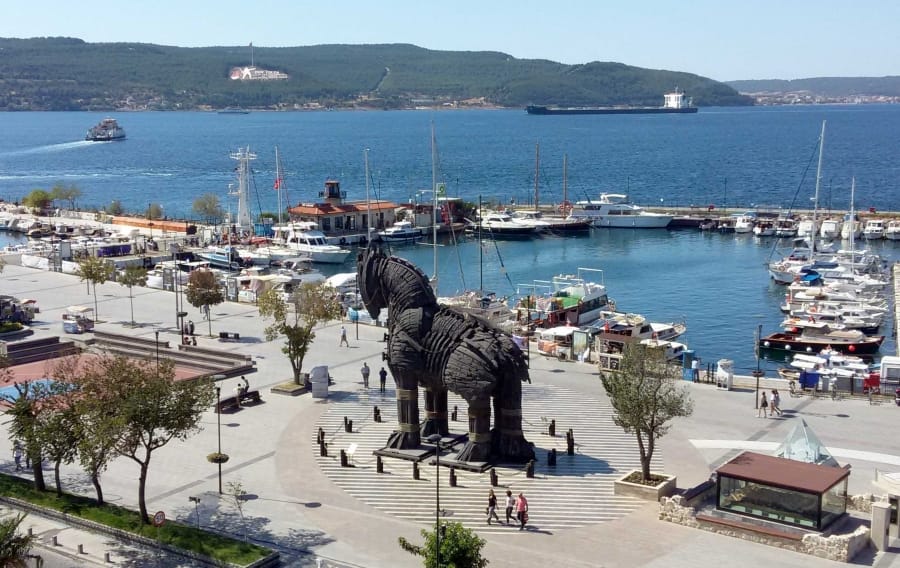
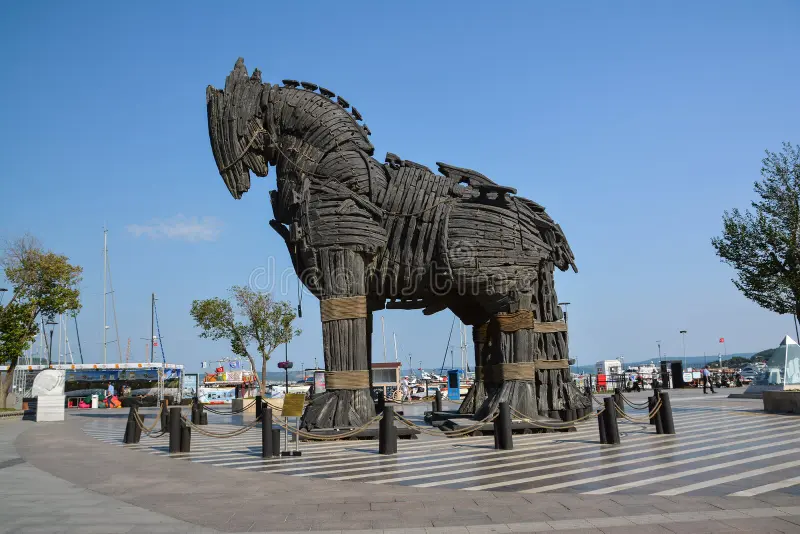
For the 2004 movie “Troy”, in which Brad Pitt played the demigod Achilles, a large Trojan Horse was built. After filming, the director donated it to the city of Çanakkale at the request of the Turkish Ministry of Culture and Tourism.
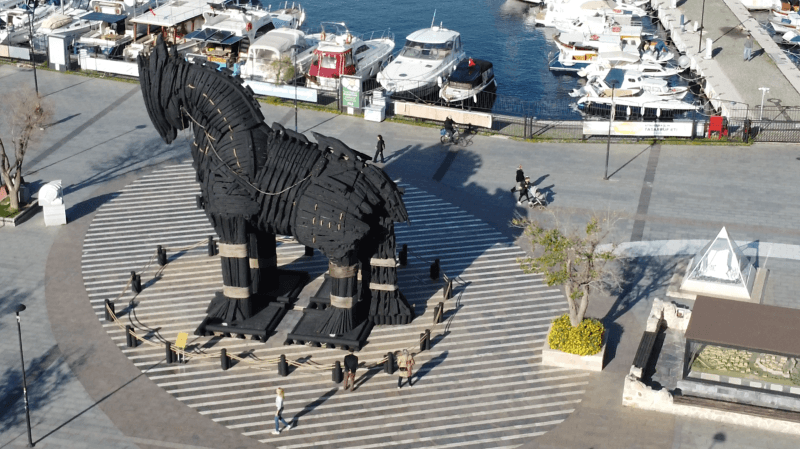
The statue weighs approximately 12 tons, has a steel frame covered with fiberglass, is 12.4 meters high, 6 meters wide, and about 10 meters long. It stands right next to the harbor — and when we arrived in Çanakkale, we saw this enormous horse towering above the waterfront.
We even took a drone photo — you can see me walking at the bottom of the image to show just how massive it really is.
Atatürk
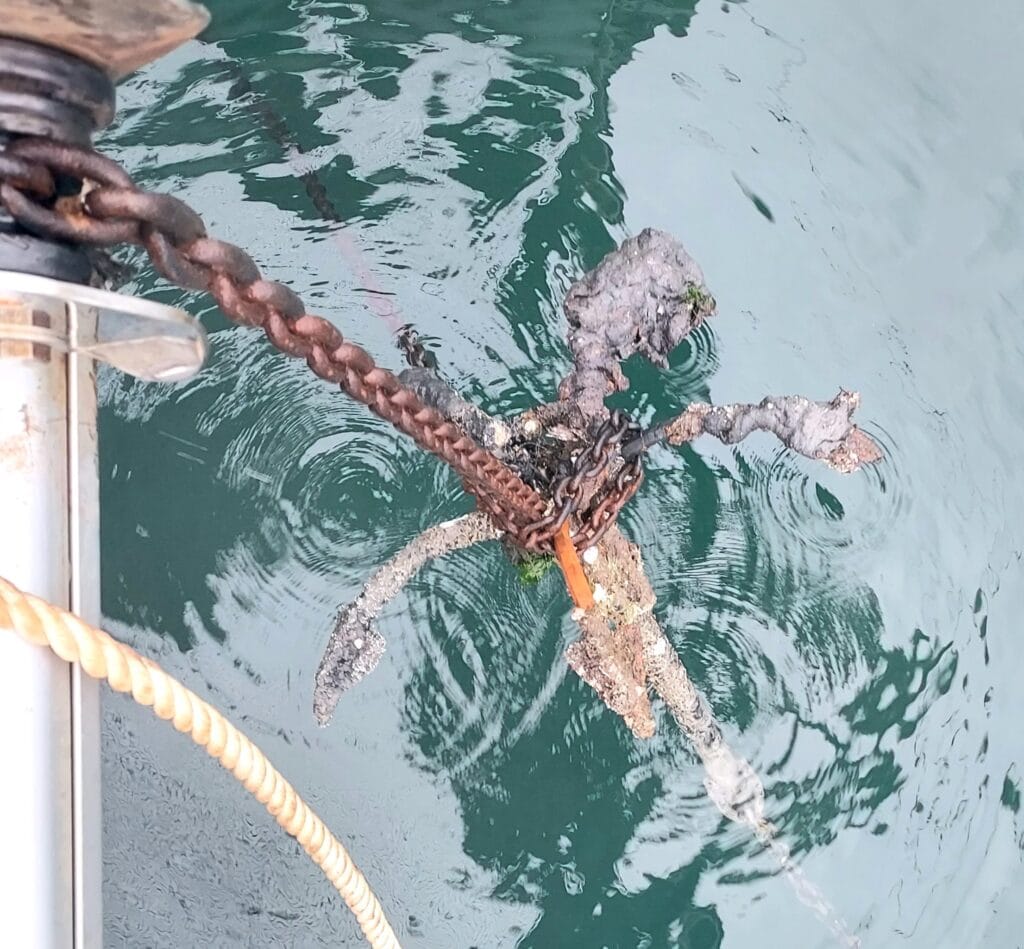
After Çanakkale we continued north through the Dardanelles. When we anchored, we even fished up an old anchor.
As we visited more towns along the coast, we were struck by how modern everything feels — and by the deep respect for Mustafa Kemal Atatürk (1881–1938).
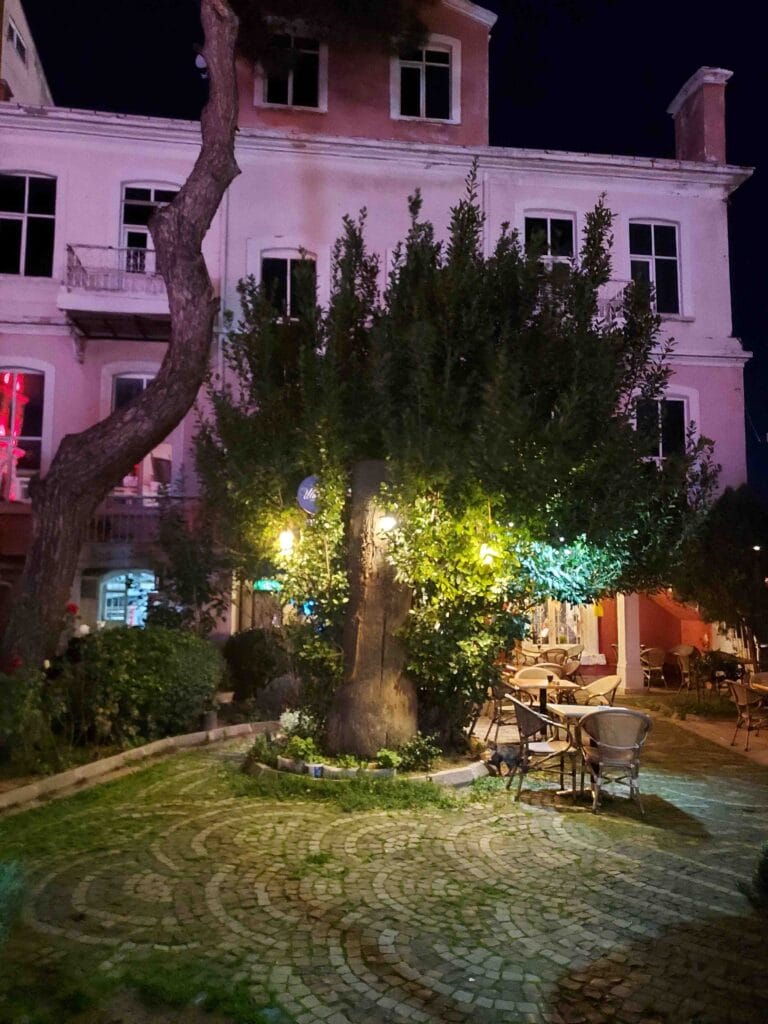
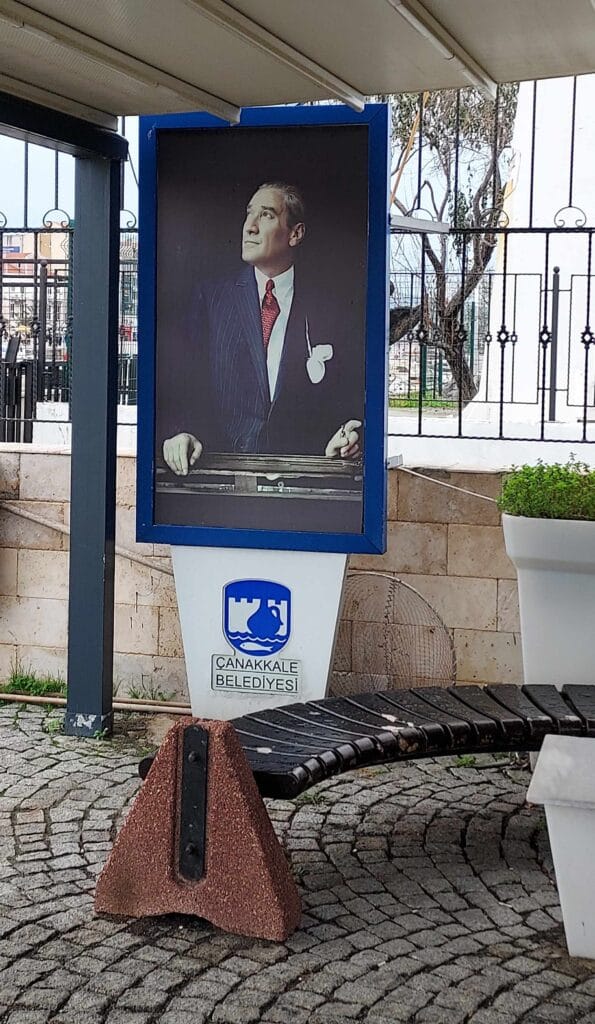
Atatürk’s image is everywhere. And even though English is limited, whenever I asked about him, people placed their hand on their heart, looked serious, and simply said: “Good man.”
Atatürk was a Turkish military leader who played a key role during the First World War and later in dissolving the Ottoman Empire. On 29 October 1923, he officially proclaimed the Republic of Turkey and became its first president. In 1934 he was given the surname Atatürk, meaning “Father of the Turks.”
He introduced radical reforms that transformed Turkey into a modern, secular state, including:
- Abolishing the sultanate and the caliphate, separating religion from the state
- Introducing a Latin-based Turkish alphabet
- Free and compulsory education
- Equal rights for women, including voting rights and access to education
- Modernisation of legislation, justice and the economy
The 1915 Bridge
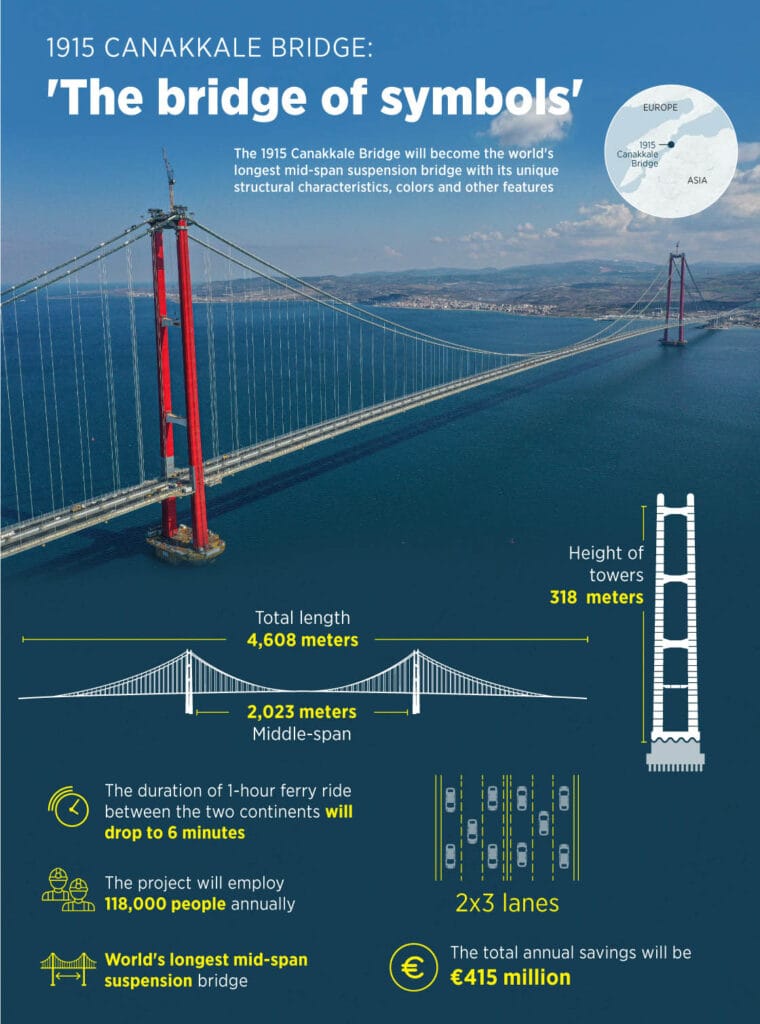
Near the northern part of the strait stands the Çanakkale 1915 Bridge, opened in 2022. With a main span of 2,023 meters, it is currently the longest suspension bridge in the world.
The name “1915” again refers to the Gallipoli Campaign of the First World War.
Our first maritime encounter with Turkey via the Dardanelles has been unforgettable — rich in history and culture.
I also gave several onboard training sessions here, which turned out to be more challenging than expected. Our normally fantastic Starlink connection does not work in Turkey, as coverage is not allowed. We had to switch back to SIM cards (Vodafone, Holafly). They work reasonably well — but once you are used to lightning-fast and stable Starlink, you suddenly find yourself searching for the perfect spot near a cell tower to get decent internet again 😉