The moment has arrived! After a wonderful time on the island of Samos, we sailed west towards the famous Cyclades islands. We had previously visited the western Cyclades, such as Milos, Serifos, Kythnos, but this time we headed to the more well-known islands on the eastern side. First stop: Mykonos!
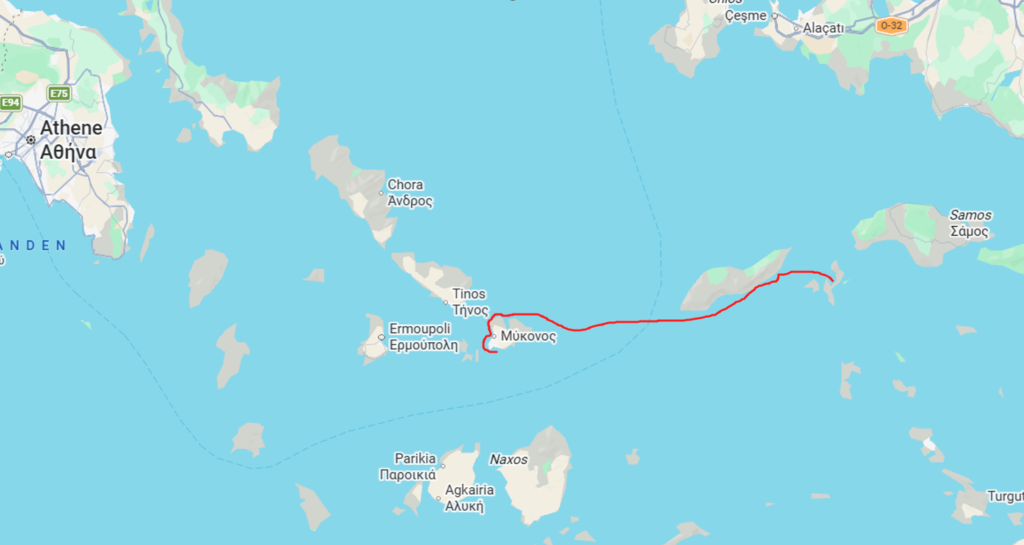
I had always been curious about Mykonos, because—just like Santorini—it is known as an island of the jet set. However, Mykonos was one of the first Greek islands to develop tourism, and over the past decades it has become a hotspot for celebrities from all over the world.
The island covers 85 km² and has around ten thousand permanent residents. Mykonos is also known as the “Island of the Winds,” as it can get quite windy here—something we had already experienced on the western Cyclades.
Who lived on Mykonos?
In ancient times, the Phoenicians (from what is now Lebanon and Syria) lived here, followed by the Minoans from Crete. Around 1000 BC, the Ionians from Athens settled here and founded “Mykonos.”
Later, Mykonos fell under Roman rule, followed by the Byzantines in the 7th century, who remained until the 12th century. After that came the Venetians. During this period, the island was frequently attacked and looted by pirates. In the 16th century, the Ottomans occupied the island until it was liberated in 1830 and became part of Greece.
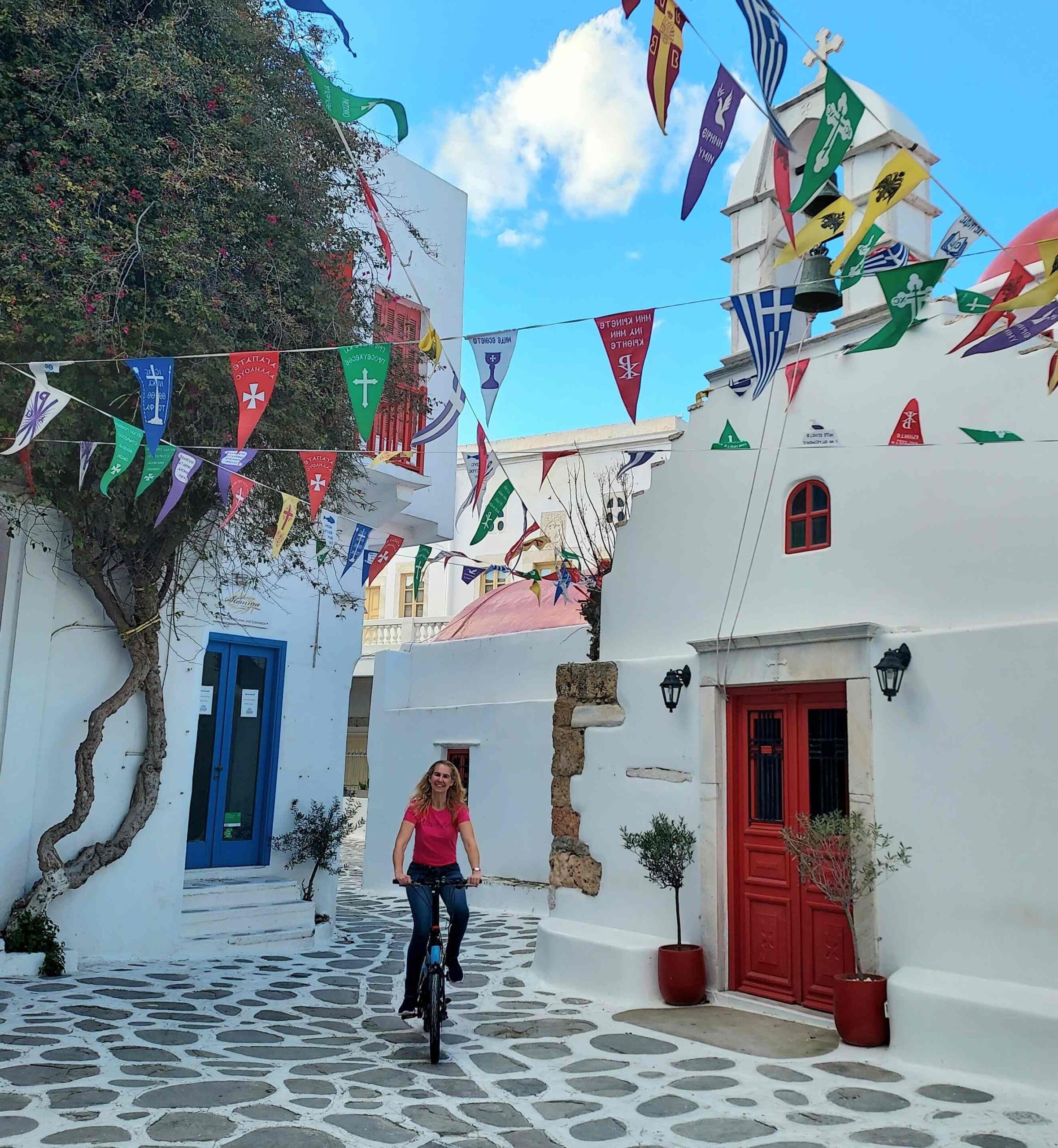
When we arrived at the harbor, we immediately saw the iconic whitewashed houses with red or blue windows and doors that the Cyclades are famous for.
We cycled to Mykonos Town, where we explored three highlights:
Little Venice
What makes the Alefkandra district so special is that the foundations of the houses are built directly into the sea.
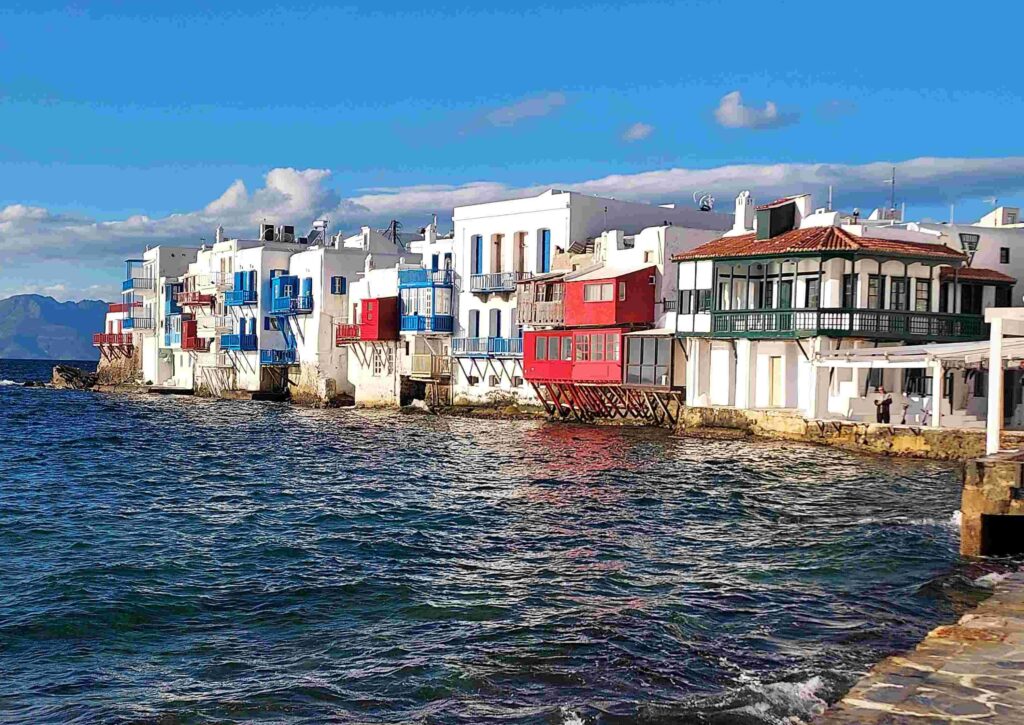
It’s stunning to see the balconies hanging above the water.
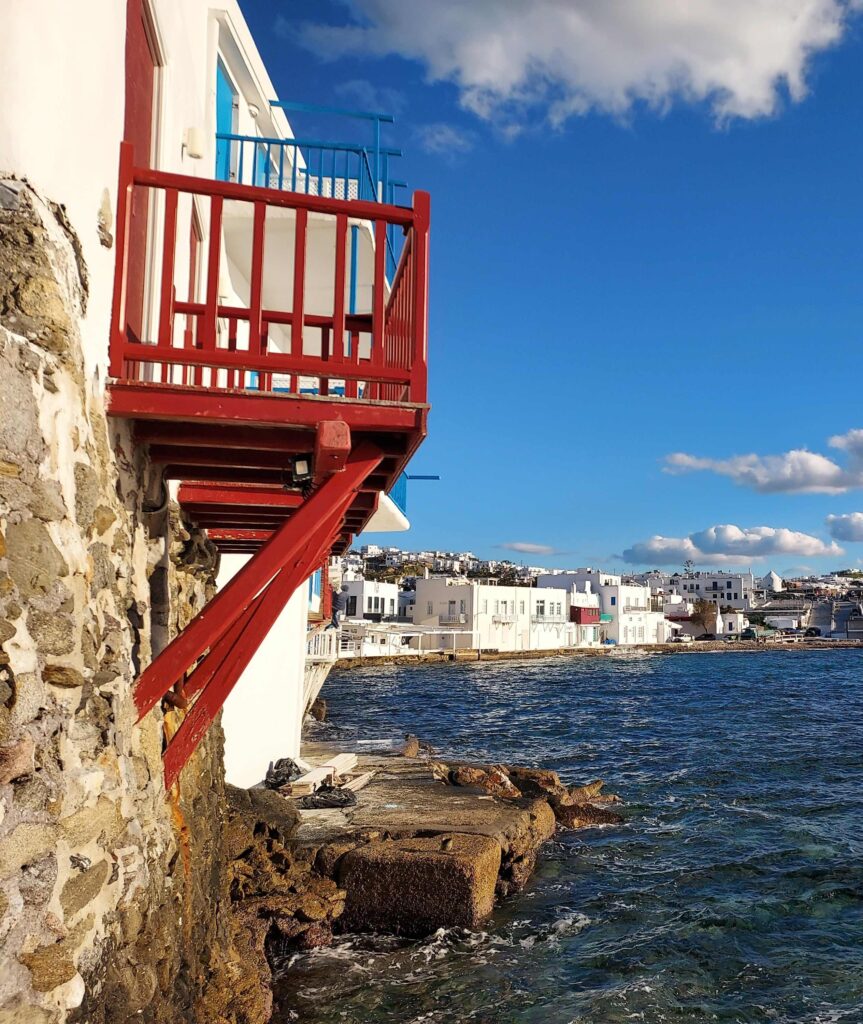
In the past, sailors built their homes right along the picturesque coastline. The architecture is characterized by colorful wooden doors, windows, balconies, and staircases—reminiscent of Venice, which is how the area got its name.
Cycling through the narrow streets
It truly feels like cycling through a Greek travel brochure when you ride through Mykonos.
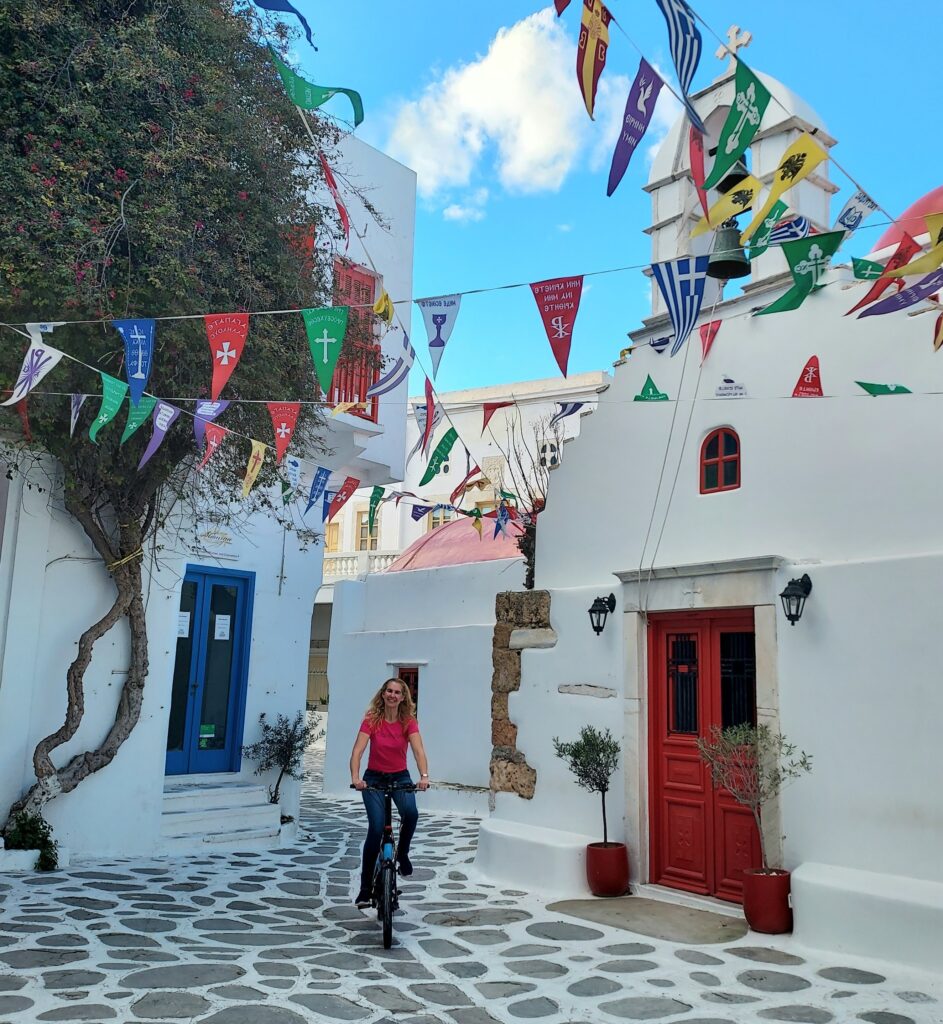
The narrow alleys and staircases between the two-story houses are beautiful to see. The residents clearly love their town, which shows in the flowers hanging on walls and the many flower pots throughout the streets.
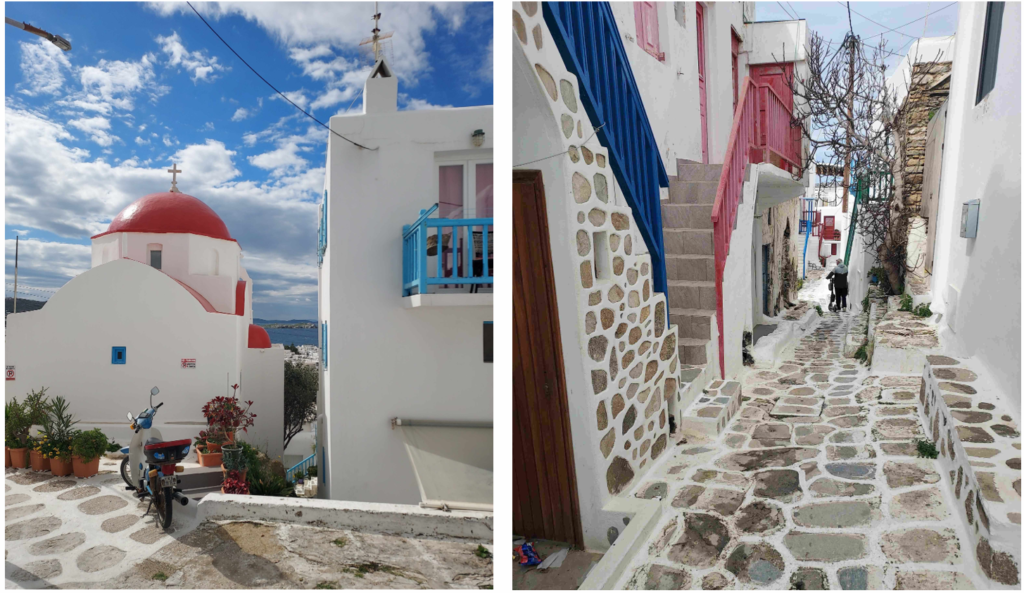
It is often said that the streets and whitewashed layout were intentionally designed like a labyrinth to confuse pirates.
The 5 windmills of Mykonos
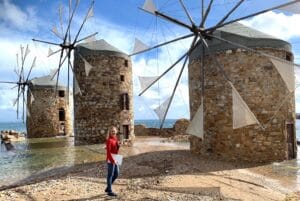
The most iconic image of Mykonos is the five windmills standing on a small hill by the sea, visible from afar. This scene also appears in films, such as the final scene of the blockbuster The Bourne Identity.
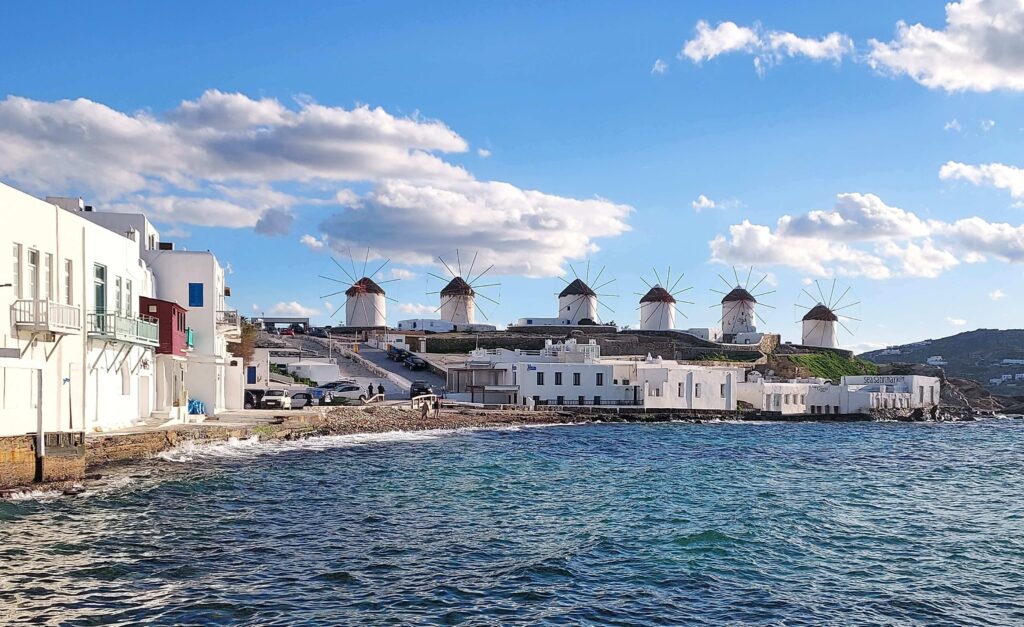
Most of the windmills face north and were built by the Venetians in the 16th century. We explored them up close, and one of the windmills has been turned into a small museum and shop.
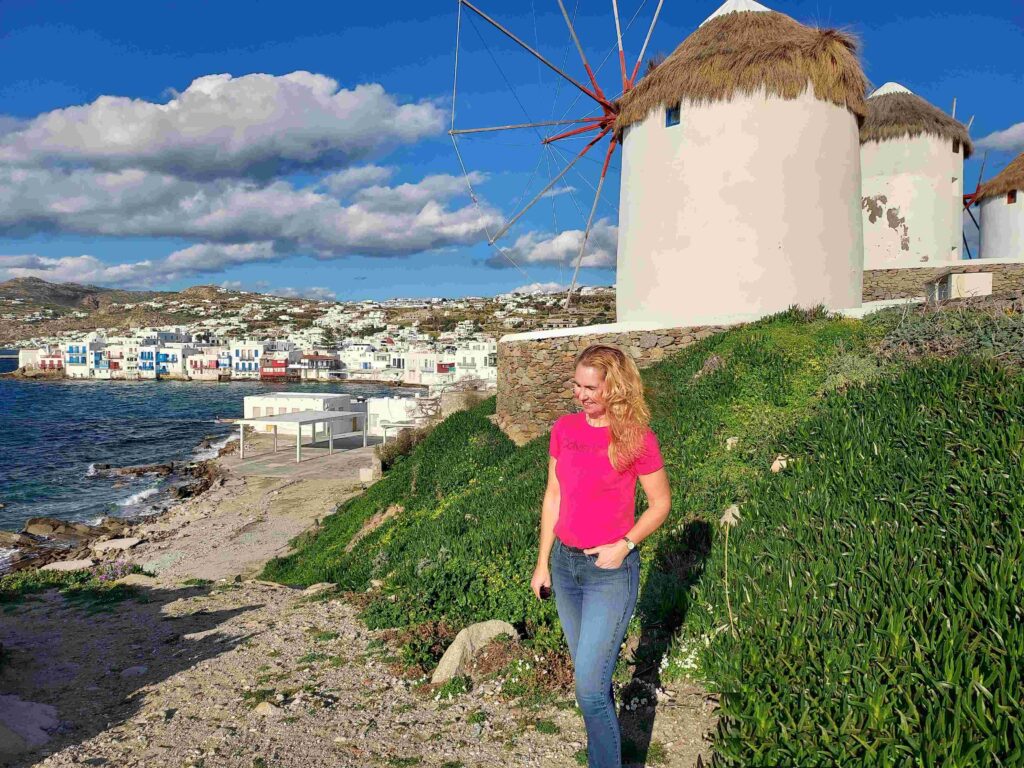
At sunset, the windmills look especially beautiful. In the video, you can also see how close they are to Little Venice, which lies just across from them.
The Paraportiani Church
Like many Greek towns, Mykonos has numerous churches, but this one is truly unique. Dating back to the 15th century, it actually consists of five small churches combined into one structure. Its asymmetrical shape is quite rare in Greece.
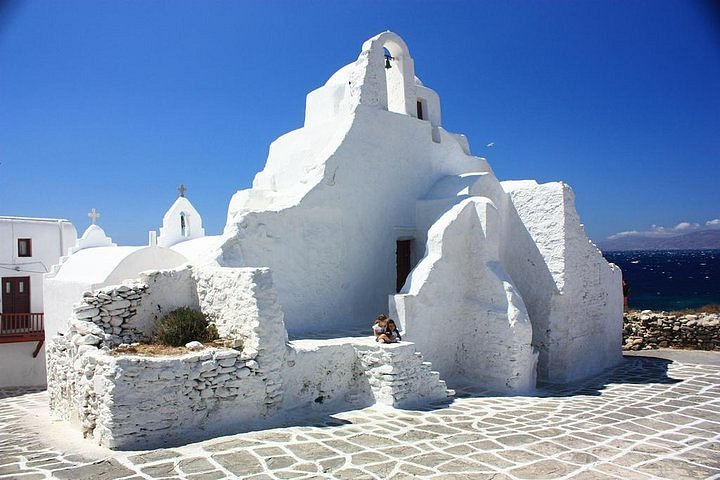
The name “Paraportiani” means “standing next to the entrance door,” referring to its location beside the gate of the castle. It is one of the most photographed churches on Mykonos—and even in all of Greece.
We found Mykonos incredibly atmospheric and beautiful from every angle.
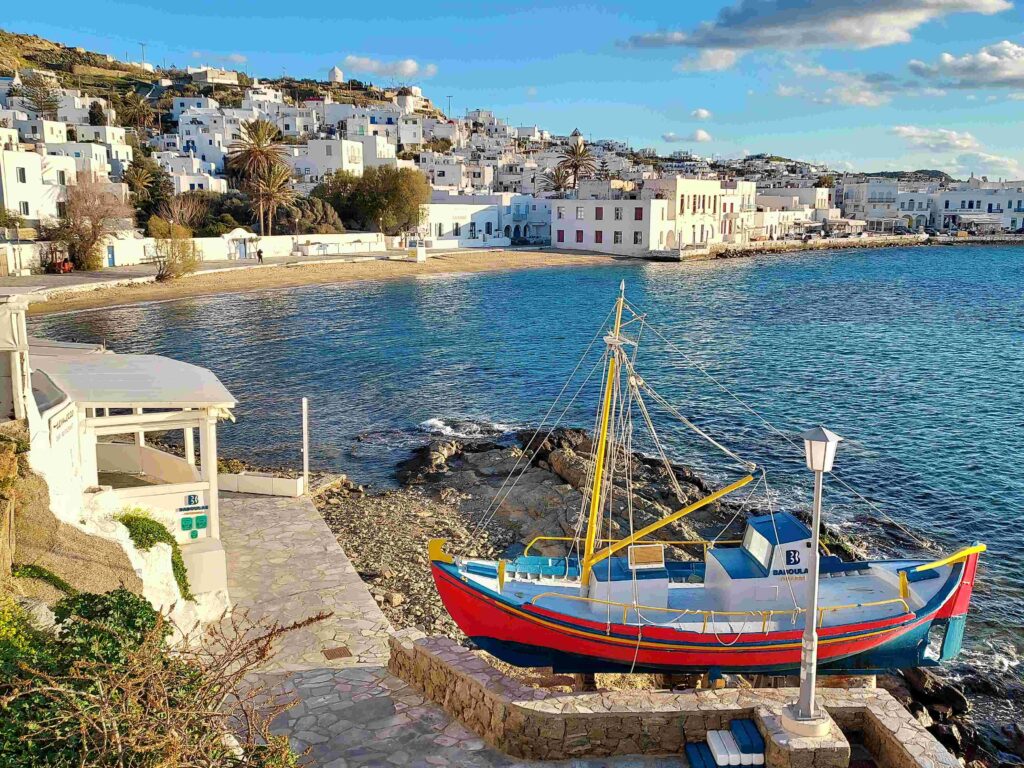
And of course, a little humor about Greek culture now and then is always welcome 😉
Finally, Mykonos from above during the Golden Hour!
We flew our drone over the five windmills and Little Venice—enjoy the view!