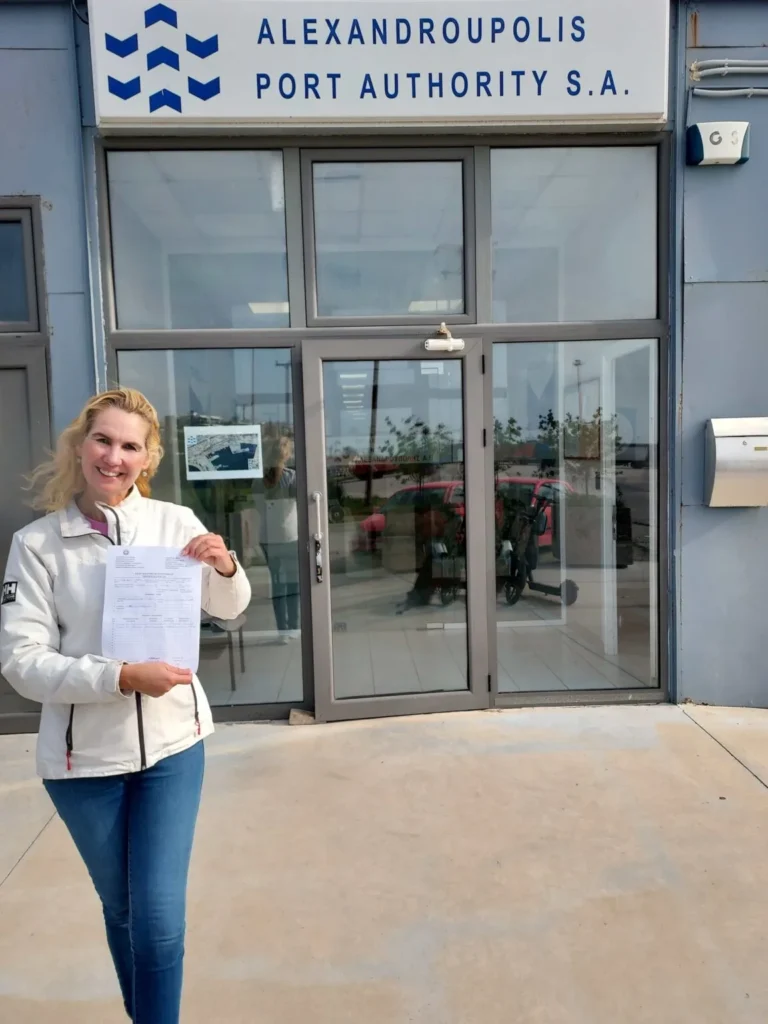
In our most recent blog, I wrote about how, in Alexandroupli – a town in the far northeast of Greece – we officially checked out of Europe. This meant visiting six different authorities over the course of two days: port police, customs, coast guard, harbor master, regular police, and the port authority.
Stamps everywhere, forms to fill out—but in the end, it all worked out. The most important document was actually processed very quickly.
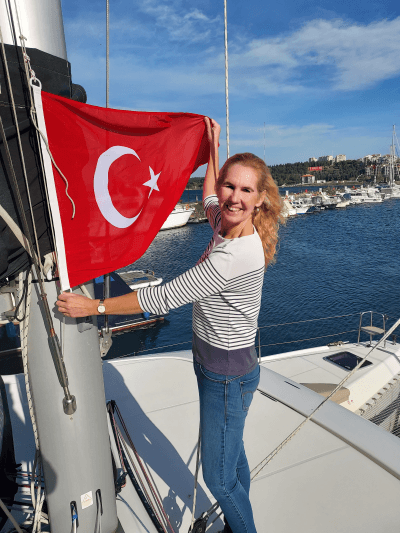
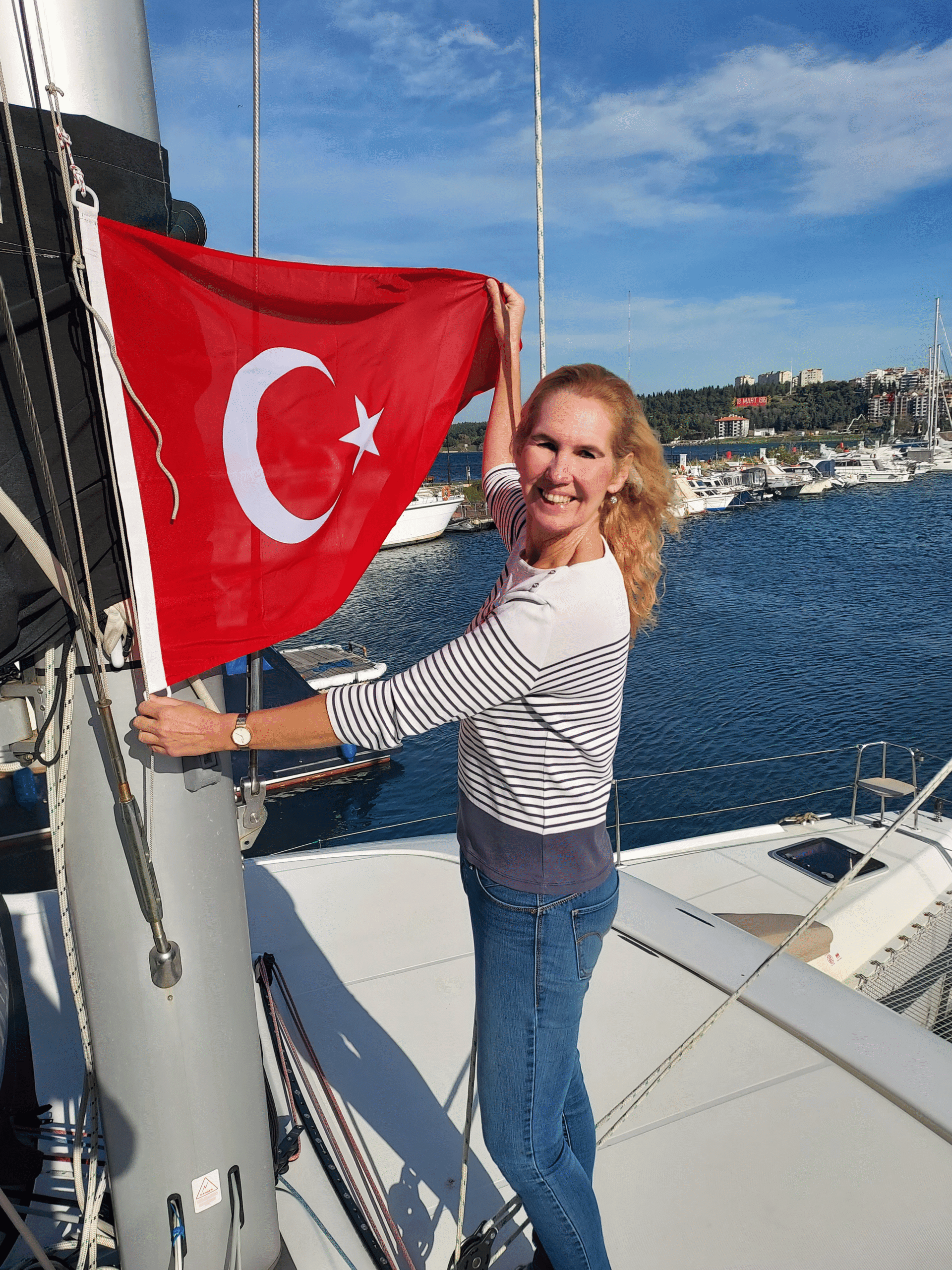
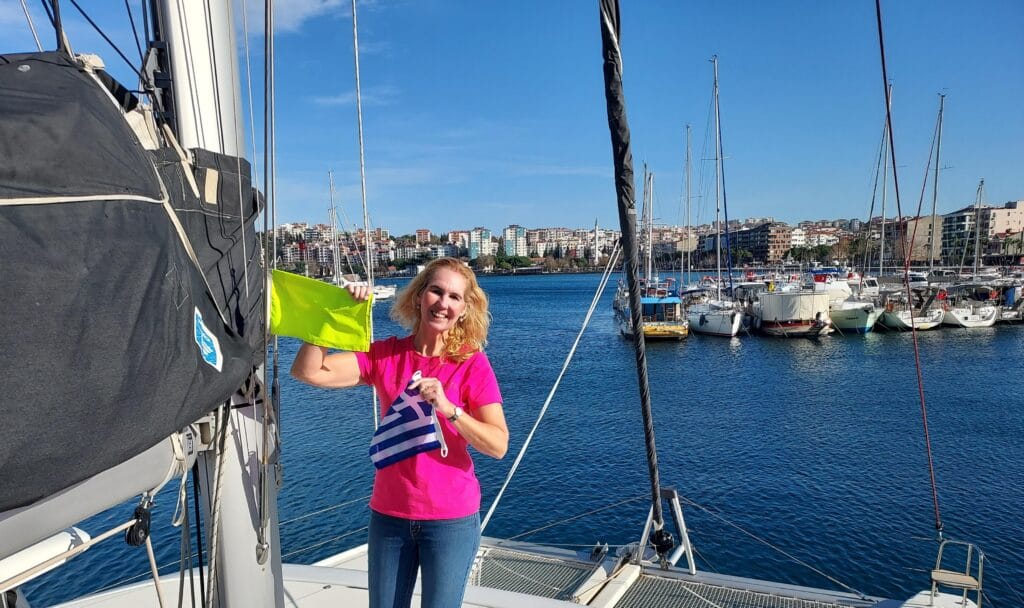
And then we departed from the port of Alexandroupoli: we lowered the Greek courtesy flag and hoisted the yellow Q-flag. This flag is mandatory to show the authorities that you have checked out of country one and are en route to country two. When you are flying the yellow flag, you are not allowed to go ashore, because you are considered “in between countries.” So until you are officially checked into the new country, you remain on your boat.
We had done this only a few times before: from Croatia (European, using the euro) to Montenegro, and from Montenegro to Albania. None of these are EU countries, and each has its own port of entry where you must berth at the customs quay.
But this was in summer. Now, in winter, strong winds were blowing and we looked up the nearest official ports of entry in northern Turkey. The first port of entry, Çanakkale, was still 82 nautical miles away. At an average speed of 5 miles per hour, that meant about 16 hours of sailing.
We wanted to sail in daylight, and with the short winter days this would take two days. That meant anchoring or entering a “shelter” harbor for two nights. Officially, this is not allowed: you are supposed to continue directly to the port of entry without stopping or going ashore, unless there is an emergency. We felt it was unsafe to take risks, so we decided to anchor or use small harbors in Turkey for two days, trusting that with our explanation the authorities would allow us to stay on board with our yellow flag flying.
A van full of men
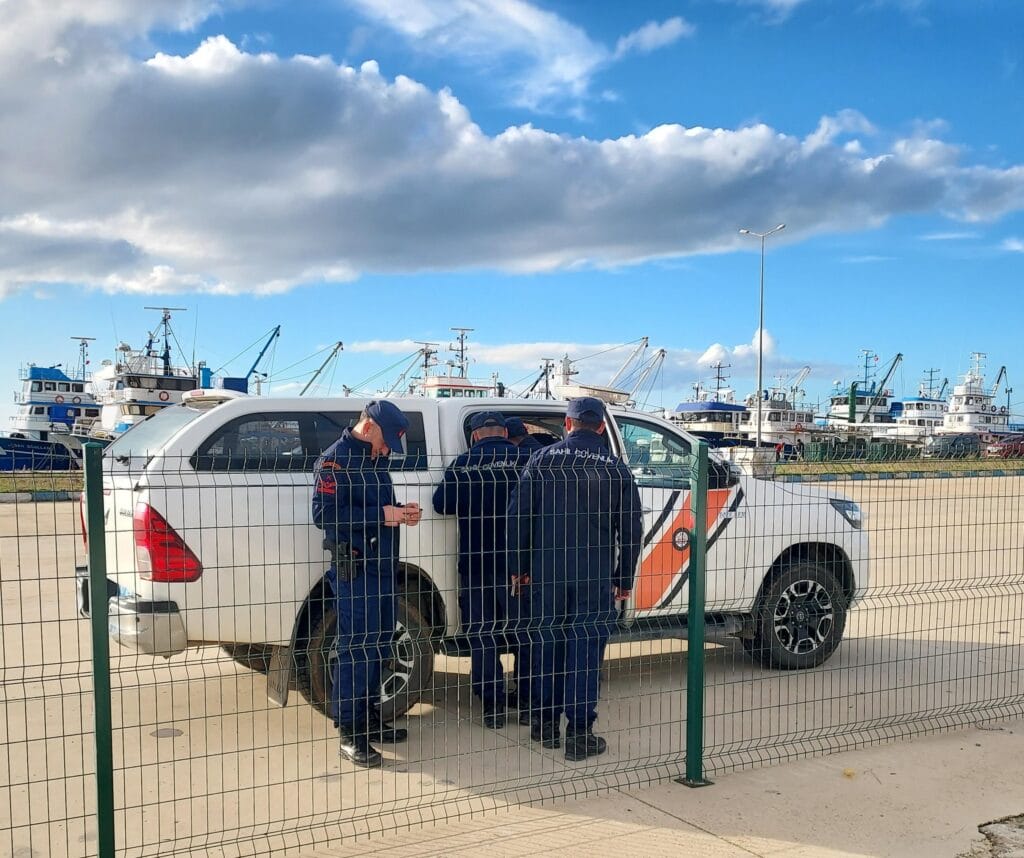
We stopped at the village of Enez, where we found a fishing harbor that offered good shelter from the strong winds. The wind was pushing us off the quay, but fortunately a police van arrived at high speed. Six men jumped out and helped us to moor.
We thanked them, and of course they asked for our papers. There were phone calls for about an hour to various other men. We were allowed to stay for one night, but we were absolutely not allowed to go ashore. We noticed that out of the six men, only one spoke a little English—and even he relied heavily on Google Translate. But we were grateful and stayed. When they drove off, we noticed an electrical outlet that actually worked, so we even had power 😉.
“Problem”
The next leg went well—less wind—but we still had to stop once more. This time it was the small harbor of Kabatepe. We arrived there at dusk. After our good experience in the first Turkish harbor, we hoped we could stay here as well. A young harbor master came over, helped us, and immediately asked whether we had already checked into Turkey. When we pointed at the yellow flag and said “no,” he said, “Problem.”
Okay. Phone calls, of course. And again a van arrived with six men. Again the word “Problem.” Through Google Translate they told us we had to leave. By now it was dark. Gilles said he absolutely would not leave, he wanted to stay one night and depart again in daylight (8:00 a.m.). “Problem.” After one and a half hours of more phone calls, and even more men arriving in vans, we were finally allowed to stay where we were. We had to pay €40 in harbor fees, and we were happy that we had gained ourselves another day.
Port of Entry
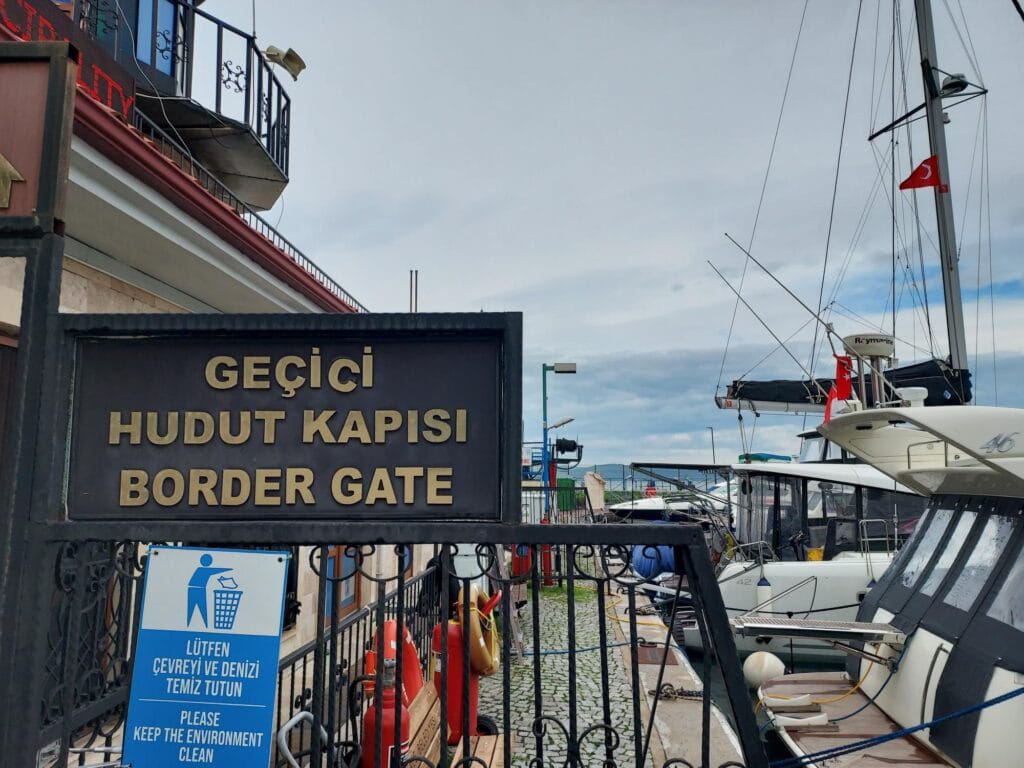
And finally, at 2:00 p.m., we arrived in the harbor of Çanakkale, where the official port of entry is located. I had already read on Navily that I should use agent Dehcets there. He charged a hefty fee (“inflation”), but there was little choice. We stayed in this harbor during the check-in procedure, because all this time, we had to stay on board, were not allowed to pass behind the “Border” gate sign.

There was more involved than the six authorities we had visited ourselves in Greece (Alexandroupoli). In Turkey, we also needed:
- a Transit Log (Yacht Registration Form), which is the “travel document” of your boat during your stay
- Coast Sanitary/Health clearance
- a DAU (digital “Blue Card”), a pump-out card with which every 14 days we must prove that we have discharged our black water at a marina holding the Blue Flag. With every pump-out you receive a Waste Transfer Form, which must be kept on board; inspections and fines do occur if these are missing
- a vessel tax (TRY)
After receiving passport stamps from the police, we finally got the signal: you are now officially checked in. Hooray!
After three days, we were finally allowed to step ashore in Turkey. Proudly, we walked through the “Border” gate—and there we were, time to explore a new country: Welcome to Turkey!