In our previous blog, we wrote about the three peninsulas of Chalkidiki in northeastern Greece, including Mount Athos, an autonomous monastic territory consisting of 20 Orthodox monasteries.
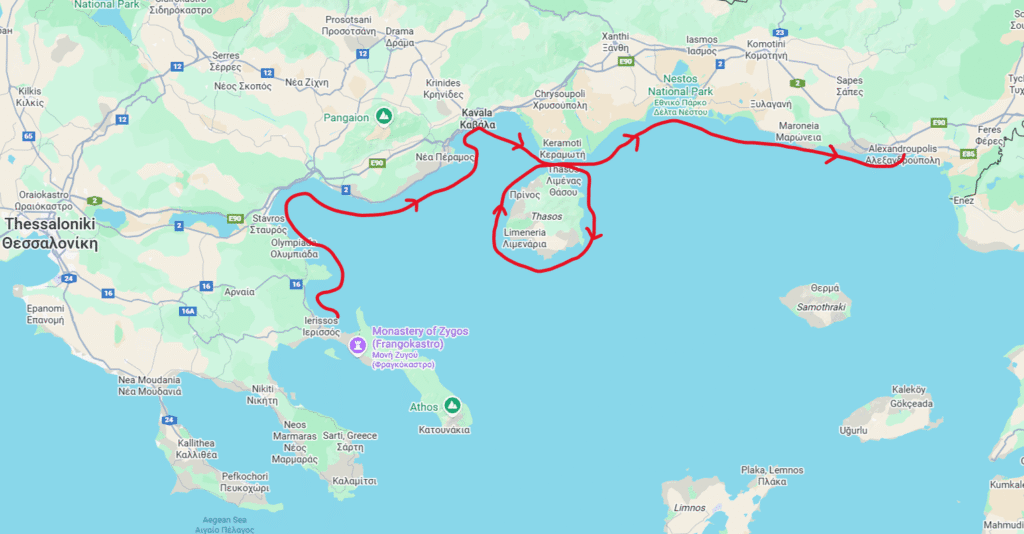
We then continued sailing eastward, passing the places Kavala, the island of Thasos, and ending in Alexandroupoli—the last place in Greece before the Turkish border comes into view.
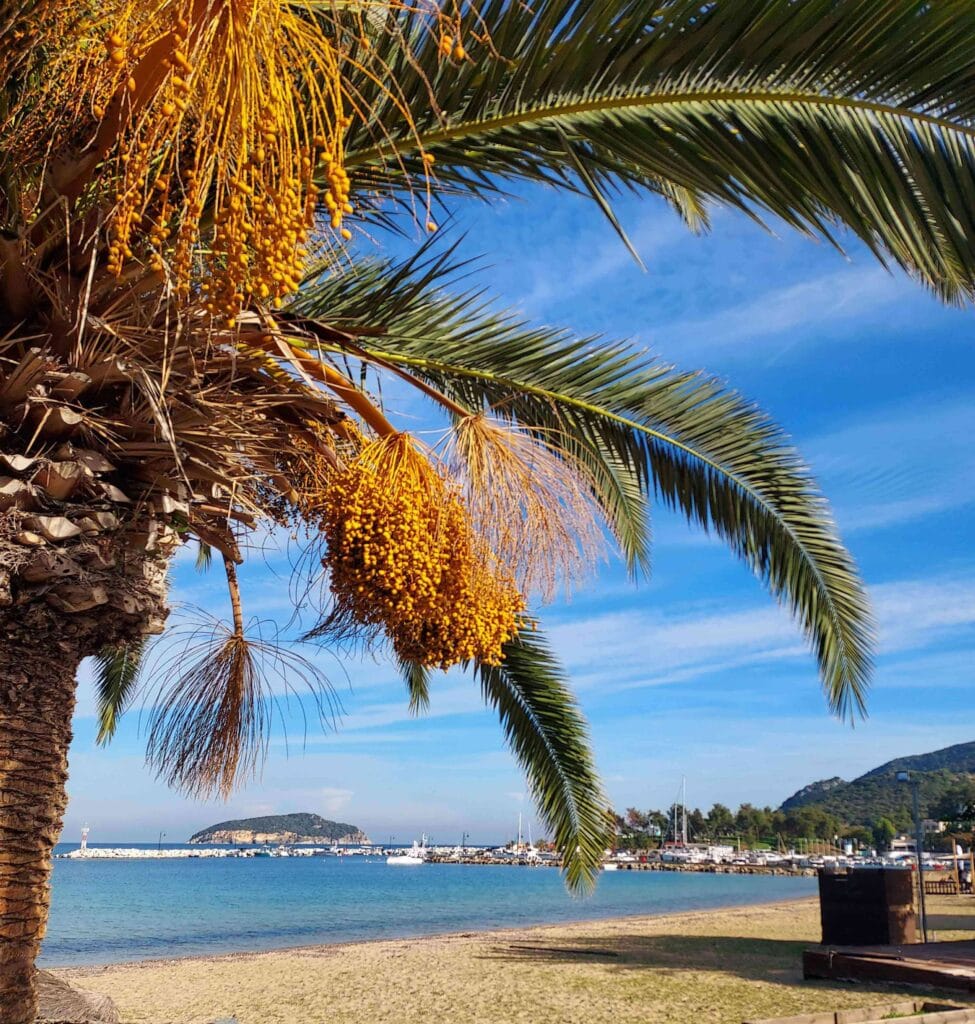
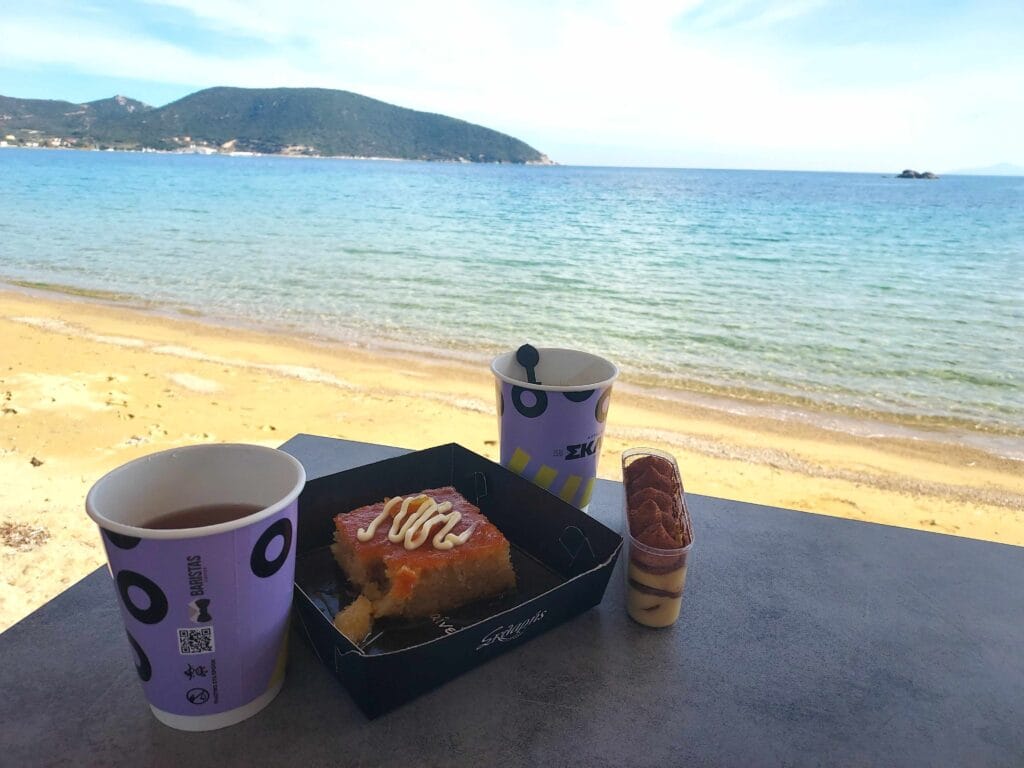
The weather was sunny, so we went cycling regularly, starting from the harbor of Nea Roda. Along the way, we stopped by the beach to enjoy a cup of coffee with a cookie at a small café.
Guests on board
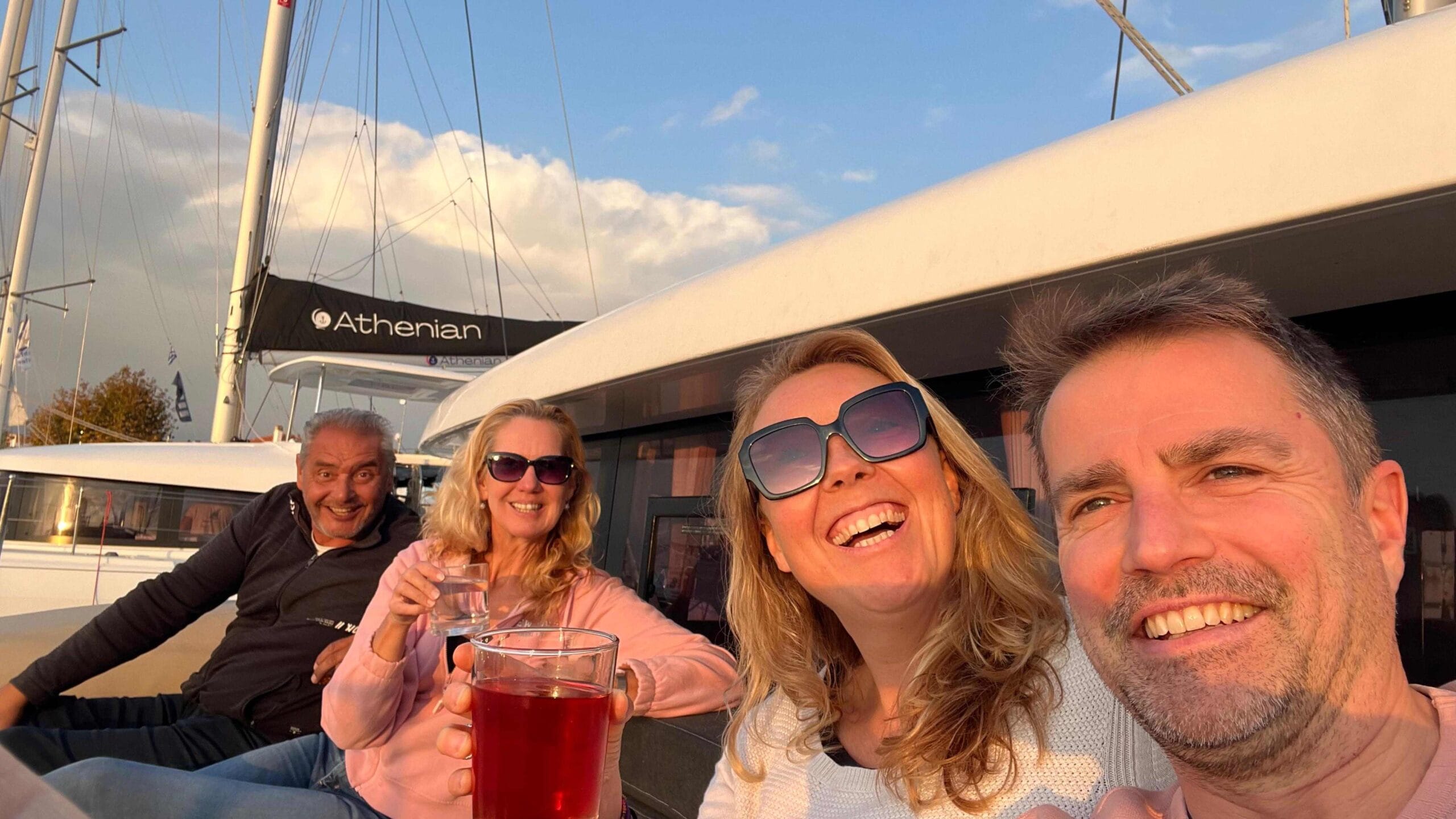
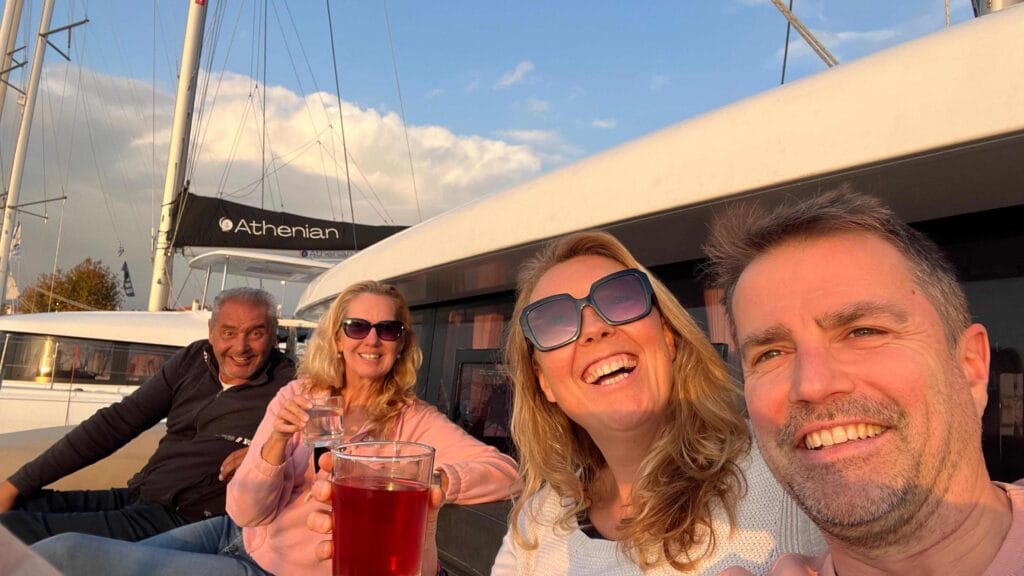
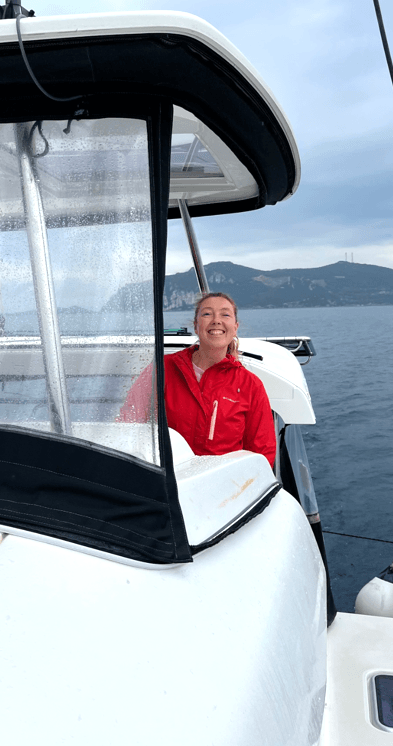
For about 10 weeks a year, we welcome guests on board. In this part of Greece, Fleur Pullen and her boyfriend Bram Herrygers joined us for a week of sailing. Great fun!
I’ve known Fleur since 2019, when she and her partner also bought a Lagoon 42 and we met in the harbor of Stavoren. We have a lot in common! She also owns a company that facilitates and trains participants in innovation, she studied and lived in Rotterdam as well, and she has a passion for travel. So naturally, that made for a wonderful week.
Kavala
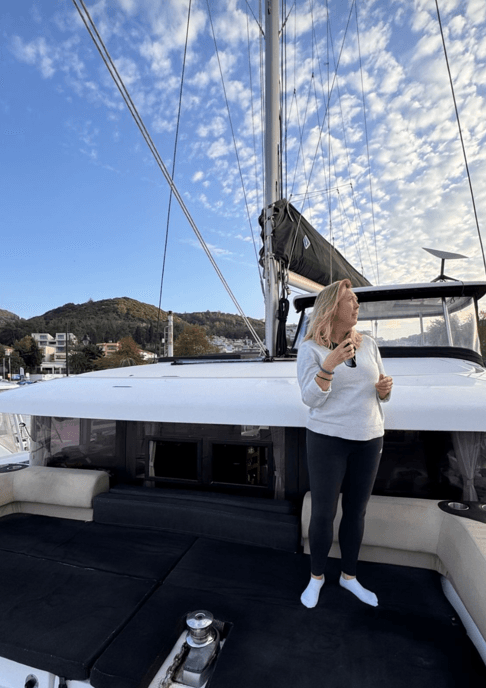
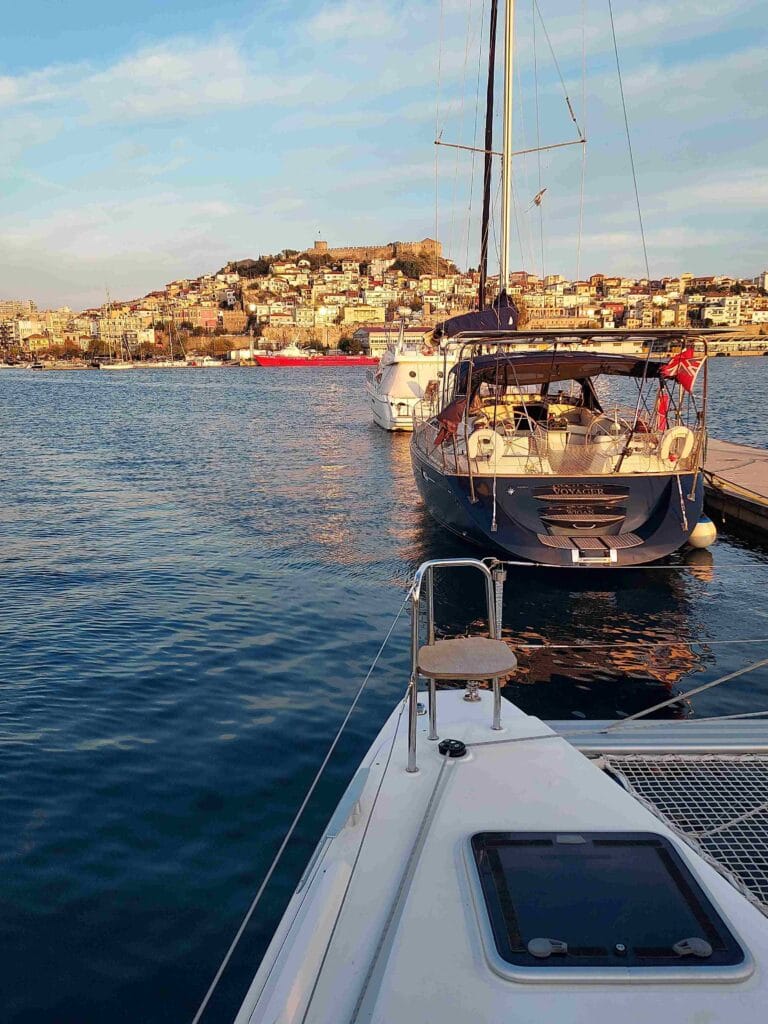
We started in the lovely town of Kavala, in the cozy harbor with a view of the hill of the old town.
We enjoyed a nice dinner out and wandered through the atmospheric city—especially the Panagia district was delightful, with its traditional houses and cobbled streets and alleys.
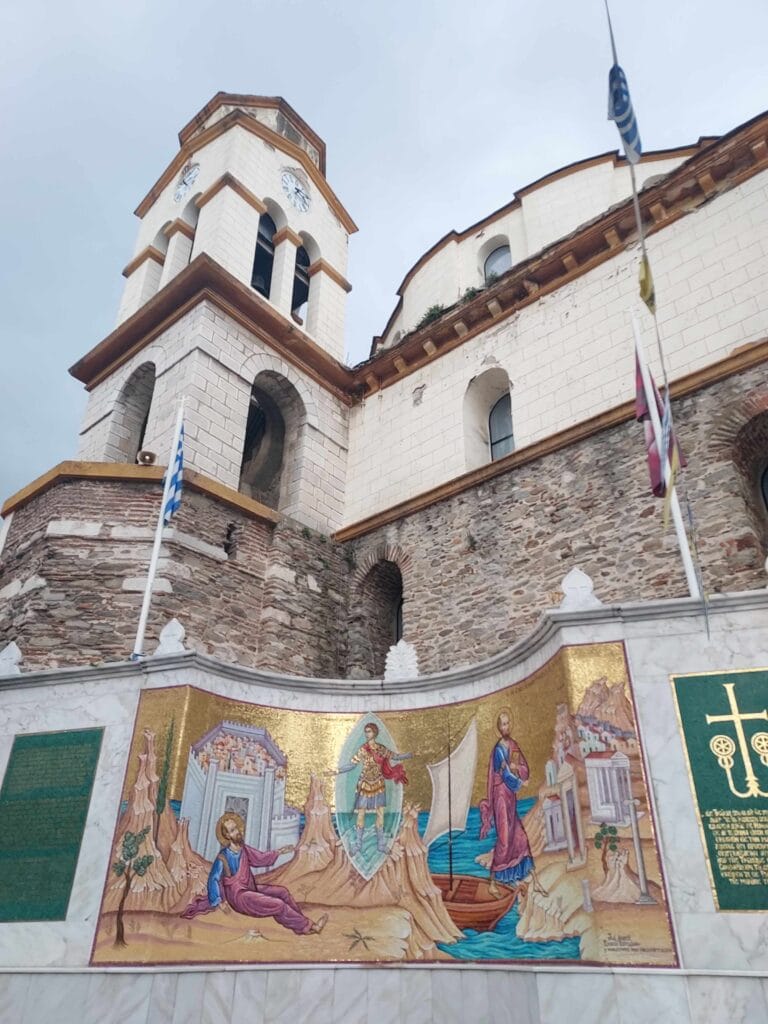
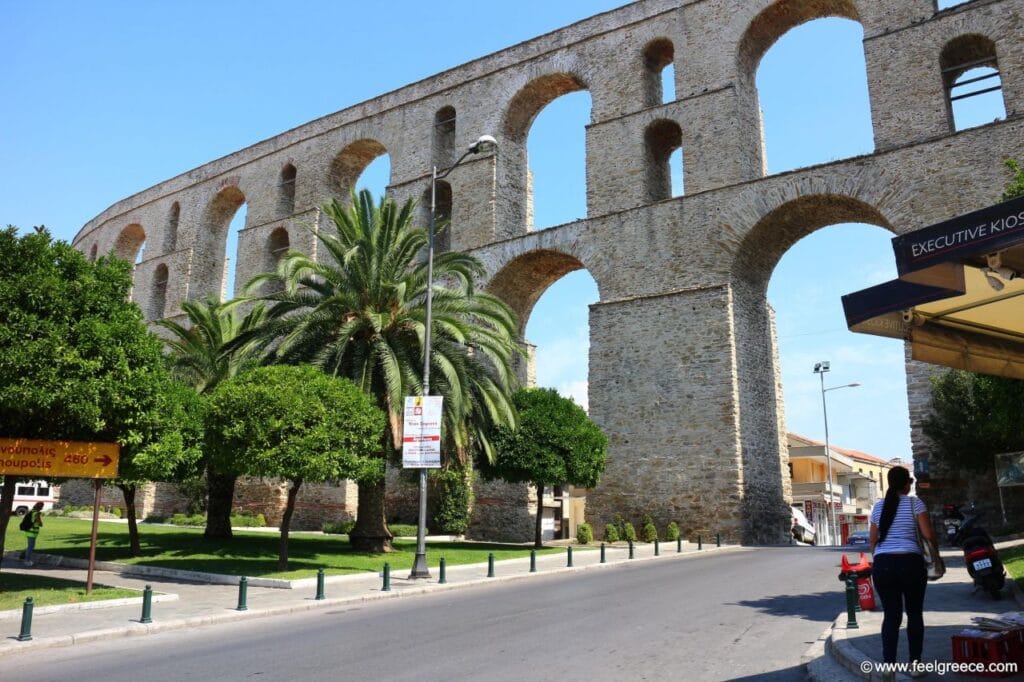
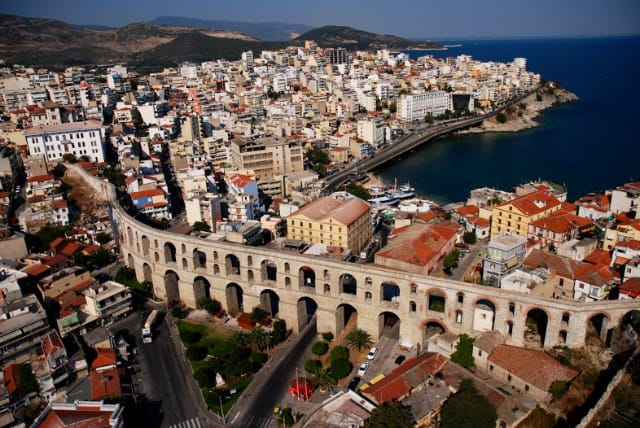
The most famous historical monument of the old town is the Kamares. This is an impressive water-supply system built around 1530. This grand structure is 280 meters long and consists of 60 arches in four different sizes. The Kamares served as an aqueduct, bringing water from a spring near the present-day village of Palia Kavala to the city.
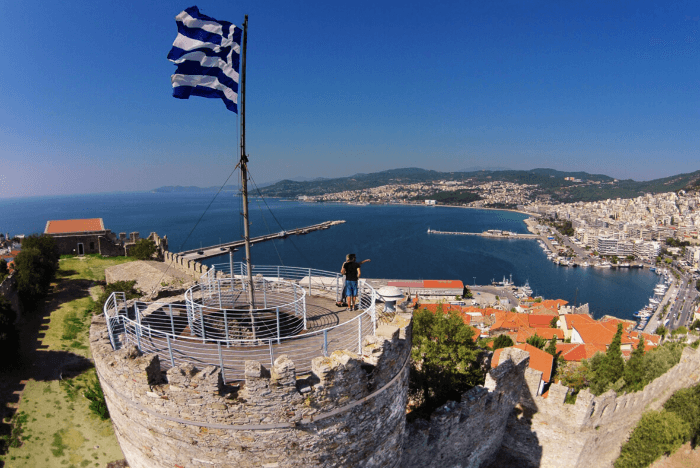
The fortress is also impressive to see. We walked to the top of the old town, where the fortress stands proudly—also known as the Acropolis of Kavala. The largest part was built in the first quarter of the 15th century AD, when Kavala was still called Christoupolis. It helped defend the city against various groups, such as the Ottomans.
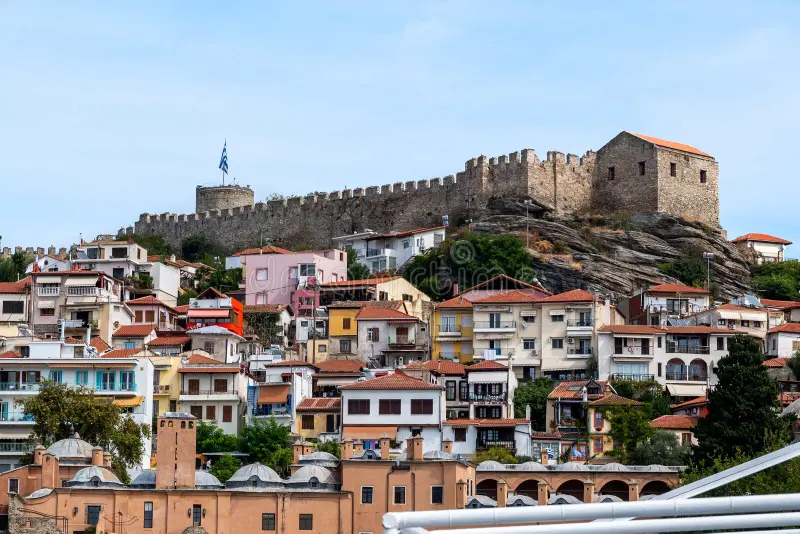
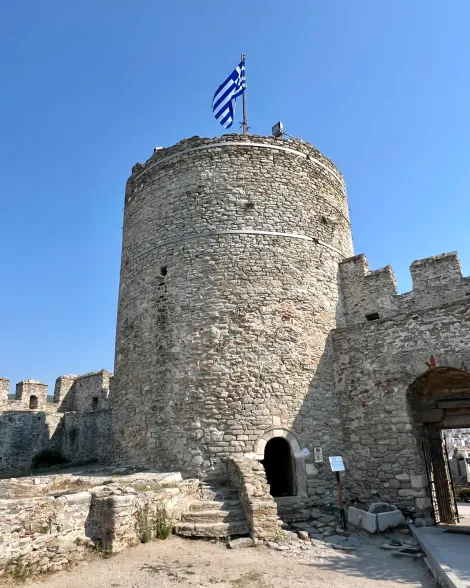
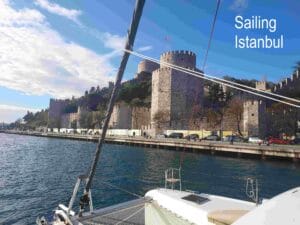
We stood in front of the fortress but didn’t go inside, as you can see in the beautiful photo from the internet. From that point, however, we already had a great view of the harbor where our boat was moored.
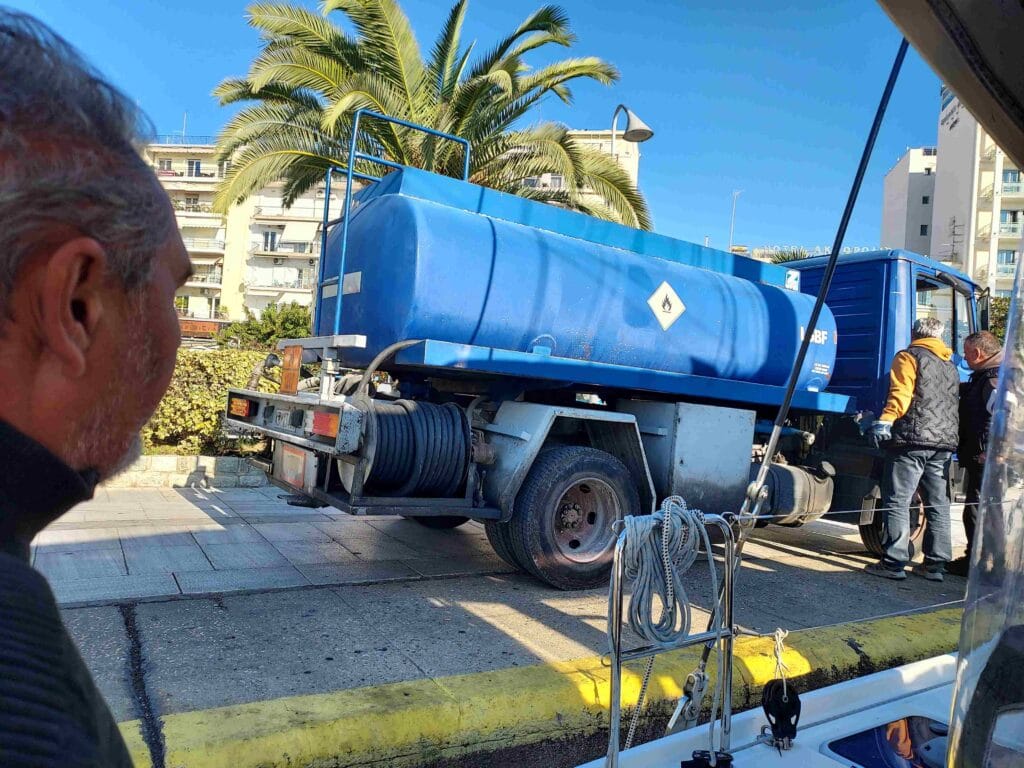
We also needed some diesel. Unfortunately, there was no fuel dock in this harbor, but we spotted three fuel stations in the city near the harbor. We were able to order a diesel tanker, and the next morning two men arrived with 600 liters of diesel for the boat!
Thasos Town
For most of the week with Fleur and Bram, we planned to sail around the island of Thasos, located south of the city of Kavala. The island has an area of 379 square kilometers, a total coastline length of 95 kilometers, and about 14,000 permanent residents.
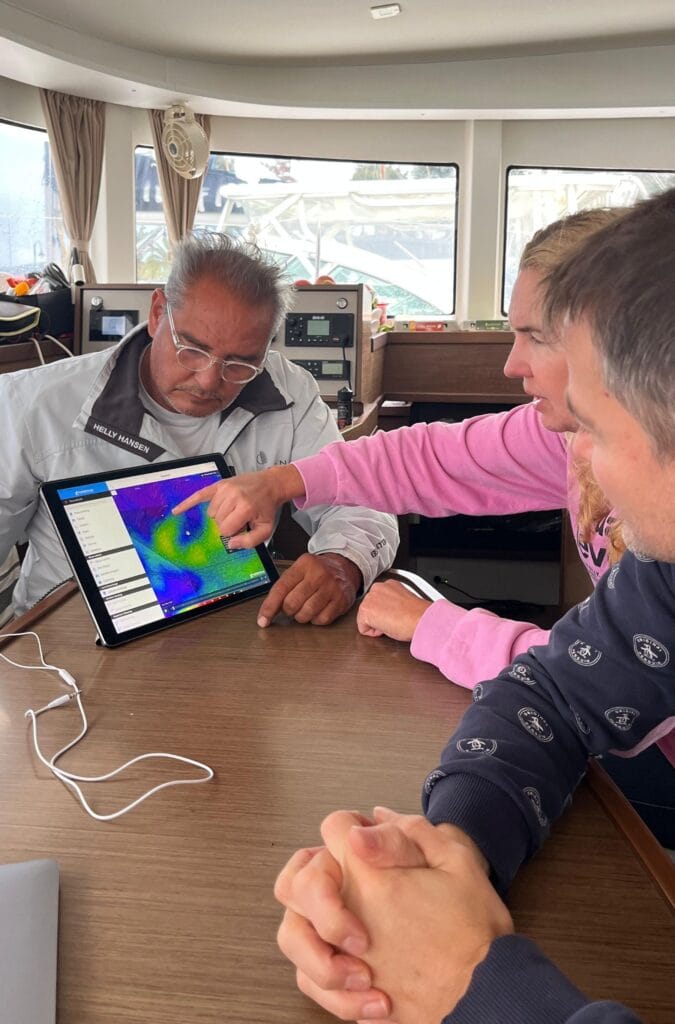
First, we checked the weather (wind strength, wind direction, wave conditions) and decided where we could moor that evening—in a harbor or a bay. Then we set off under sail toward Thasos!
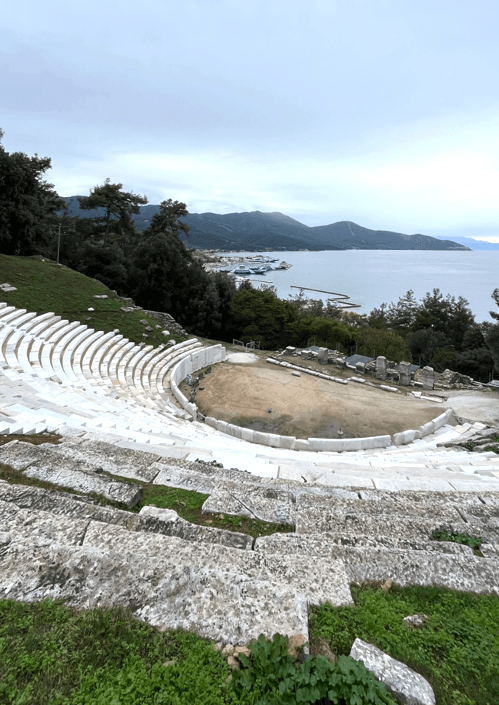
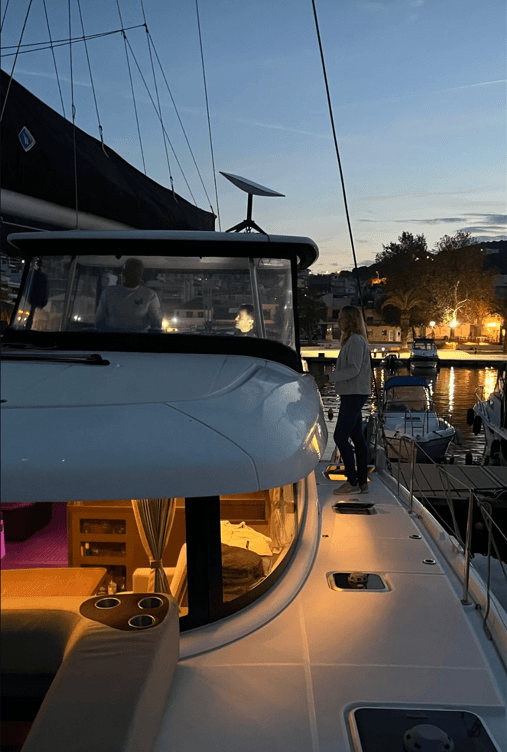
We arrived in Thasos Town, where we could moor nicely along the quay in the harbor. The most interesting sight in Thasos Town is the ancient Agora—a site with old temples, remains of sanctuaries, an ancient theater, and other buildings. The ancient Agora was the political, administrative, and religious center of the ancient city and is within walking distance of the modern town center. The ancient theater was built in a natural hollow on the hillside.
Limenaria
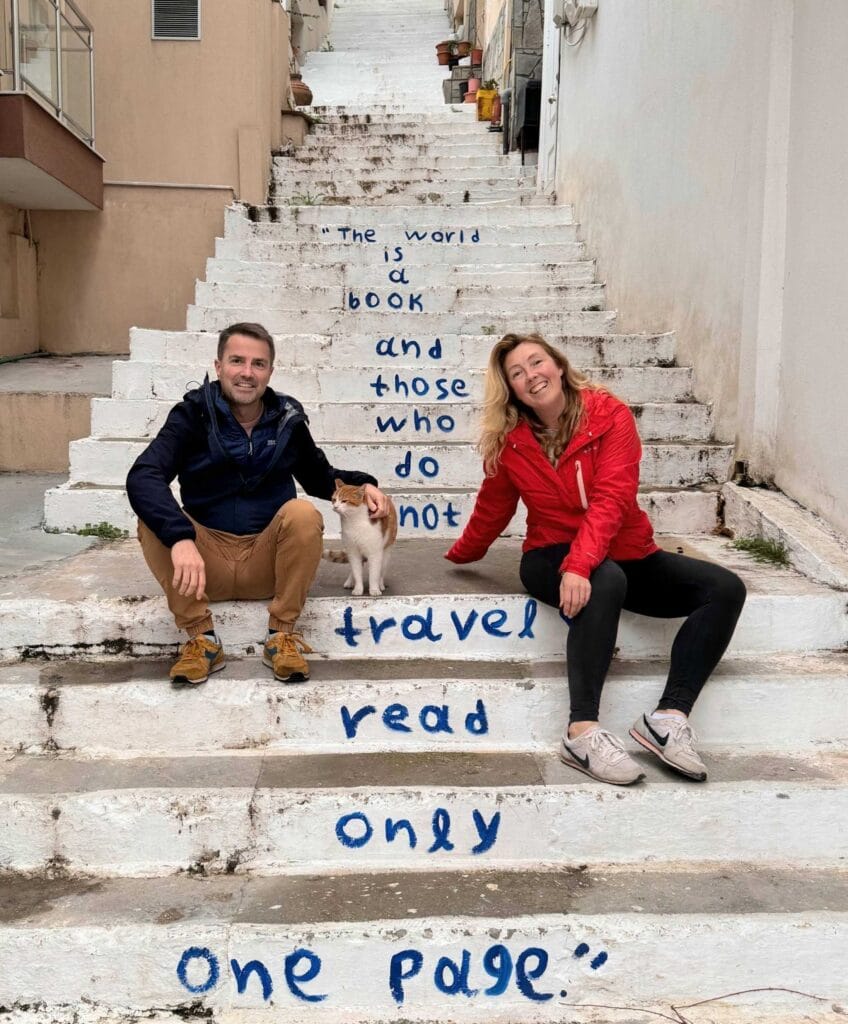
We sailed along the east coast toward the south of the island and went ashore again in the charming town of Limenaria. It was a quiet town, with several restaurants open, and we strolled peacefully among the citrus and olive trees that were nearing harvest. We came across this lovely text on a white-painted staircase—it really spoke to us!
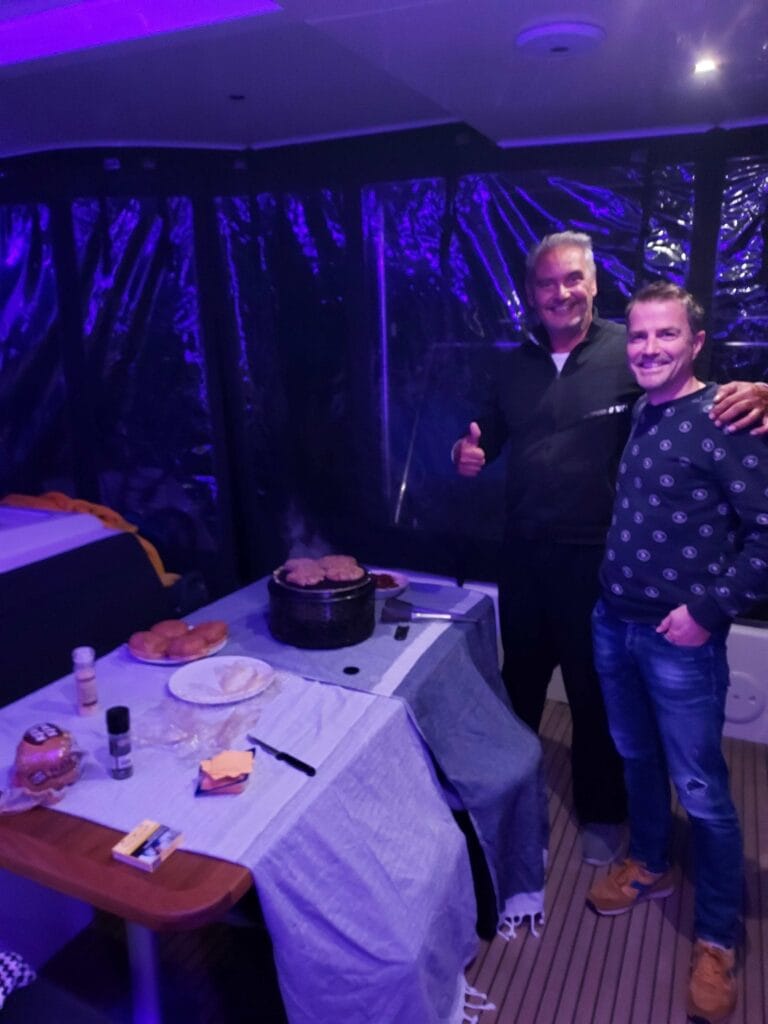
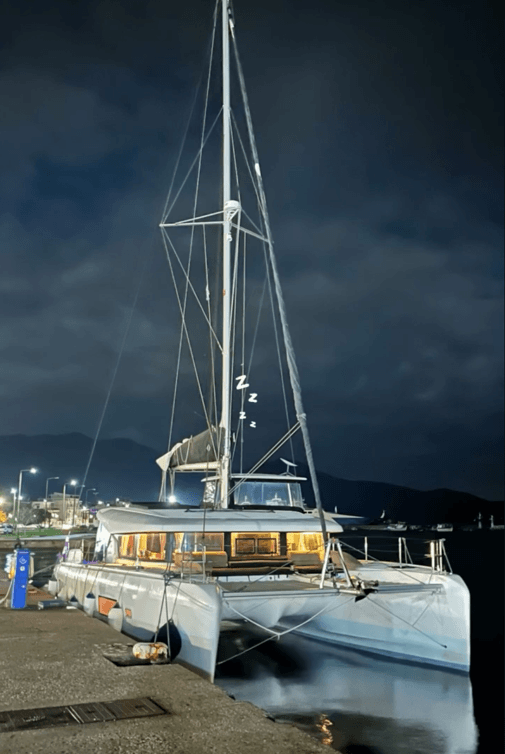
That evening it was time for Gilles’ famous BBQ! After a full day outdoors and some excellent Greek wine from the island of Thasos, it was wonderful to sleep on the boat.
West coast of Thasos
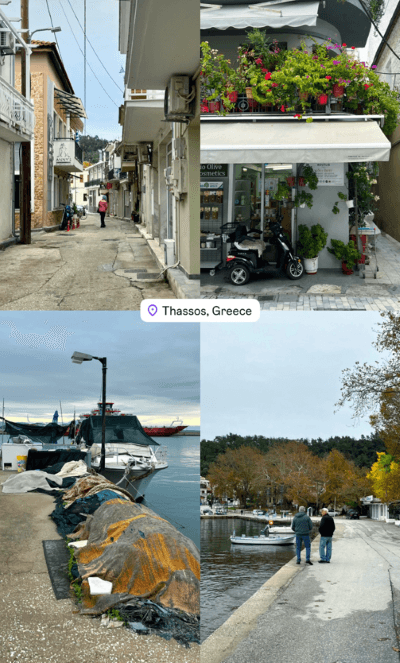
The next day, we continued sailing along the west coast back toward the north of the island. We walked through the sleepy towns and also anchored in a bay. A term you often hear on the island is the prefix “Skala,” which literally means “stair.” This gives rise to villages such as Skala Prinos, Skala Potamias, and Skala Panagias. These are all coastal villages that typically have a connection with a mountain village or inland settlement. While the mountain villages tend to retain a more traditional character, the coastal villages are more oriented toward tourism.\
Keramoti
From the north of Thasos, we sailed back to the Greek mainland. East of Kavala lies the fishing town of Keramoti, located in a delta area. With the setting sun, it was a wonderful place to be.
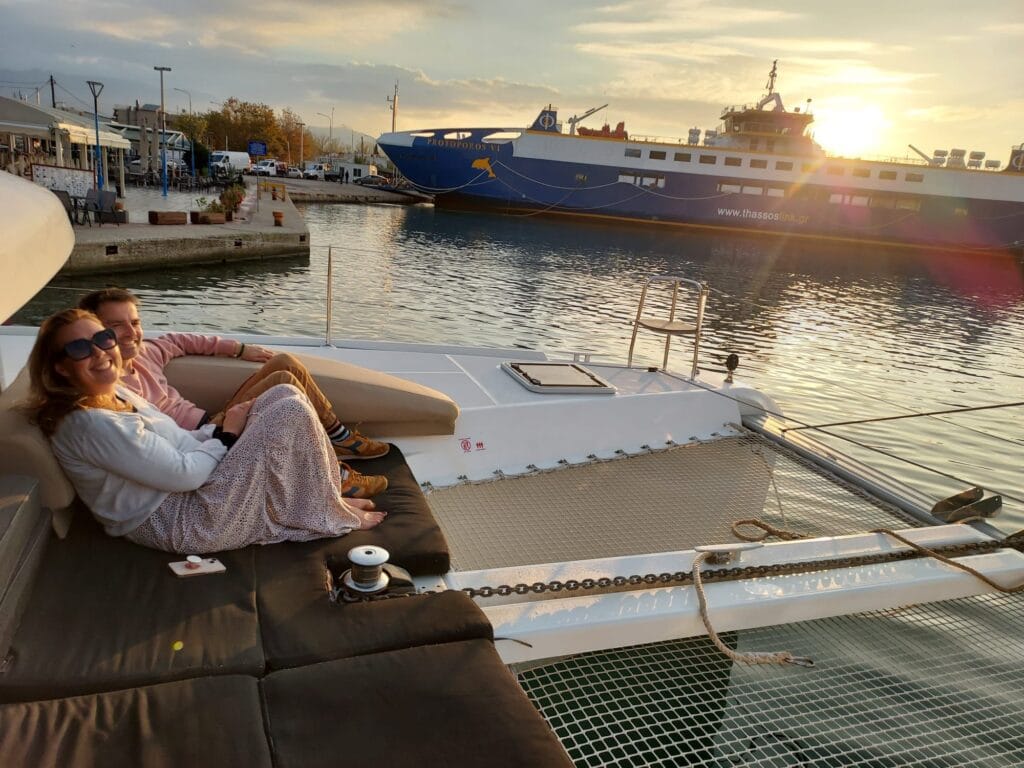
Here we said goodbye to Fleur and Bram, who would drive back by rental car from the boat to Thessaloniki Airport. We had such a lovely week with them, and they wrote in our guestbook about how they experienced the week!
Nestos National Park
We continued sailing eastward and passed through a delta landscape with lagoons and river forests—very green and, to our great surprise, featuring a well-equipped marina: Porto Lagos Marina.
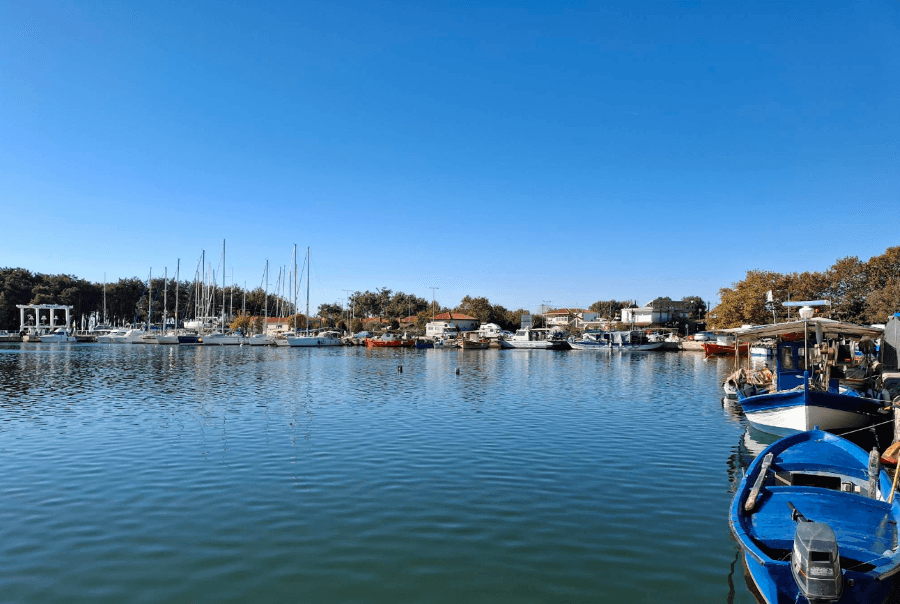
As we approached the quay, we saw that a large market was taking place that afternoon. We also noticed all kinds of iron ladders hanging along the quay! Because the quay was so high, these ladders had been installed as a service for visiting boats. If you dock with a regular sailboat (with one contact point), you can easily position yourself next to a ladder. But we are sailing a catamaran almost 8 meters wide, with two wide, low platforms at the stern (called “sugar scoops”). So we had to carefully protect our two platforms with ball fenders while approaching the quay. Fortunately, we managed to dock without any damage.
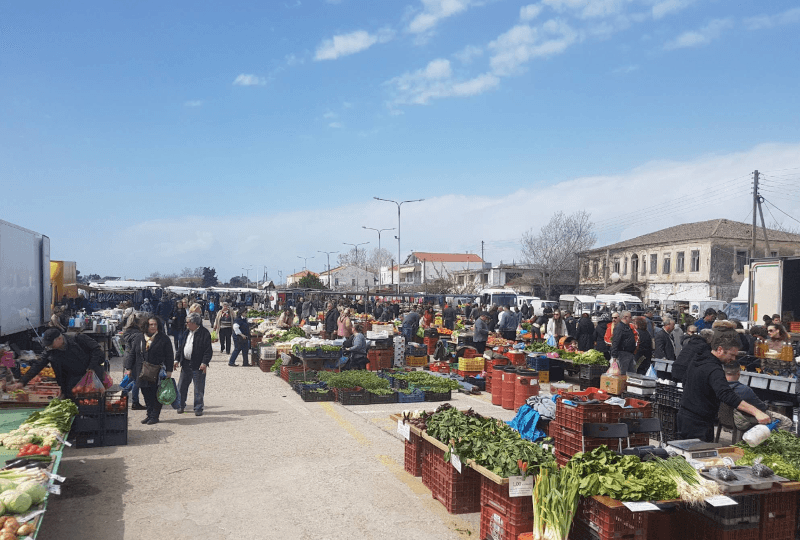
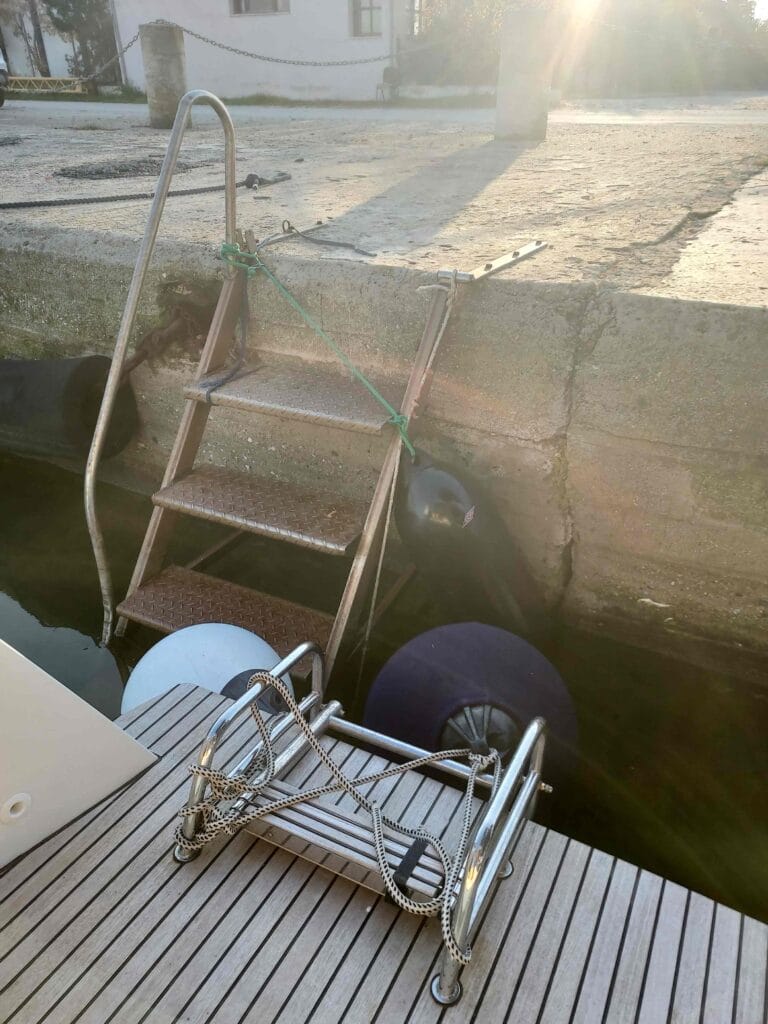
You might think that after four years of sailing and visiting harbors in 17 countries, you’ve encountered every possible way of docking—but this was a new one for us 😉.
We stayed here for a few days, also to do laundry after a week with guests, clean the boat, and restock at the local supermarket. On the map, we also noticed a beautiful monastery further east in the lagoon, located on a small island. We cycled there in the late afternoon.
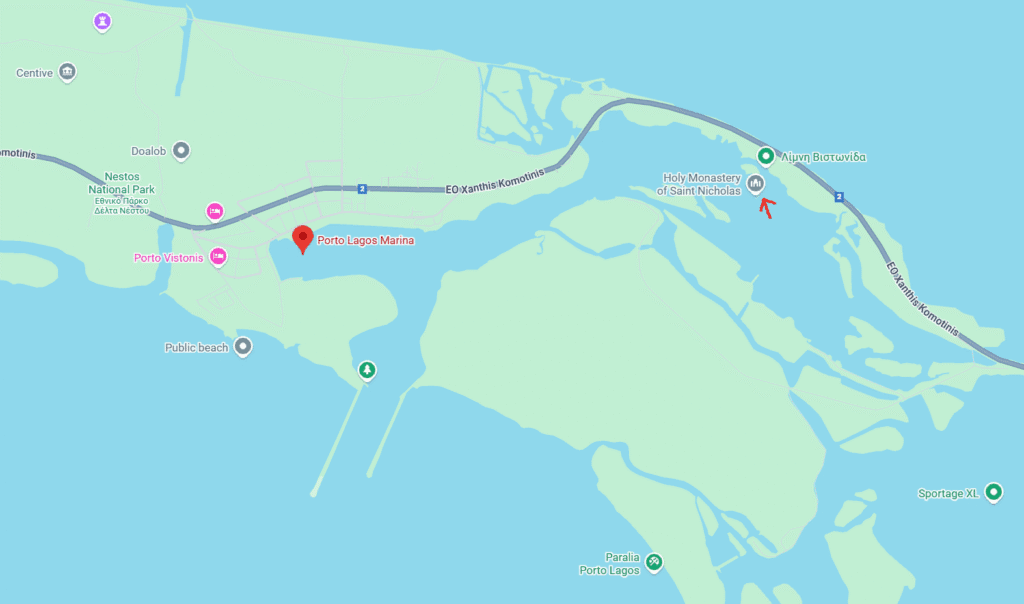
Holy Monastery of Saint Nicholas
The monastery of Agios Nikolaos turned out to be a dependency of the holy monasteries on Mount Athos! The friendly monk at the entrance pointed this out to us, gesturing toward Mount Athos, which we could indeed see in the distance. That was three weeks after we had been there ourselves, but the mountain remains an important reference point for the entire region.
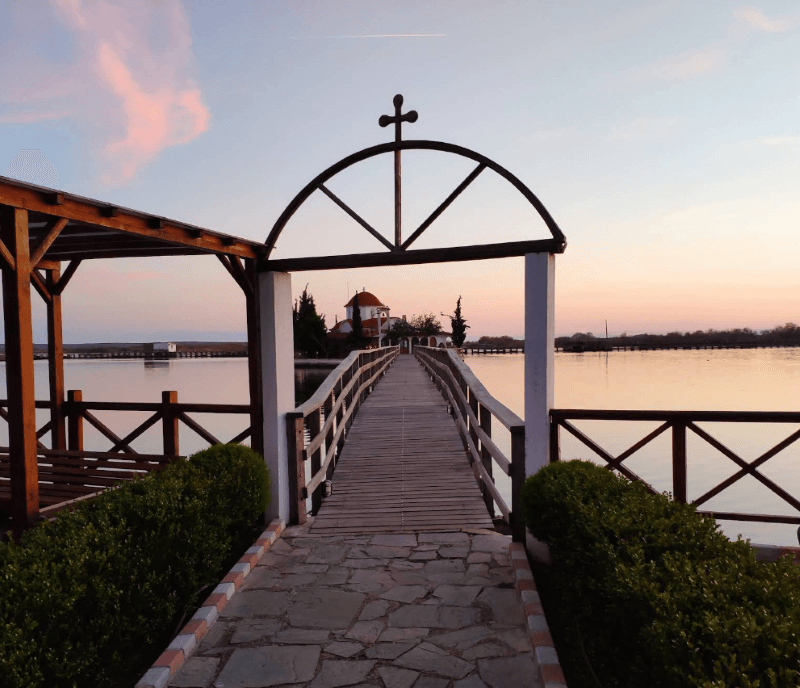
The complex is built on two islands in the lagoon. A wooden pedestrian bridge connects the two islands, and another bridge connects the first island to the mainland.
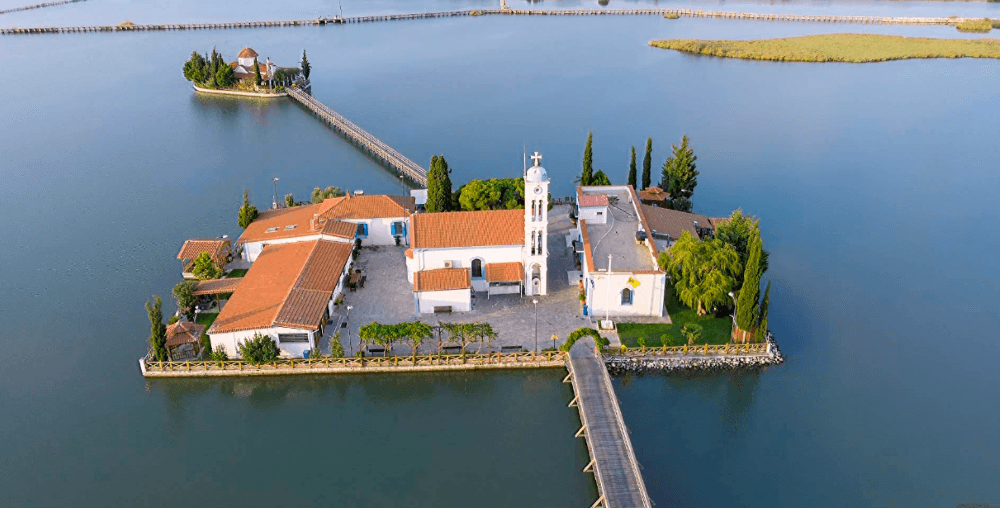
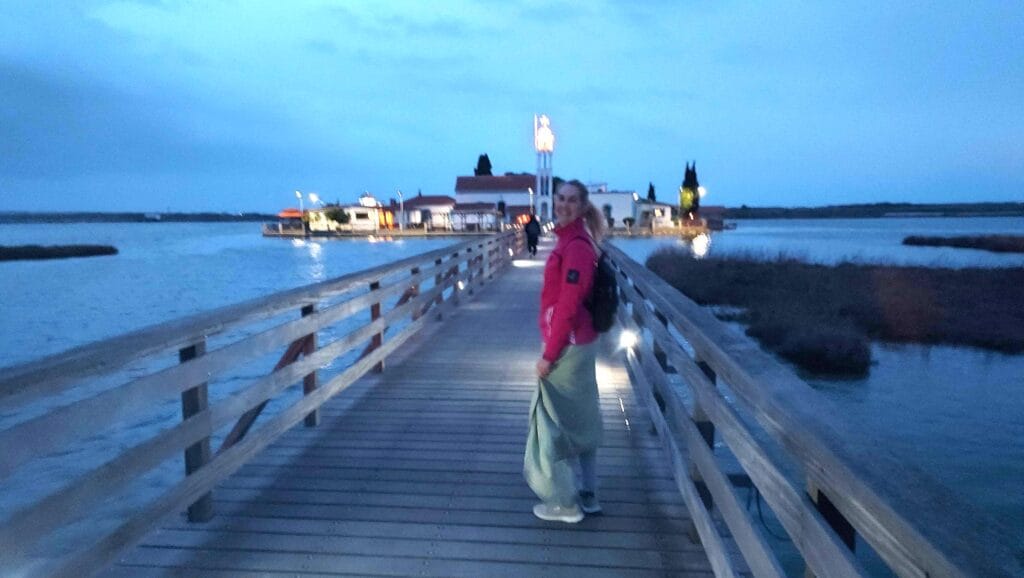
When I heard the words Mount Athos and learned that a small brotherhood lived on the two islands, I briefly feared that I, as a woman, would not be allowed access. But the friendly monk gave me a wrap to wear over my trousers, and I was allowed to enter after all. It was a truly beautiful place—especially at dusk, with a slightly mysterious atmosphere.
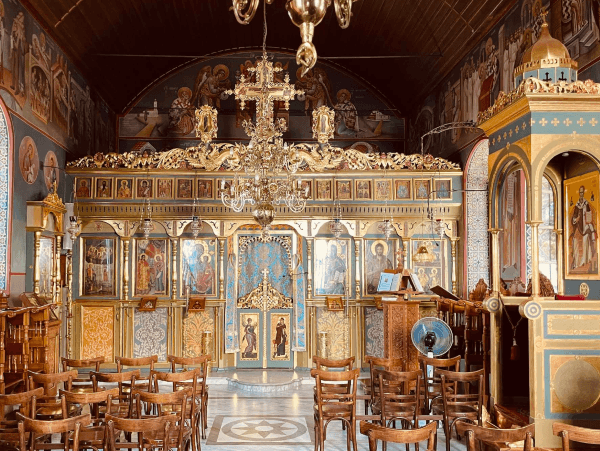
The monastery was holding an Orthodox service. We could hear chanting, and when we looked through the stained-glass windows, we saw monks performing a ritual with blessings using holy water and incense (a symbol of prayers rising to God). Through the windows, we could also see many golden icons inside the monastery.
Alexandroupoli
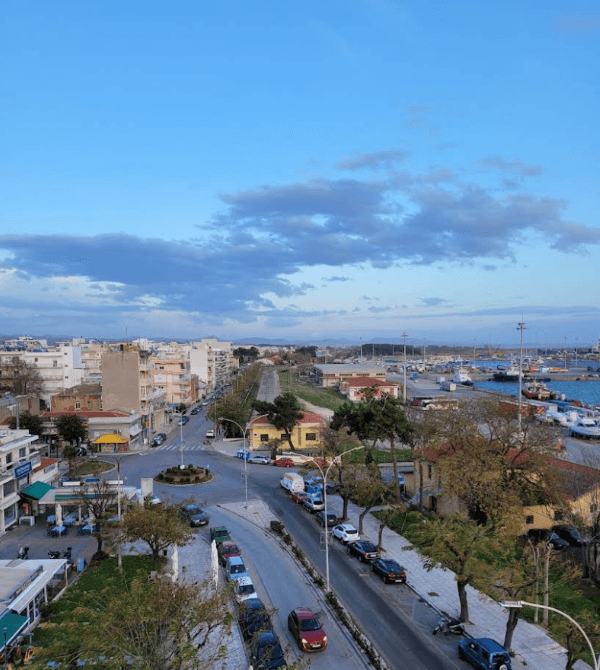
After the serene calm of the lagoons and the monastery, our journey continued eastward. The last place we would visit in Greece before sailing into Turkey was Alexandroupoli.
A busy city with a beautiful boulevard and many shops, yet surprisingly only a small marina. With strong winds and many boats in the harbor, it took some effort to find a good spot—but Captain Gilles docked skillfully at the pier.
This city was under Turkish rule for a long time and was called Dede-Agatch, meaning “the tree of the monk.” During the Russo-Turkish War of 1877–1878, the city was captured by the Russians. Russian troops settled there and designed a city plan with wide, parallel streets—quite a contrast to the narrow alleys typical of Ottoman cities. After World War I, the city was assigned to Greece in the Treaty of Neuilly. When King Alexander I of Greece visited the city, it was renamed Alexandroupoli (“Alexander’s City”) in his honor.
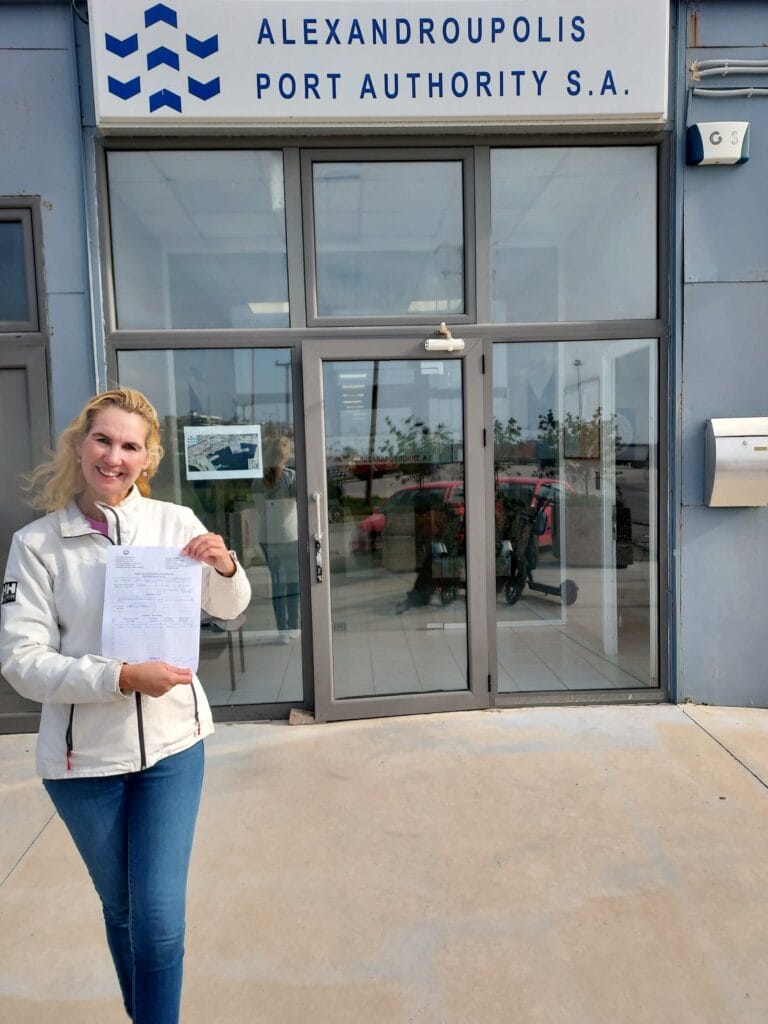
We stayed here for several days because we needed to officially check out of Europe (via Greece) before sailing into Turkey. This required visits to six authorities: port police, customs, coast guard, harbor master, regular police, and the port authority. Stamps everywhere, forms to fill out—but in the end, it all worked out. The most important document was actually processed very quickly.
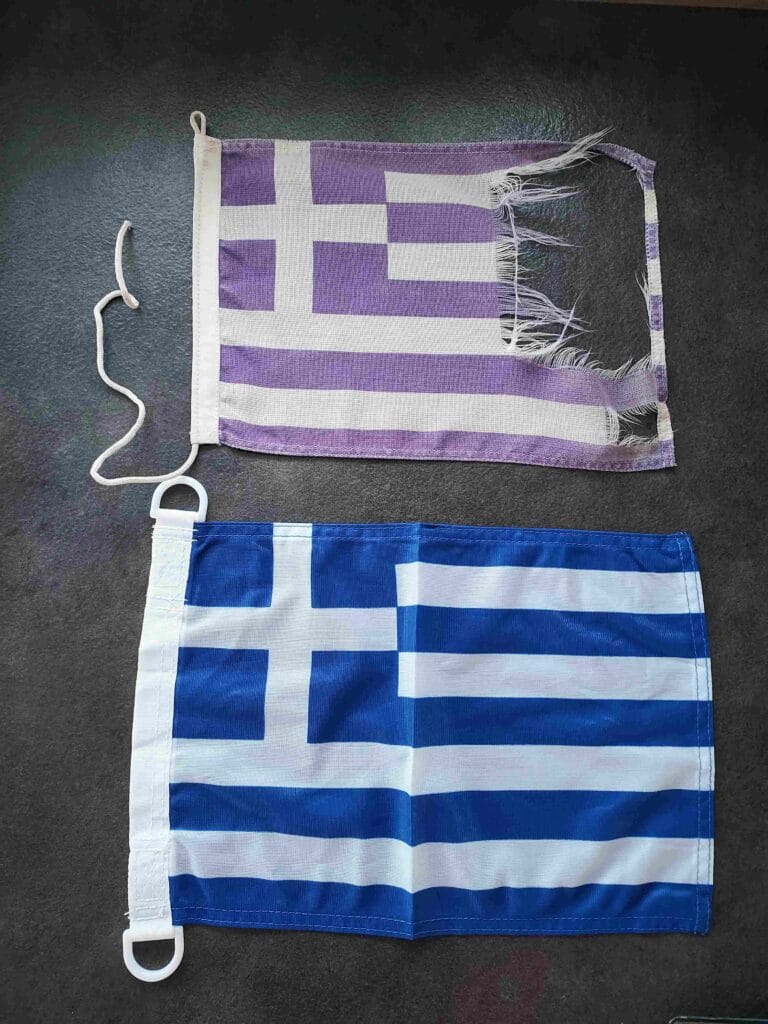
Then we still needed to buy a Turkish flag. Remarkably, there was even a flag shop in this city, so we were able to buy one. We also replaced our old Greek flag, which had become quite worn after a year of sun and wind. We were still looking for a third flag, but unfortunately couldn’t find it.
Yellow flag
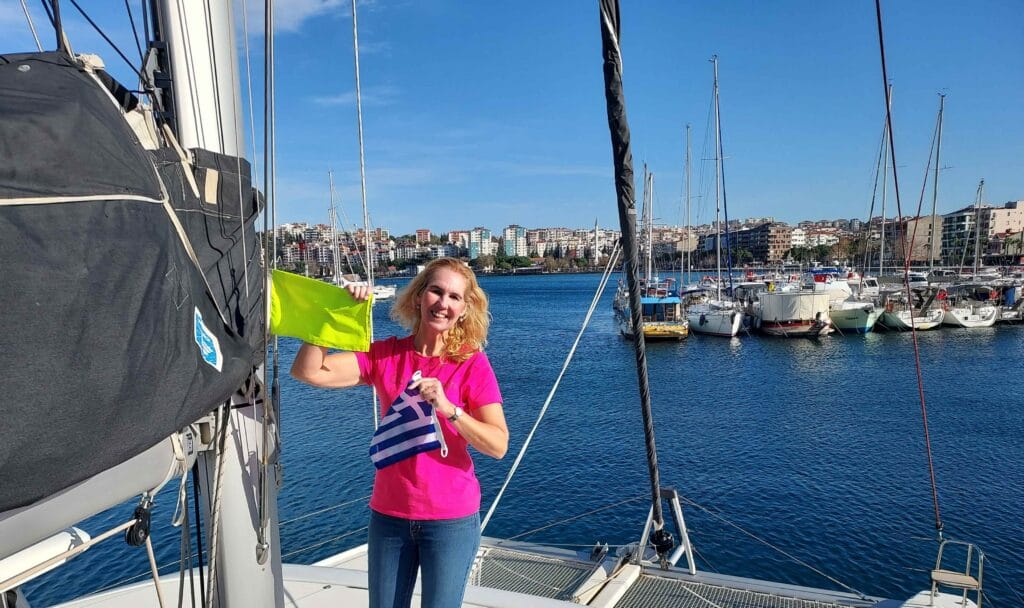
Because officially, when leaving one country (Greece) and entering a new one (Turkey), you are required to fly the bright yellow quarantine flag. This signals to authorities at sea and on land that you are not allowed to go ashore because you are between two countries and must continue sailing until you reach the first port of entry in the new country. There, you must dock at a customs pier, and only after all paperwork is in order are you allowed to step ashore.
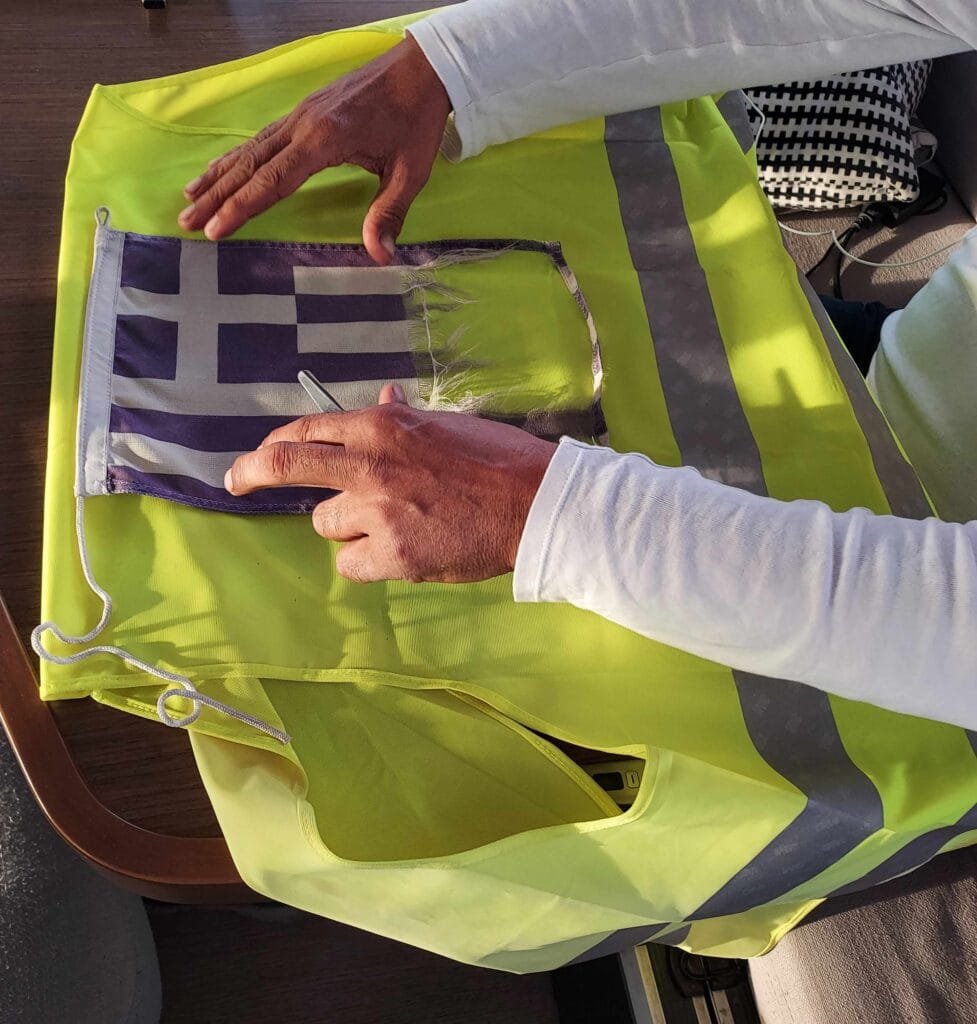
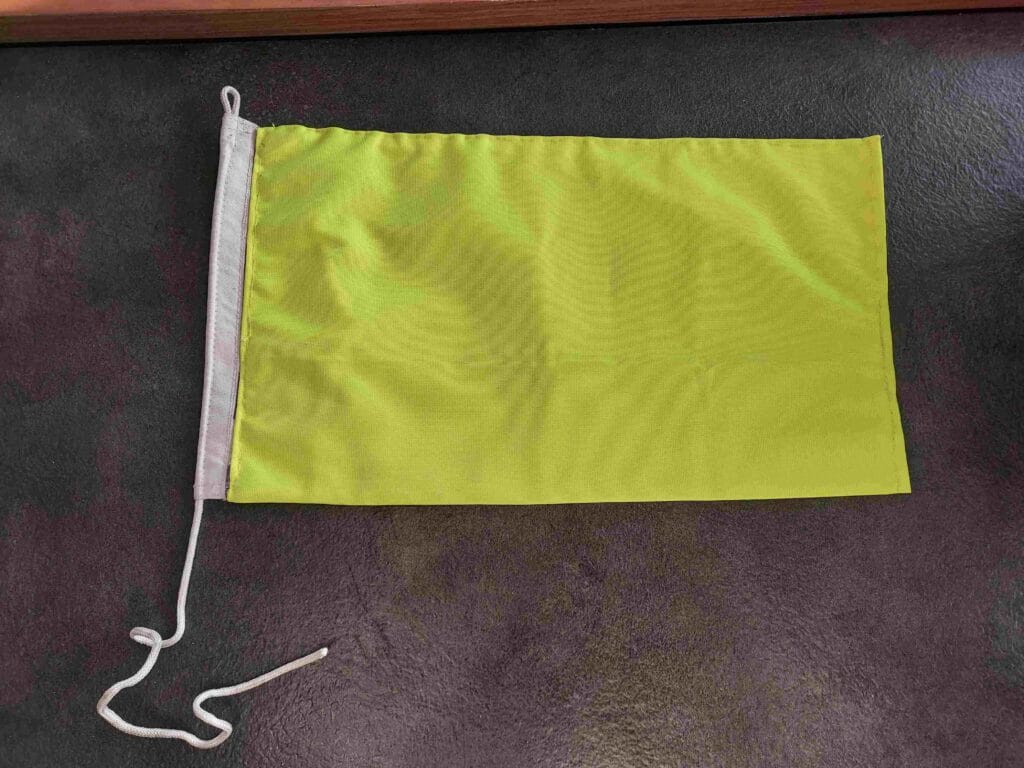
The flag shop didn’t have a yellow flag. The owner was a friendly elderly man who even offered us coffee. While Gilles was looking around the shop and thinking about how we would manage without the yellow flag, he spotted a yellow road worker’s safety vest hanging in the window. He said he could turn that into a flag. So we bought the vest, used our old Greek flag as a template, and the wide white stripe of the vest worked perfectly. And that’s how our quarantine flag was made!
On a sunny day, we set sail from Alexandroupoli, leaving the harbor toward Turkish waters—on our way to a new country and new adventures!