We enjoyed being in Messolonghi with the delta, lagoons and rivers! When we would sail further west, we would return to familiar ground, the Ionian Sea again, with islands like Lefkas, Kefalonia and Zakynthos where we have been before.
So we decided to go eastwards again, because we would meet friends and family in the area of Athens for a holiday.
In 1 week we were able to sail back to Athens. Of course, those were long sailing days, but the wind and weather were good, so we were lucky, everything went smoothly.
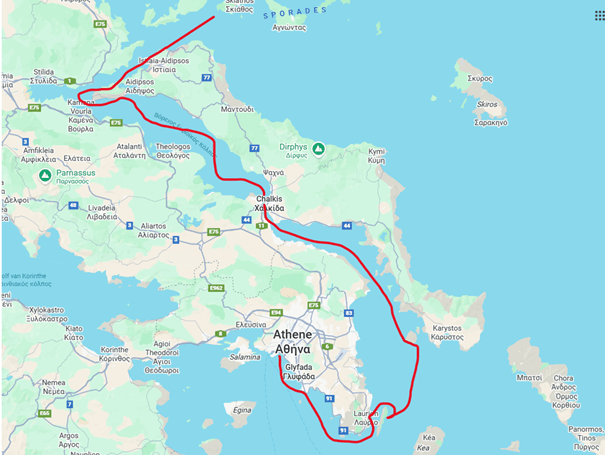
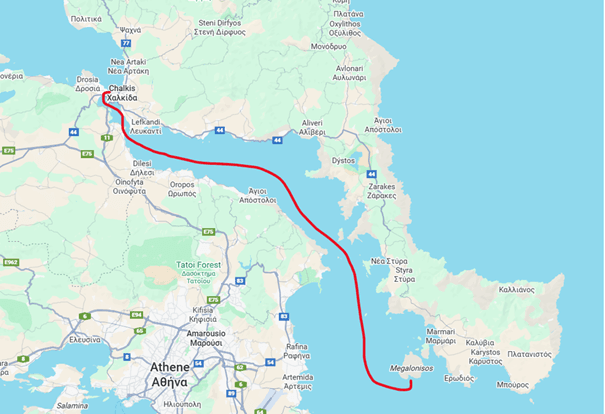
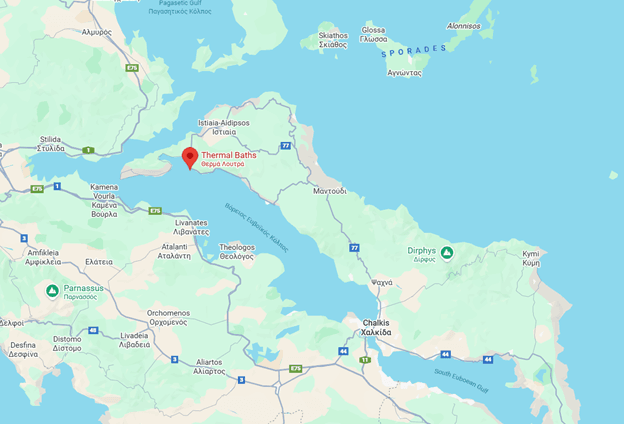
Here you see the trip that we took when we arrived in Athens, we sailed via Chalkis to the Sporades.
The highlights that we visited during that sail, are mentioned below.
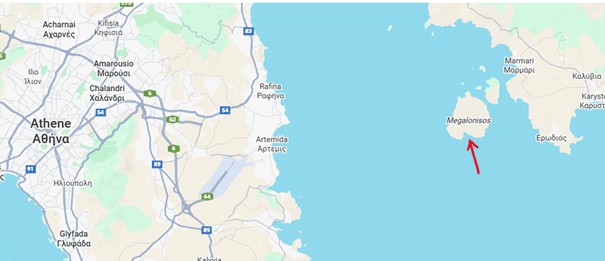
Megalonisos
This is a quiet island on the east side of Athens, and it is largely privately owned. After being sold by the Greek royal family in 1915, it came into the hands of a Greek shipping family. Officially, it is uninhabited; the last residents left in the 1990s.
For us it was a pleasant stop, because it has a spacious bay, shallow water of about 3 to 4 meters, crystal-clear water and a sandy bottom. So we dropped the anchor.
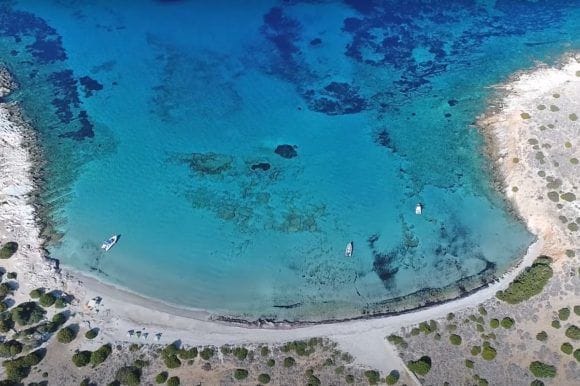
It was very peaceful in the bay and when it got dark, we had something to eat on the boat and watched a movie.
Earthquake
At 00:30 in the night, the water started moving and we heard a rumbling noise that grew louder and louder as it approached the boat. Our first thought was: that must be a large ferry. Our anchor light always makes us well visible, so the boat would certainly see us. Still strange, though… such a big ship in this bay…
The roaring and rumbling increased, the boat started moving more and more, and we actually began to fear a collision. We rushed onto the deck. Looked around. Nothing. No big boat passing by.
A plane then? No, not a plane. But we did see small waves building up. The strange thing was that the boat was going up and down rather than side to side, like it normally would when a boat passes. It was more like driving over a road with small bumps, where you start to “bounce.”
Then we were left with only one conclusion: an earthquake. We searched online and found a website where you can check volcanic activity worldwide in real time: Volcanodiscovery.com.
And indeed, there had been a report of a seaquake with an epicenter 14 km north of our boat. The quake occurred at a depth of 2 km — which is considered very shallow (the Earth’s crust is 35–60 km thick) — and had a magnitude of 5.2. And that was definitely noticeable!
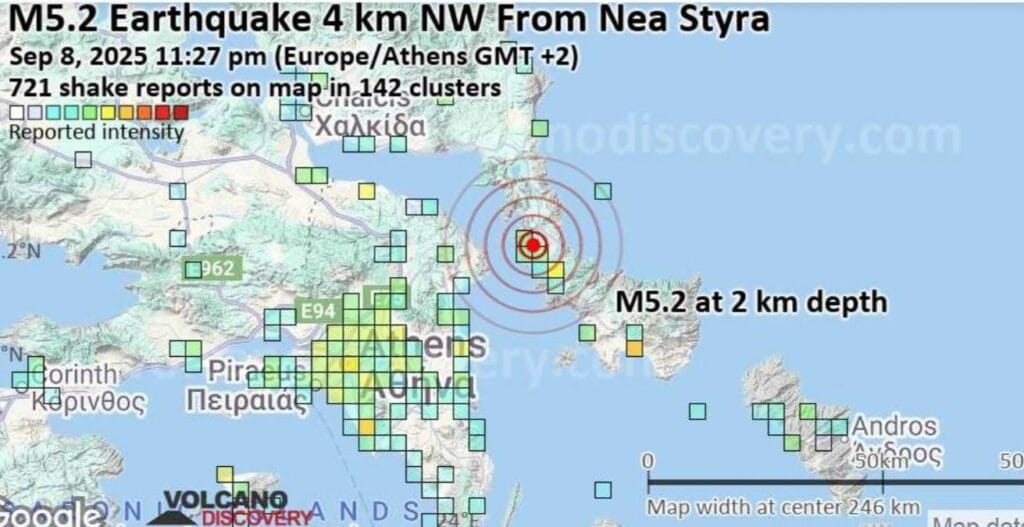
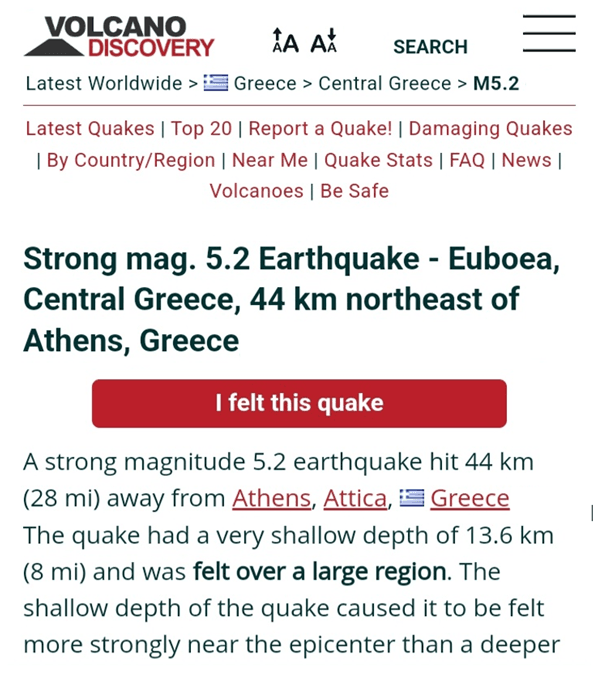
It was quite something, especially because the noise and rumbling came so close and because the “bouncing” of the boat on the water felt so unusual. Luckily, no tsunami.
Thanks to that website, we were able to put things into perspective pretty quickly, because the next morning we learned that in the past 24 hours about 1,500 earthquakes had been recorded worldwide. I never knew there were that many earthquakes every day! Most of them occur in Asia and are under 2.0, so hardly noticeable.
But this earthquake in Greece was definitely noticeable! You really keep collecting new experiences and learning new things in this digital nomad life 😉
Evia
We wanted to sail further north, toward the Sporades islands, and noticed that our best route was between a long island (Evia) and the mainland of Greece (where Athens is). Near the town of Chalkis we would encounter a bridge we couldn’t pass under, but which opens for boats.
We were pleasantly surprised by Evia — we had never heard of this island before — but it is, after Crete, the largest island of Greece in the Aegean Sea. The island is 180 km long, yet only about 20,000 people live there. Lots of nature, quite rugged in parts, with mountains (the Dirfys peak is 1,743 m), hills and ravines, and still relatively unknown to foreign tourists. Yet there are plenty of charming spots and small villages to stop along the way.
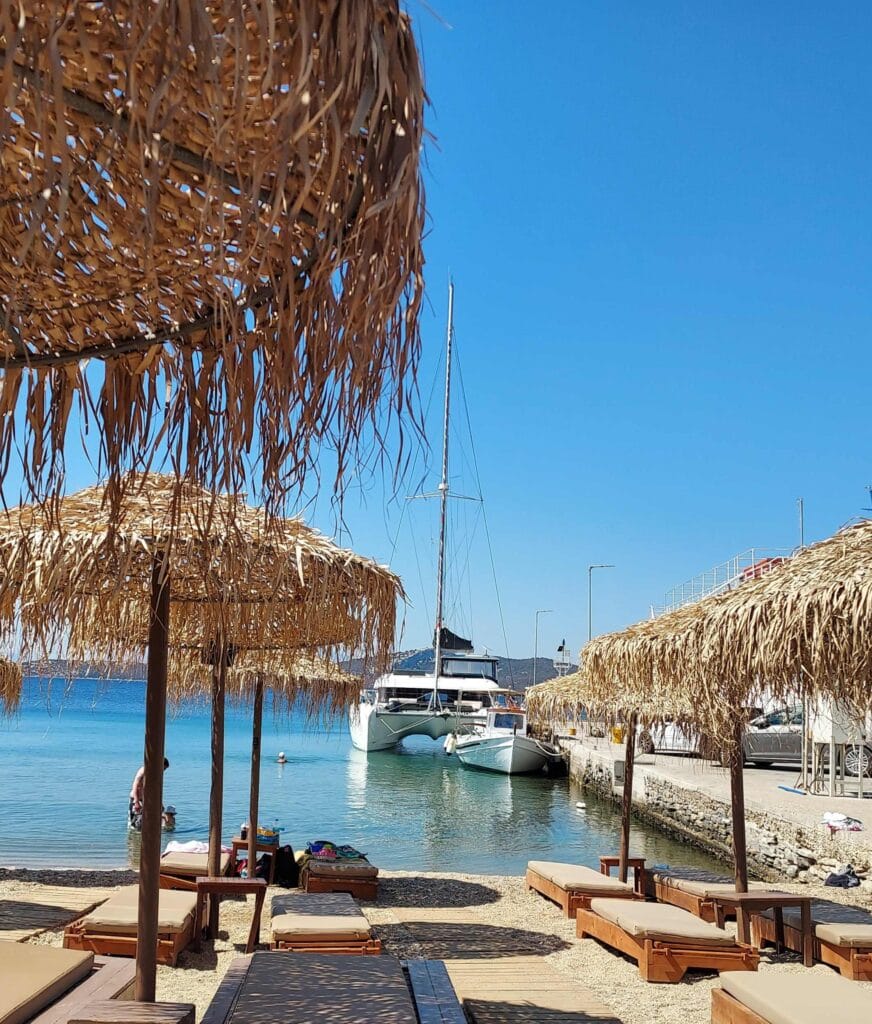
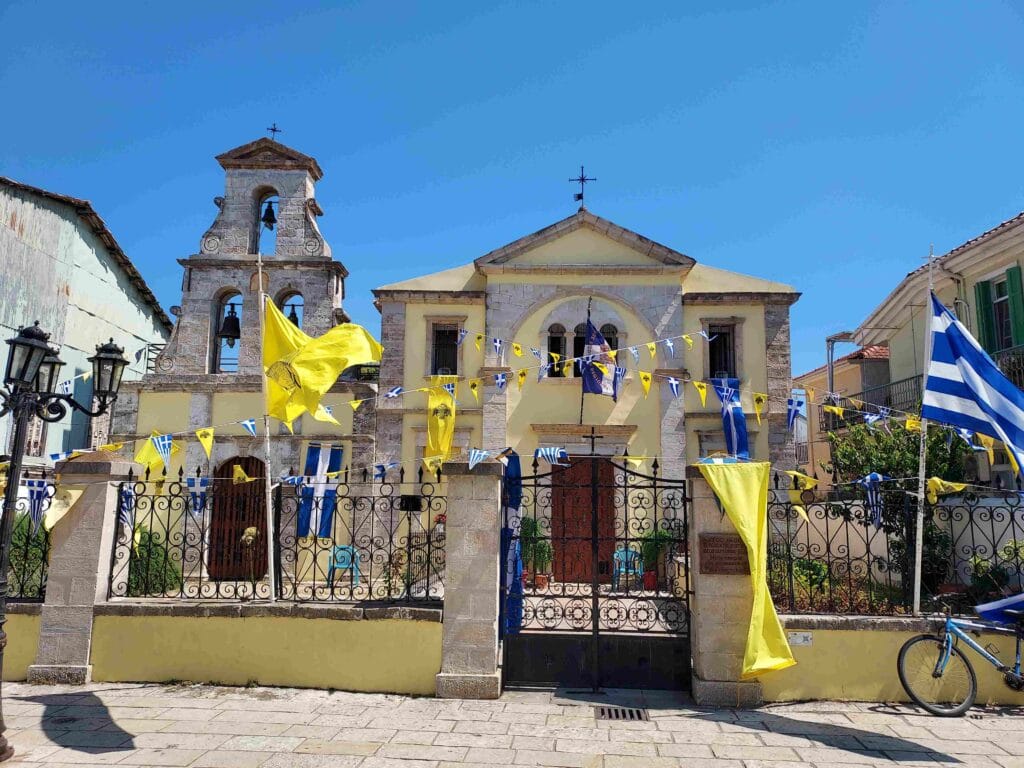
Evia is connected to the mainland at only one point, in the larger town of Chalkis, where there are two bridges — a big one and a small one — you can cross. There are also many ferries.
Chalkis
As we approached Chalkis by boat (written as Χαλκίδα in Greek), the contrast was striking: the coast of Evia had been peaceful and quiet, but Chalkis was lively and bustling!
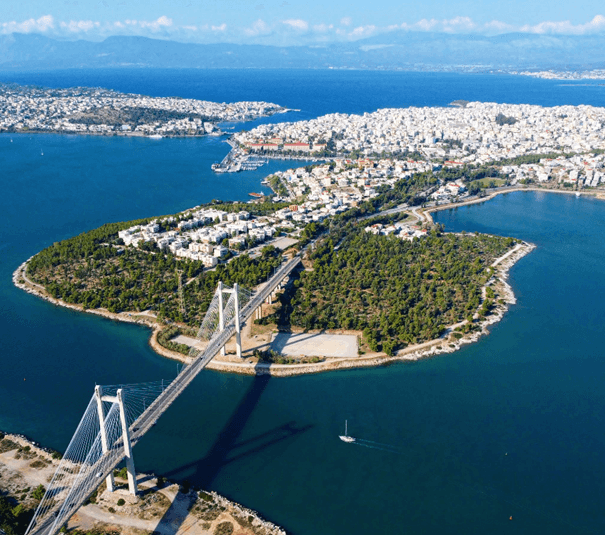
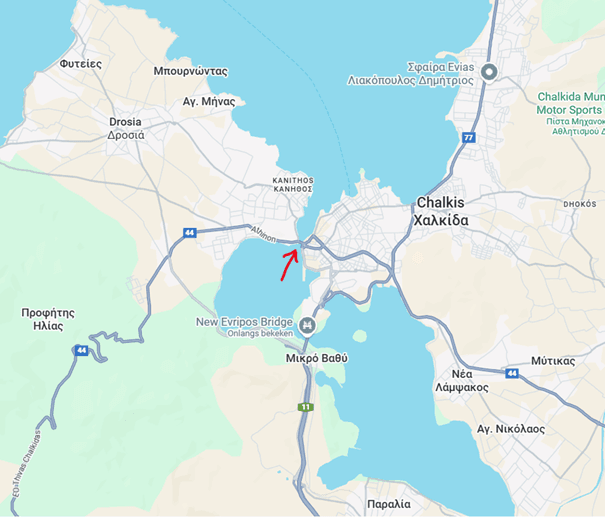
The first bridge you encounter (on the south side) is the big bridge you can see it above in the picture. It’s known as the New Evripos Bridge, and we could easily pass under it.
We ended up in a small harbor near the old bridge (also known as the retractable/low/sliding bridge). Because we needed to buy a ticket to pass through it and also find a harbor master in this busy harbor, we went ashore and discovered how charming Chalkis actually was.
Crazy Waters Bridge
The harbor master was relaxed; we were allowed to stay in this full harbor. When we found the kiosk to buy a ticket to pass under the bridge, a few things our eyebrows had raised earlier suddenly made sense. We had read the following on the sailors’ app while sailing toward Chalkis:
– you cannot tie up along a quay while waiting to pass the low bridge; you must anchor in the bay
– most sailors wrote that they passed the bridge at 1:30 a.m. or 3:00 a.m.
Both seemed strange to us at first, but once we saw the situation with our own eyes and received an explanation from the ticket seller, it all made perfect sense.
This small bridge is in the middle of the city and opens only once a day to maintain continuous traffic flow. When it opens, many boats pass through, which takes about an hour. That’s why they only open it at night for boats.
The reason the times vary on the sailors’ app is the strong current at this point. They check the tidal changes: every six hours at slack tide — when the water is calmest — the boats can pass through this narrow channel.
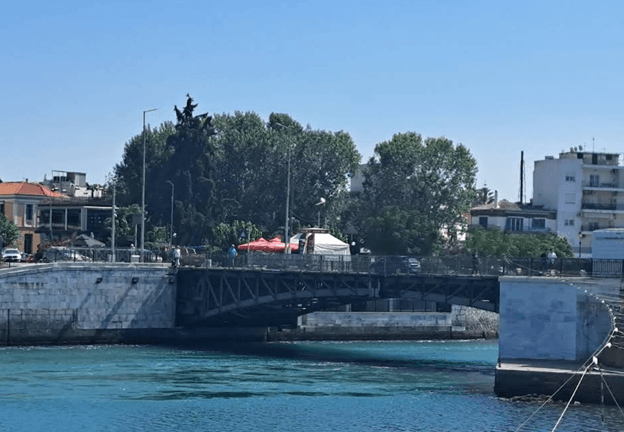
When we saw how turbulent the water was under the bridge and even 500 meters before and after it, we fully understood why they don’t want boats (in the middle of the night!) bouncing against the quay or each other in this narrow opening.
The old bridge is located at the narrowest point where Evia nearly touches the mainland, known as the Evripus Strait. The channel is so narrow here (only about 38–39 meters wide) that there is very little room for the water to flow through. Hence the name “Crazy Waters Bridge” (sometimes called “trella nera” in Greek). You can see it in the video below I made.
Just before dark, we left the harbor and anchored in the bay — together with about 15 other boats. You could see the small bridge as it was lit up with light bulbs at the bow of the bridge.
We had calculated that slack tide would be at 1:30 a.m. So we put on Netflix to kill the time.
At midnight, suddenly a call came through on the VHF from Port Control: “We are starting!”
Boats were called in order: first the largest one through the bridge, then number 2, and we were called as number 3. Perfect. We started the engines and followed the two boats ahead.
At night everything looks different, so it was nice to follow others and see the city lights along the quays. The small illuminated bridge itself was suddenly hard to see. Once we went through the opening, we understood why: the bridge split in the middle and slid sideways into the quay walls. No bridge at all!
Life really teaches you not to make assumptions — situations can be completely different from what you imagine, so you need to stay open to other scenarios.
We passed through the bridge, and at 1:30 a.m. we moored 100 meters further along the quay in the city. We had arranged this with the ticket seller on the other side so we could enjoy a peaceful night’s sleep.
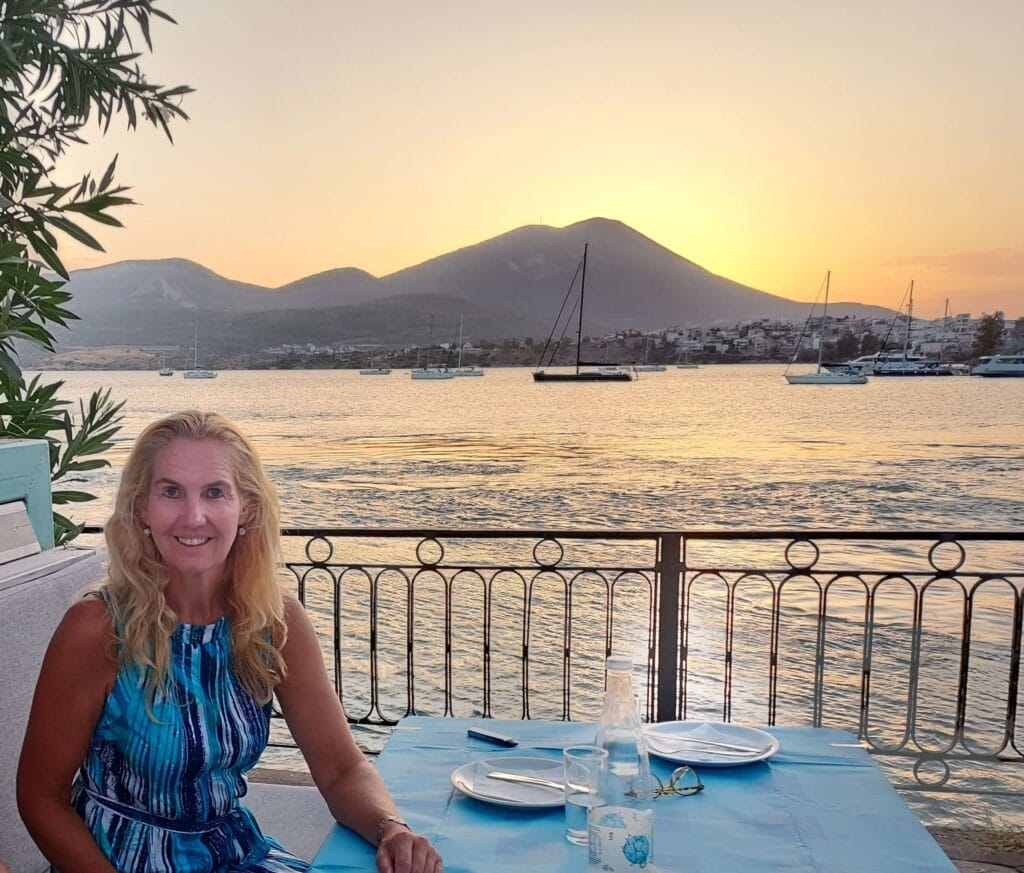
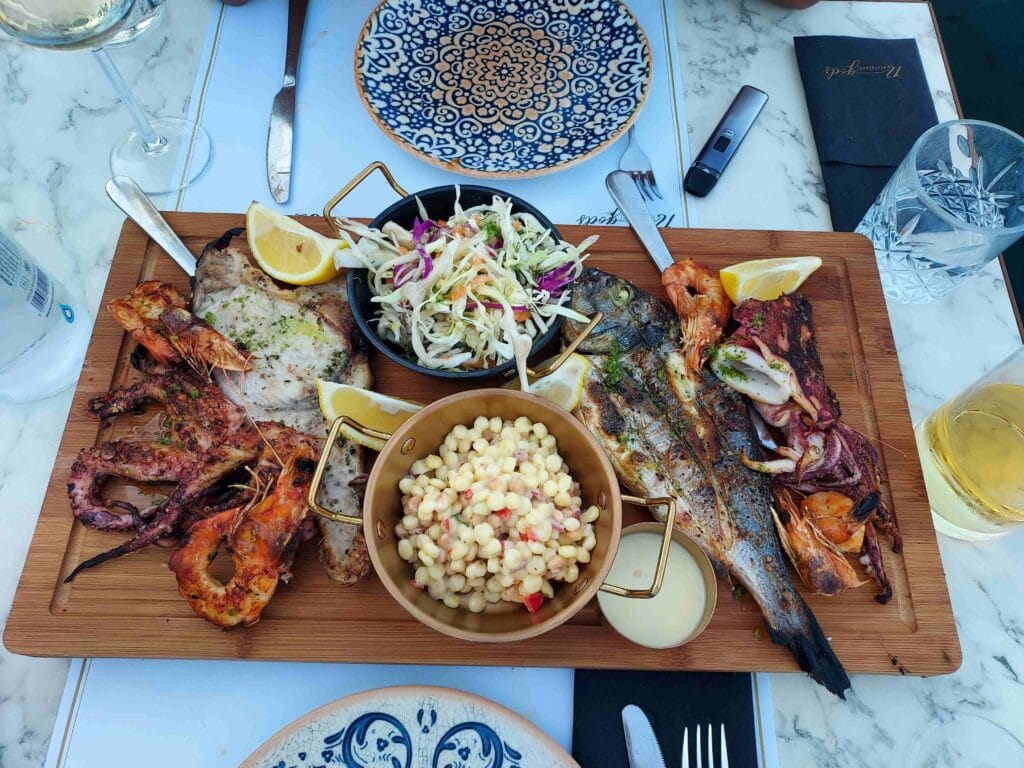
Chalkis turned out to be a really fun city; we spent another day exploring, enjoyed great food and found cozy spots.
Loutra (Thermal baths)
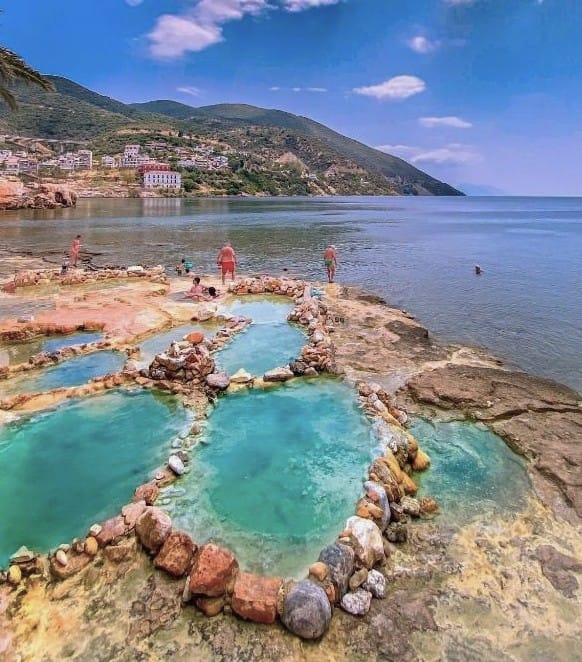
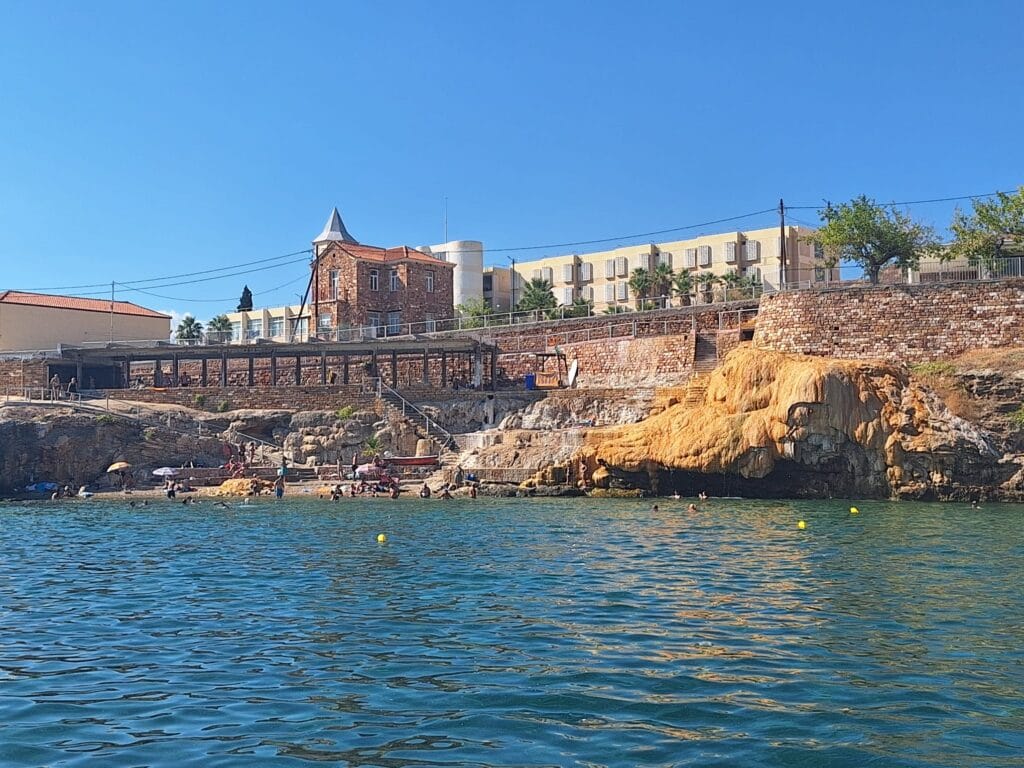
As we continued sailing north after Chalkis, we kept our eyes on the beautiful island of Evia on the eastern side. When we looked for a good lunch anchorage, we suddenly saw a special place: Loutra. Supposedly there were natural hot springs.
As we approached, we indeed saw ochre-coloured rock walls and dropped our anchor.
There are said to be more than 80 natural springs around Loutra. The springs originate deep underground — up to about 3,000 meters — due to geothermal activity.
The waters contain many minerals, including calcium, magnesium, iron, potassium, and sodium. The temperature of the spring water varies: some springs reach 75–85 °C.
The hot springs of Loutra have been used since ancient times. They were already mentioned by the Greek philosopher Aristotle in the 4th century BC. During Roman times, emperors such as Hadrian and Marcus Aurelius visited the baths.
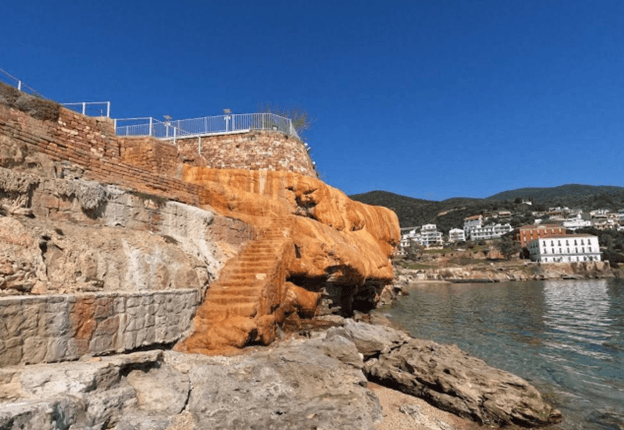
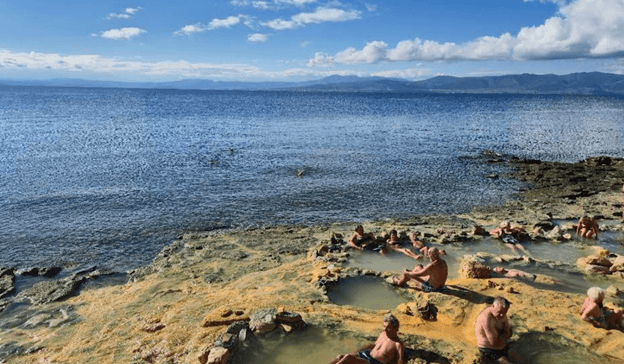
We jumped off the boat and swam to shore in about 10 minutes, and we could already feel the water getting warmer. The fascinating thing was that natural rock pools have formed right along the coastline.
We stepped into one of them — it was very warm, as it was closest to the steaming flow, so we chose a pool closer to the sea 😉. There were cut-open plastic bottles lying around, used to scoop the hot water over your body. Since the pools are very shallow, you can also spread the warm sand over your skin and rinse off properly. There were freshwater showers nearby.
There were even small waterfalls you could stand under.
We filmed this remarkable phenomenon — we thought it was a very fun and unique place.
We continued sailing north and in the distance we could already see the Sporades islands. That would be our next destination!