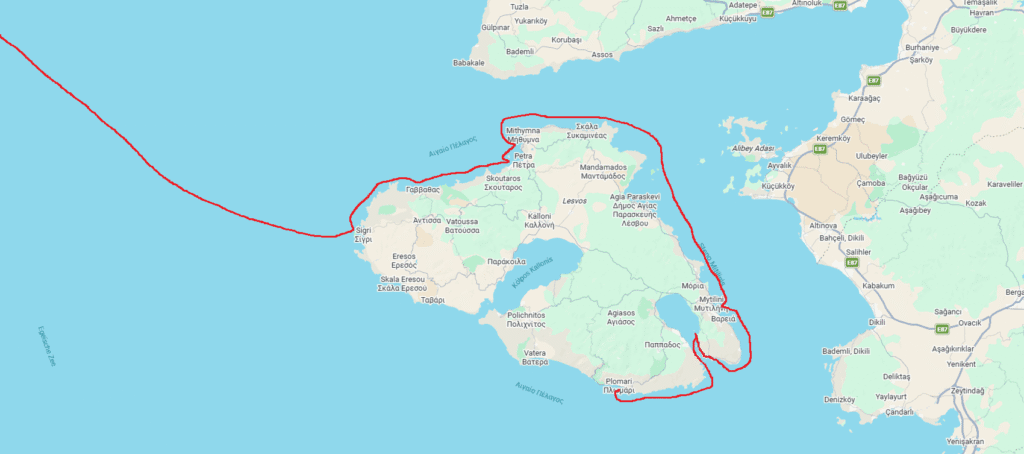
Wonderful to be back on the Greek islands again! Limnos truly surprised us with its varied landscapes and beautiful harbors beneath the island’s high mountains. Then came a long crossing to Lesbos — eight hours of sailing — but it was rewarded with a fantastic week exploring the coastline of Lesbos.
Sigri
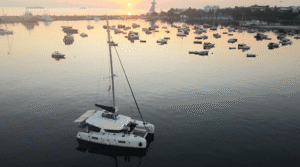
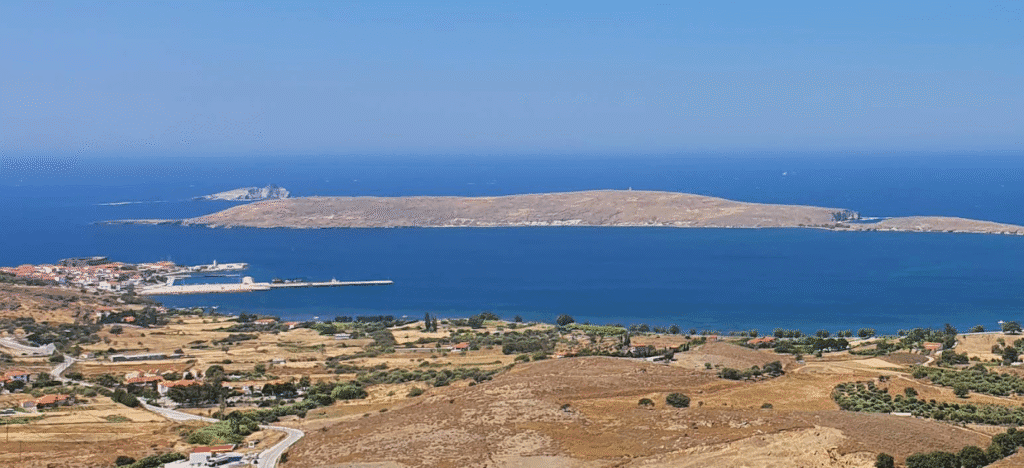
We arrived on the western side of Lesbos in the village of Sigri. The village and its harbor were somewhat hidden behind a long, narrow island lying in front of the entrance, making it an exceptionally sheltered and peaceful harbor.
The name “Sigri” is believed to come from the Latin word securus, meaning “safe” — a reference to the protected harbor.
The village was also guarded for centuries by an 18th-century Ottoman fortress, built to defend against pirate attacks.
From the quay, you look out over a landscape completely different from the greener eastern side of Lesbos: dry, volcanic, and almost otherworldly.
Petrified Forest
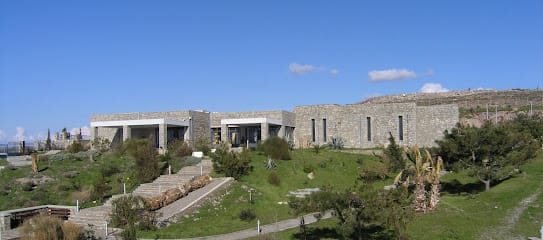
One of the biggest highlights in Sigri is the Natural History Museum of the Lesvos Petrified Forest, which tells the story of the fossilized forest formed millions of years ago through volcanic activity.
Just outside Sigri lies this unique geological site, where tree trunks have literally turned to stone.
About 20 million years ago, western Lesbos was not a dry landscape but a dense subtropical forest filled with enormous trees. Powerful volcanic eruptions in the Aegean region buried the forest under thick layers of ash, lava, and mudflows, sealing the trees almost airtight. Because little oxygen reached them, the trunks did not decay as they normally would.
Over time, groundwater rich in dissolved minerals such as silica flowed through the buried wood. Slowly, the organic fibers were replaced by minerals — a process called petrification.
What makes it so special is that the wood’s structure remained preserved. Growth rings, bark, and even roots are sometimes still visible, yet fully transformed into stone.
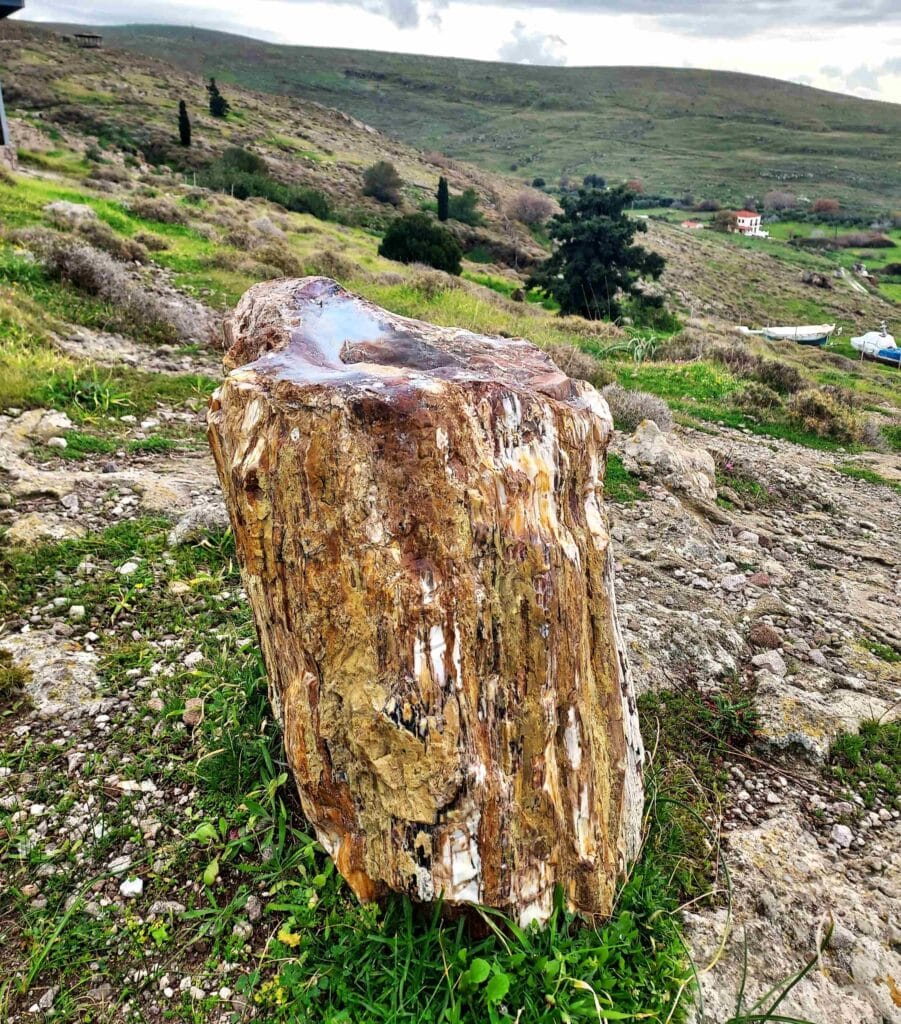
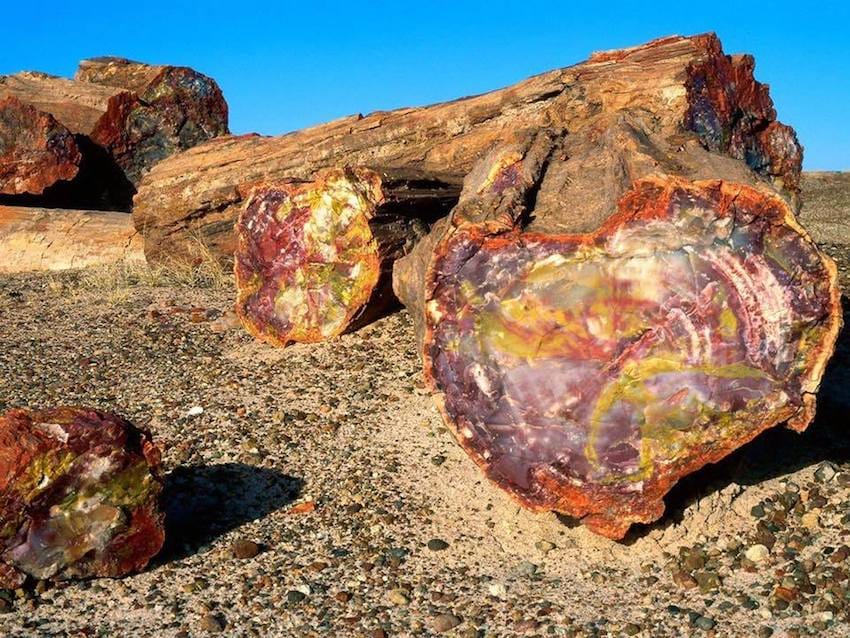
Today you can see tree trunks that are millions of years old but look as if they fell yesterday, with colors ranging from red to yellow and black depending on the minerals present.
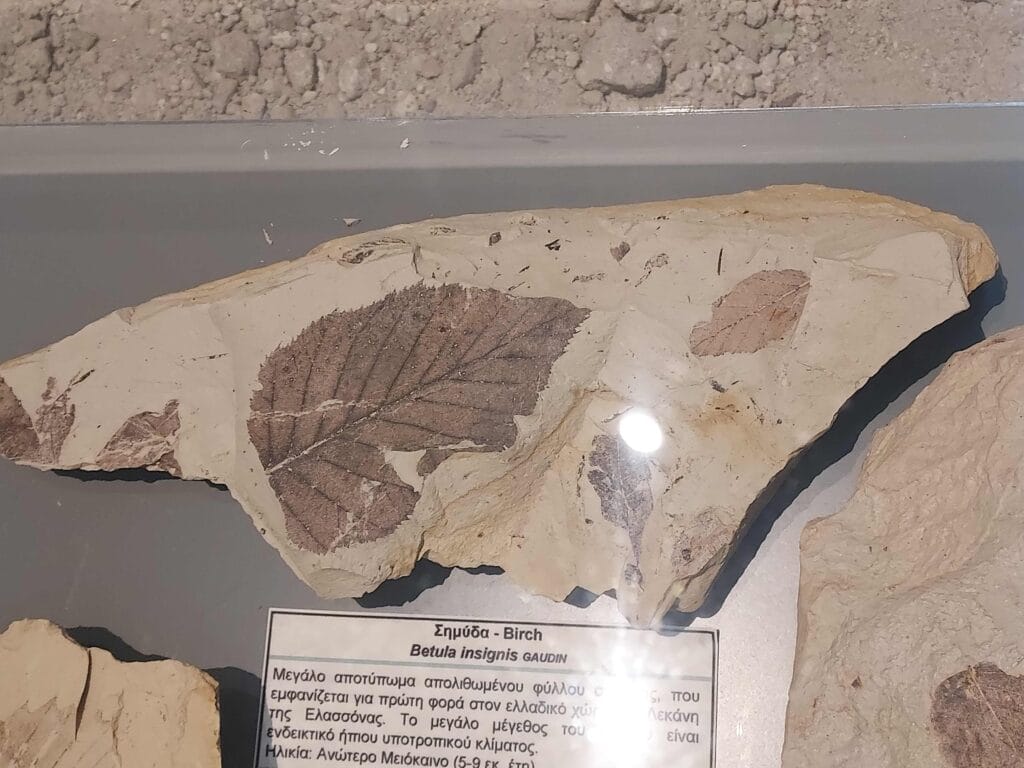
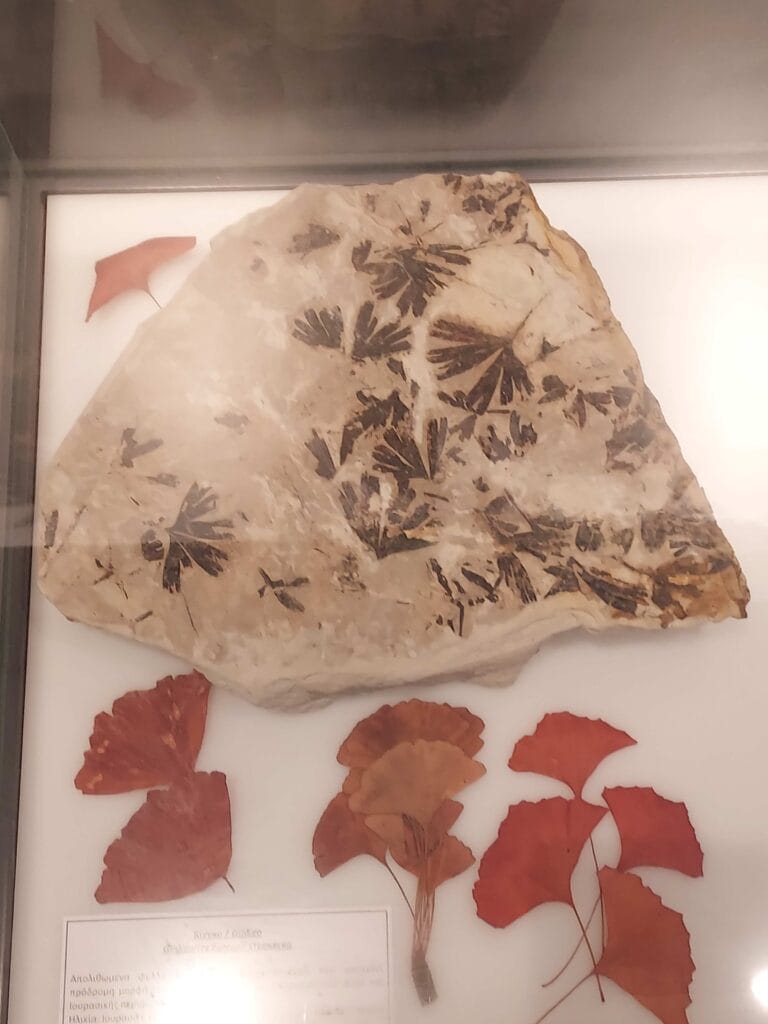
What fascinated us most were the leaf imprints preserved in stone — even the fine veins are visible millions of years later. This was truly one of the highlights of Lesbos for us, and the museum explains the island’s volcanic history beautifully.
The Church of Saint Theophanes Sugrianis
Near the harbor we passed a church called Agios Theofanis.
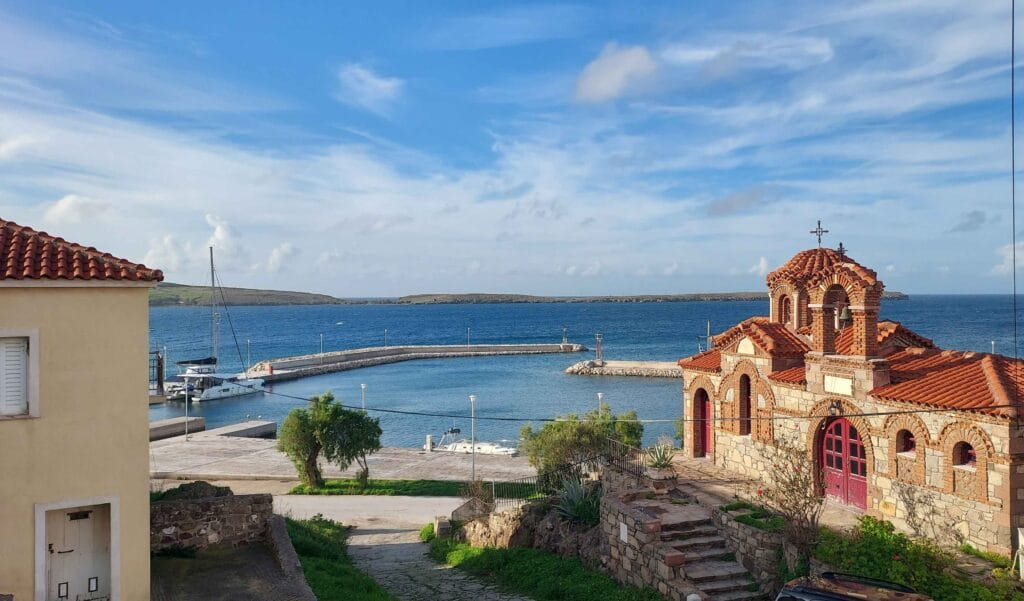
Theophanes Sugrianis lived in the 16th century and became known as a monk and spiritual leader during the period when the island was under Ottoman rule. His name is still spoken with respect by locals.
Inside, the church turned out to be richly decorated, with traditional golden icons and oil lamps typical of the Greek Orthodox — almost mystical — architectural style.
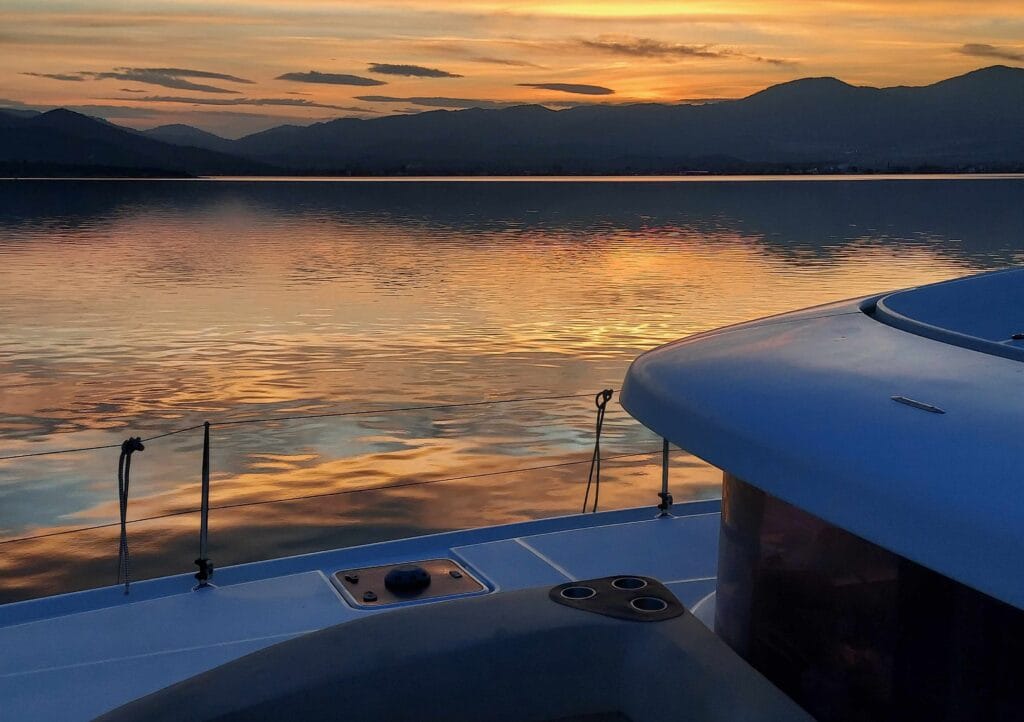
After a lovely day in Sigri, we watched the sunset — said to be one of the most beautiful on the island — with golden light falling over the surrounding hills.
Petra
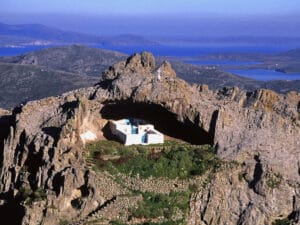
We continued sailing along the north coast of Lesbos. Petra, meaning “stone,” is a charming coastal town. True to its name, a massive rock about 40 meters high rises in the middle of the village, topped by the church Panagia Glykofilousa.
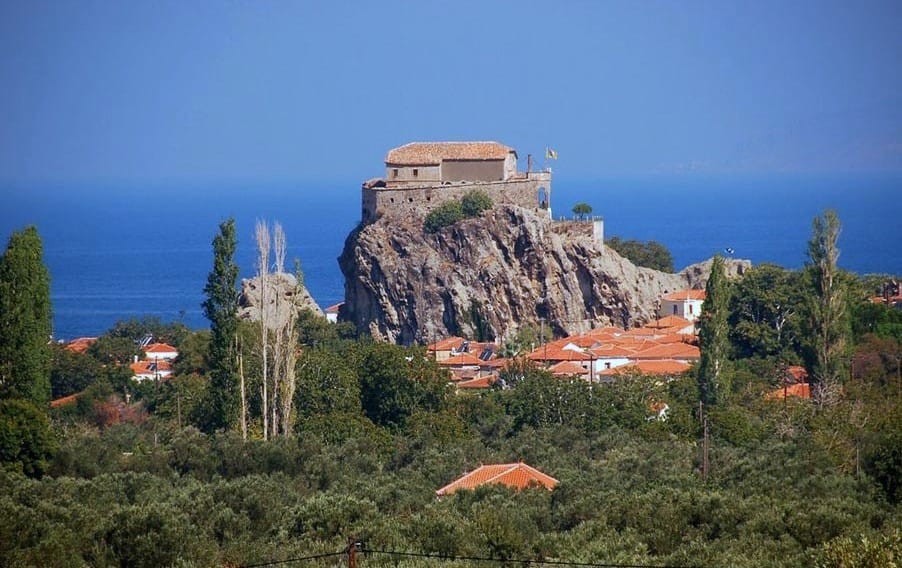
The name Glykophilousa literally means “the sweet-kissing Mary,” referring to an iconographic depiction of Mary lovingly kissing her child — a symbol of protection in Orthodox tradition. According to local legend, an icon of Mary was miraculously found on the rock, after which the church was built there. It holds deep religious significance and attracts many visitors, especially during Orthodox celebrations on August 15 (Assumption Day).
Tradition says Mary protects fishermen and sailors here. From the rock you have a wide view over the Aegean Sea, and captains would pray for protection before setting sail.
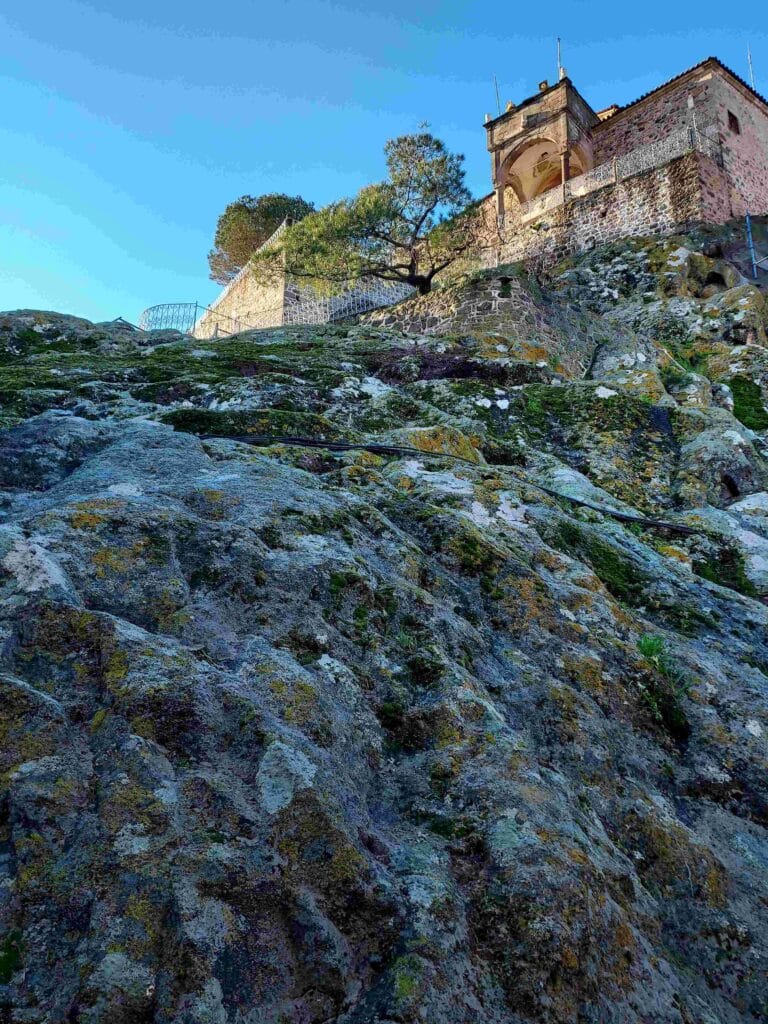
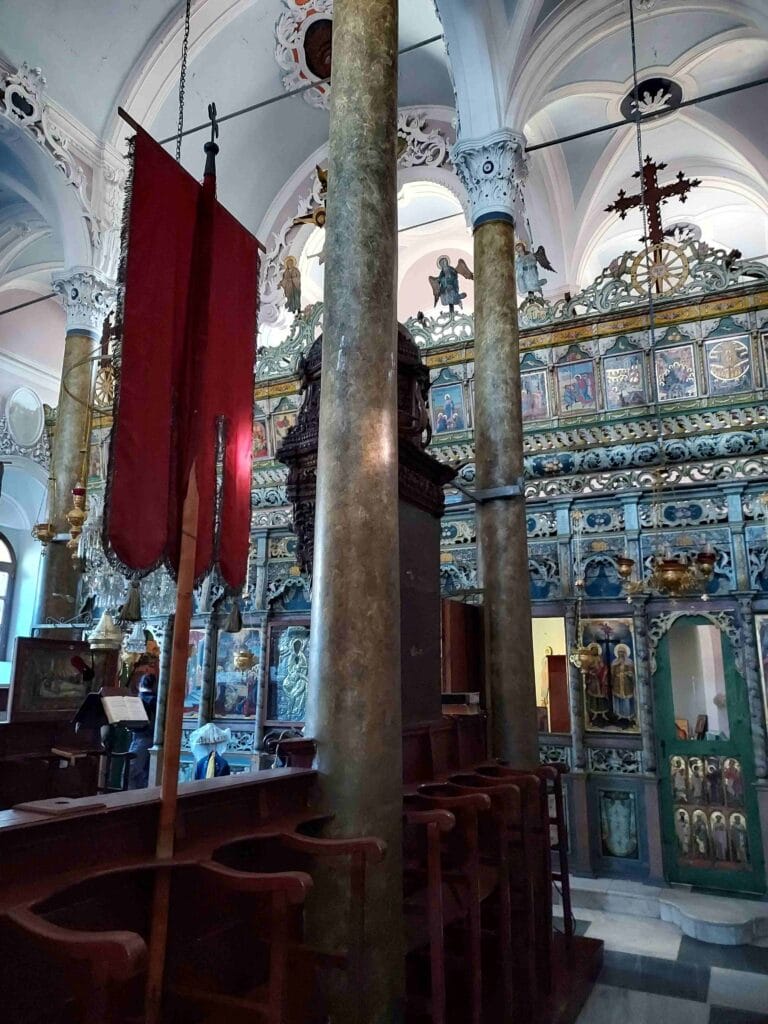
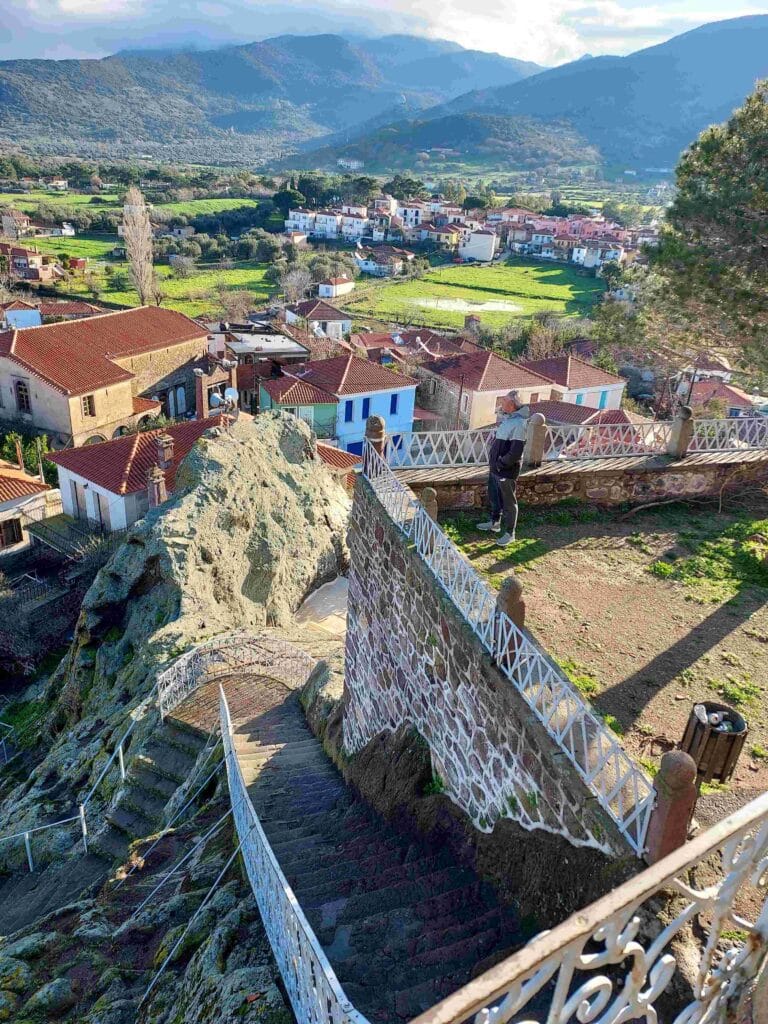
The 114 steps up to the church feel like a small pilgrimage, but the panoramic view over the sea and red rooftops makes every step worthwhile.
Vareltzidaina Mansion
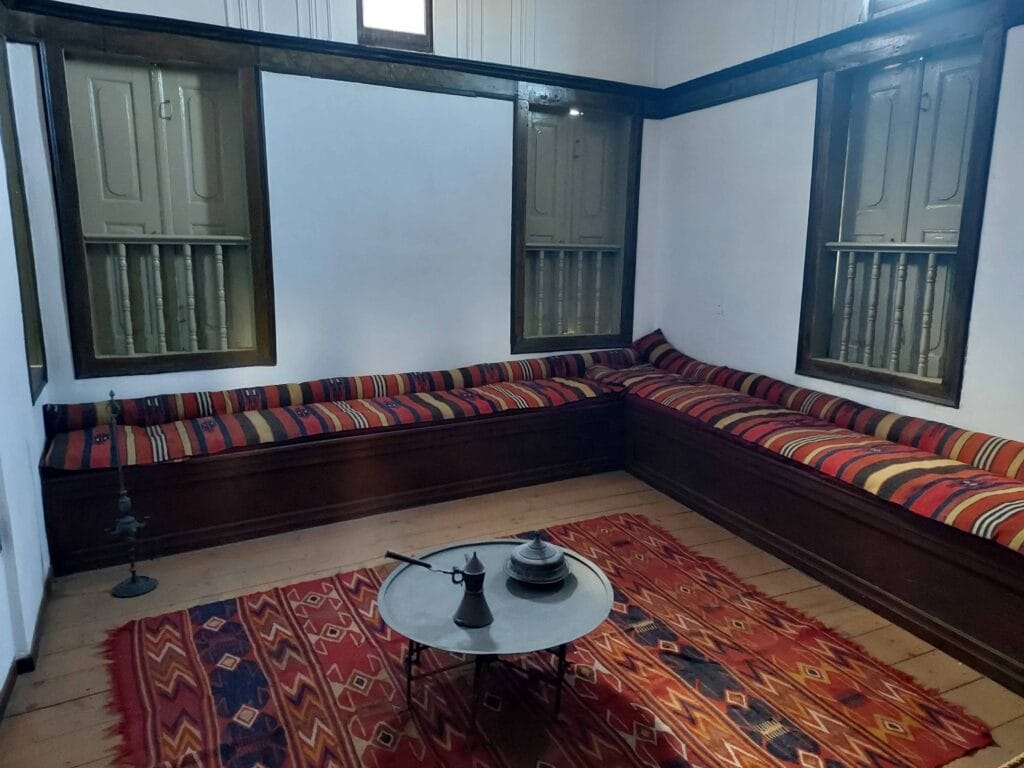
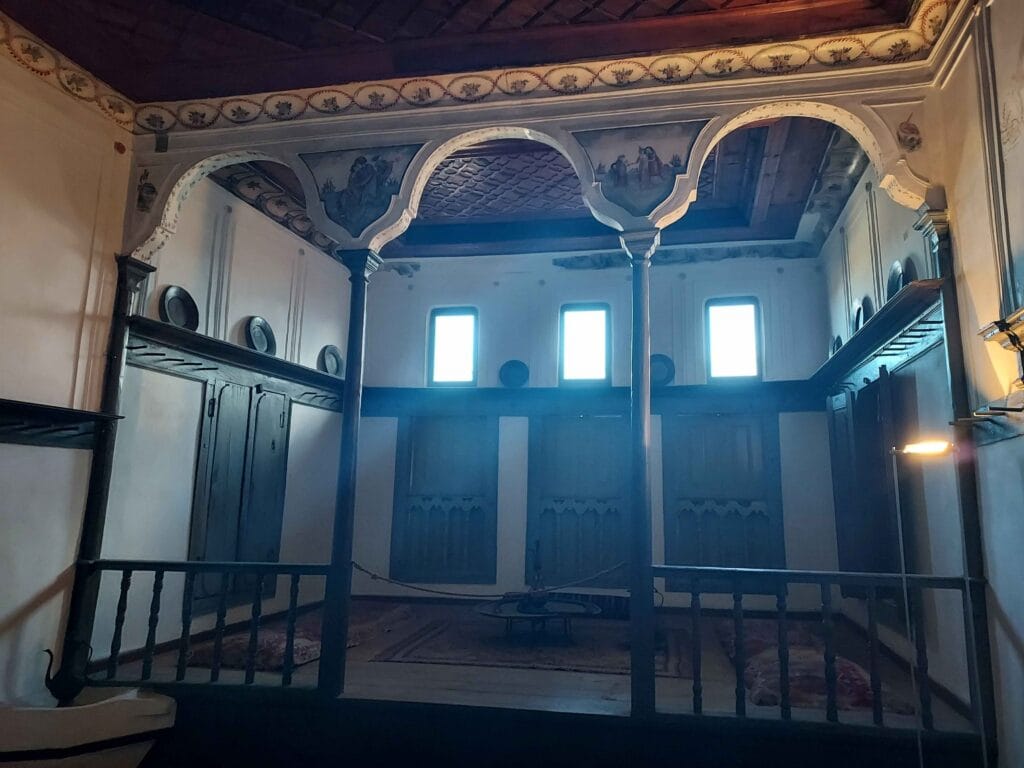
At the base of the rock stands one of Petra’s most remarkable historic houses. Built around 1790 by a wealthy local family, it is a classic example of traditional island architecture, with thick stone walls, wooden balconies, and a sheltered courtyard.
The name “Vareltzidaina” refers to the family who owned the house. Like many homes in Petra, it tells the story of a time when trade, olive oil production, and shipping brought prosperity to the island.
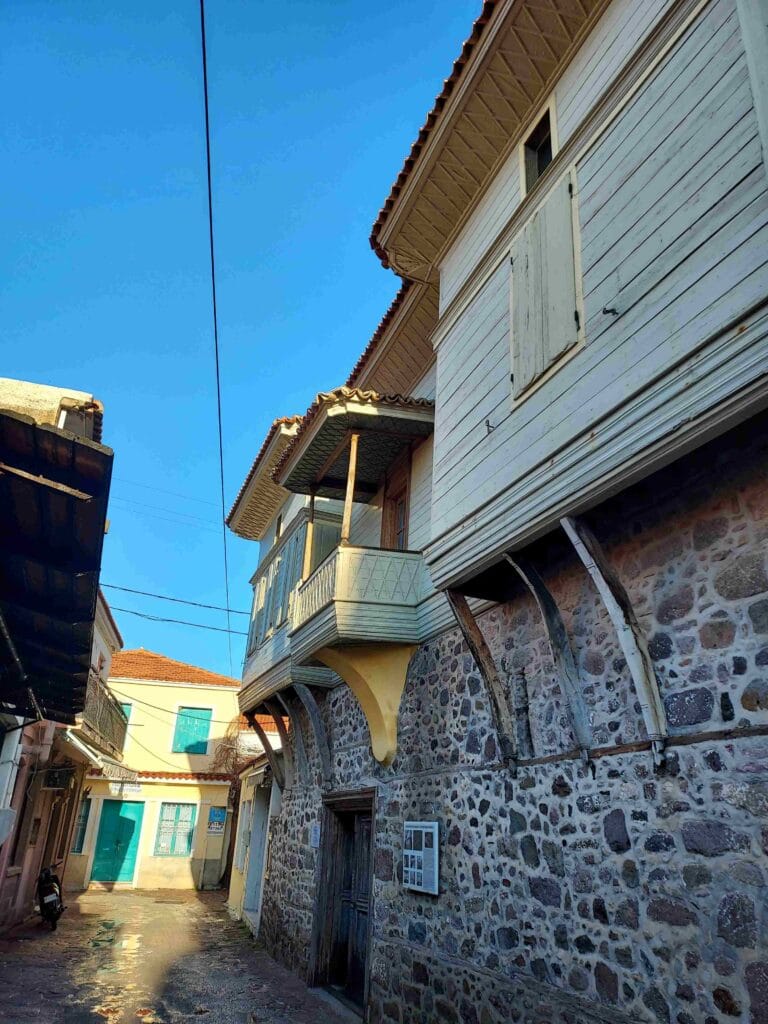
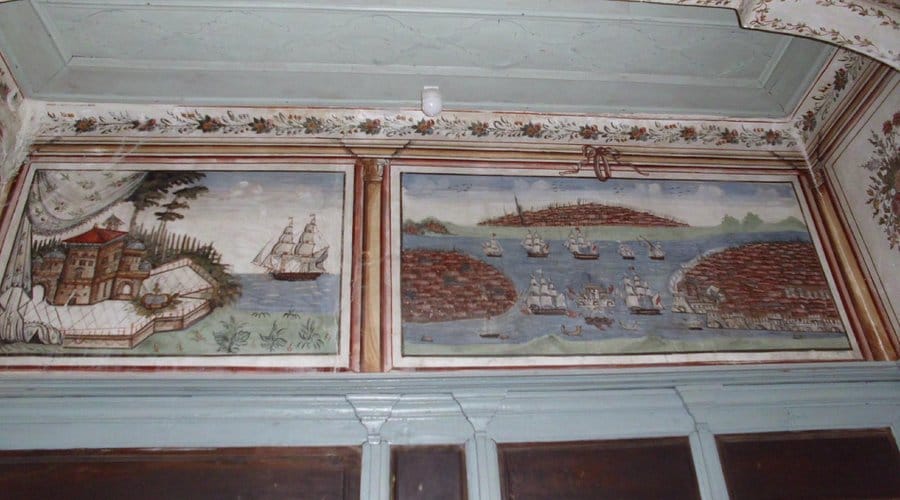
Inside you find original furniture, textiles, kitchenware, and religious objects showing how a well-to-do family once lived — narrow rooms, low ceilings, and beautifully preserved details, including carved wooden ceilings and traditional storage spaces.
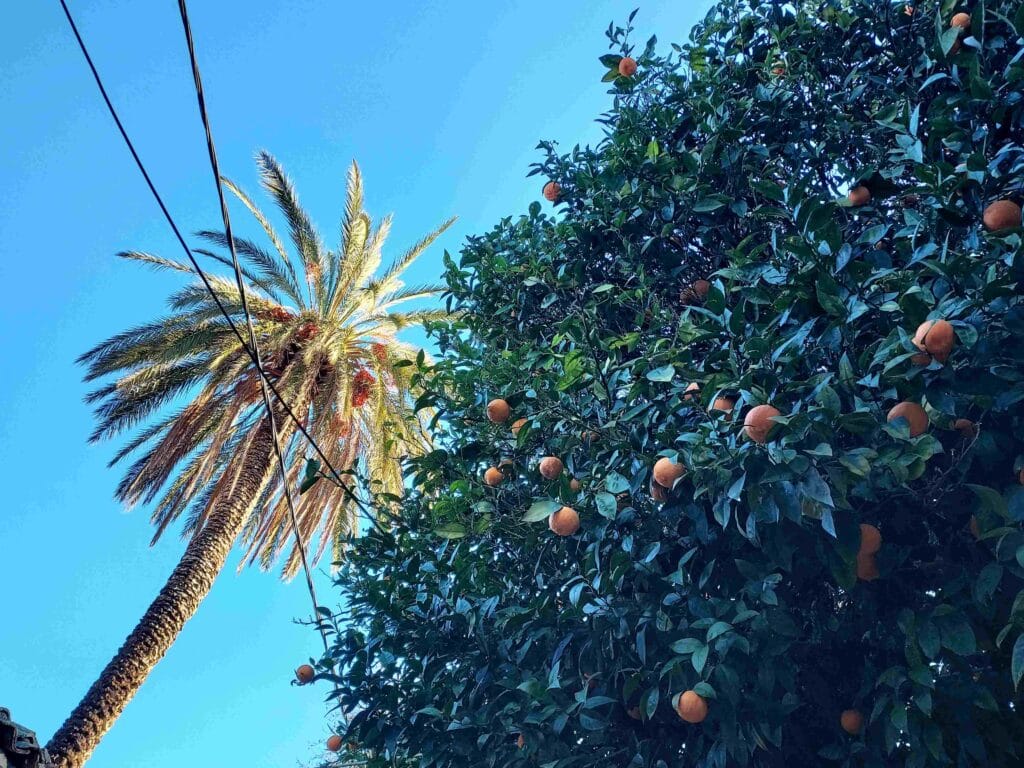
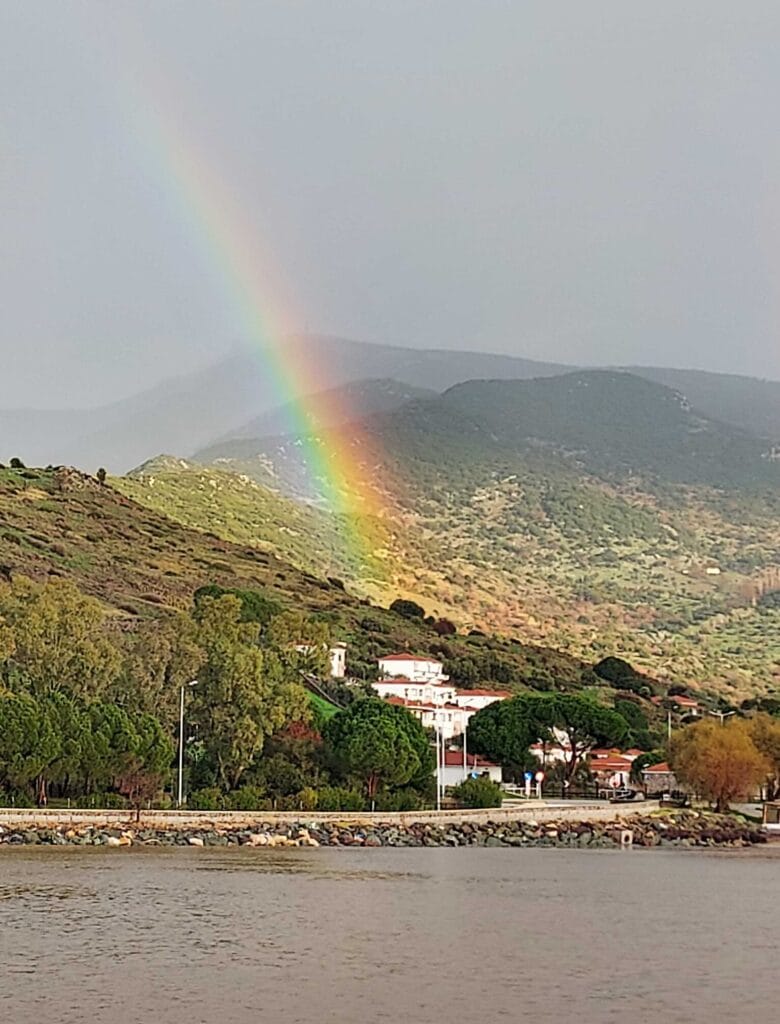
We cycled back to the harbor from Petra, passing citrus trees everywhere — and apparently we found the white house with the pot of gold at the end of the rainbow!
Molyvos
Just half an hour north of Petra lies Molyvos.
It is often seen as one of the most beautiful villages in all of Greece, and when we moored our boat in the harbor, we immediately understood why.
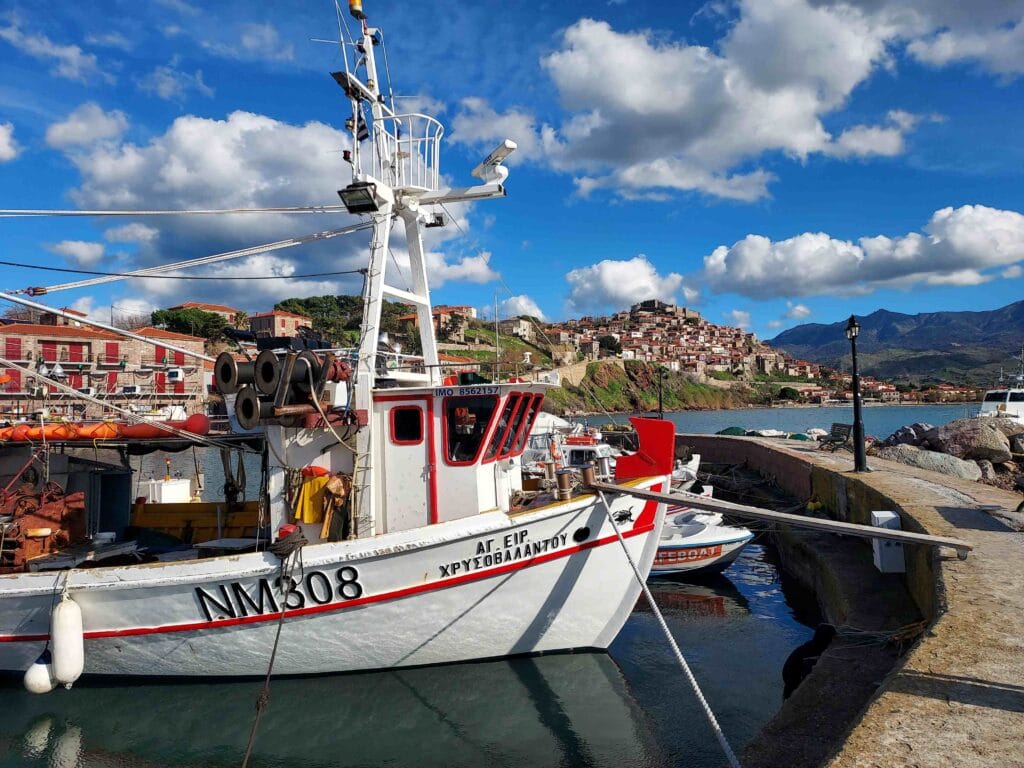
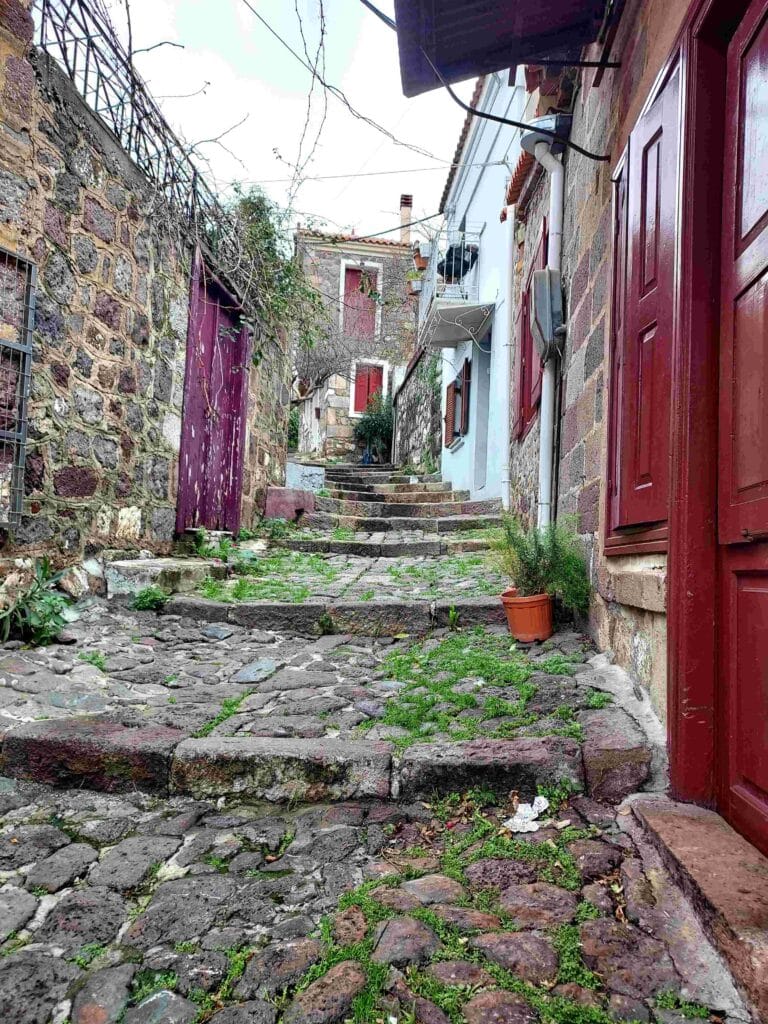
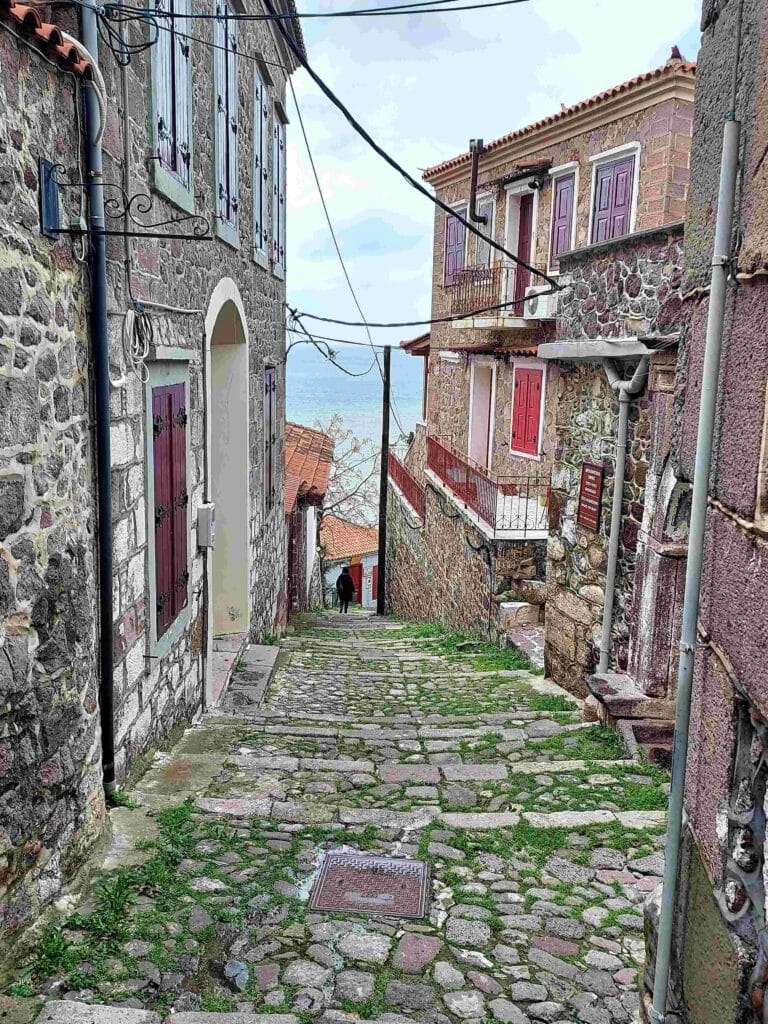
Cobblestone streets wind upward past stone houses with wooden balconies — a place where it feels as if time has stood still.
The medieval castle atop the hill dominates the skyline and has witnessed both Byzantine and Ottoman times.
We sent our drone up to capture Molyvos from a bird’s-eye view.
Mytilini
On the eastern side of Lesbos lies the capital. While the mountain villages feel sleepy and quiet, Mytilini is lively and vibrant. The marina is located right in the city, conveniently separated from the ferry port where large cruise ships arrive and a quay where grey military vessels dock.
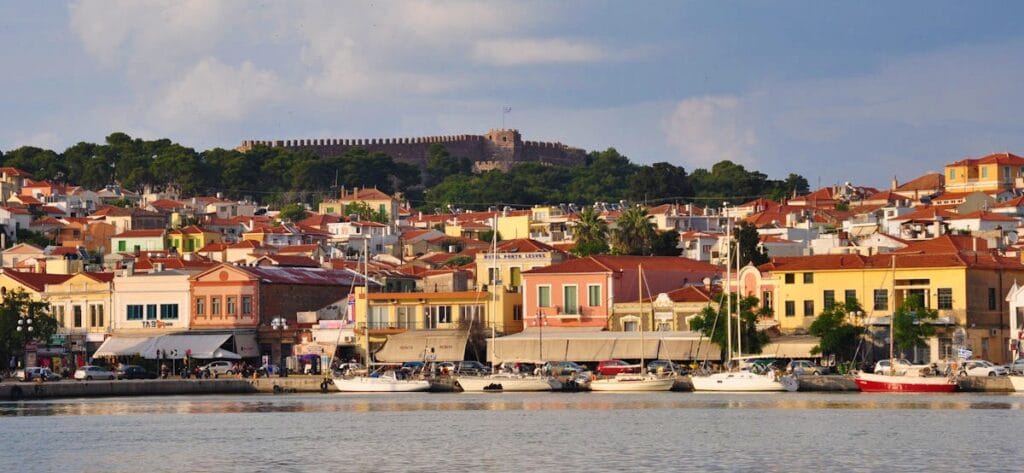
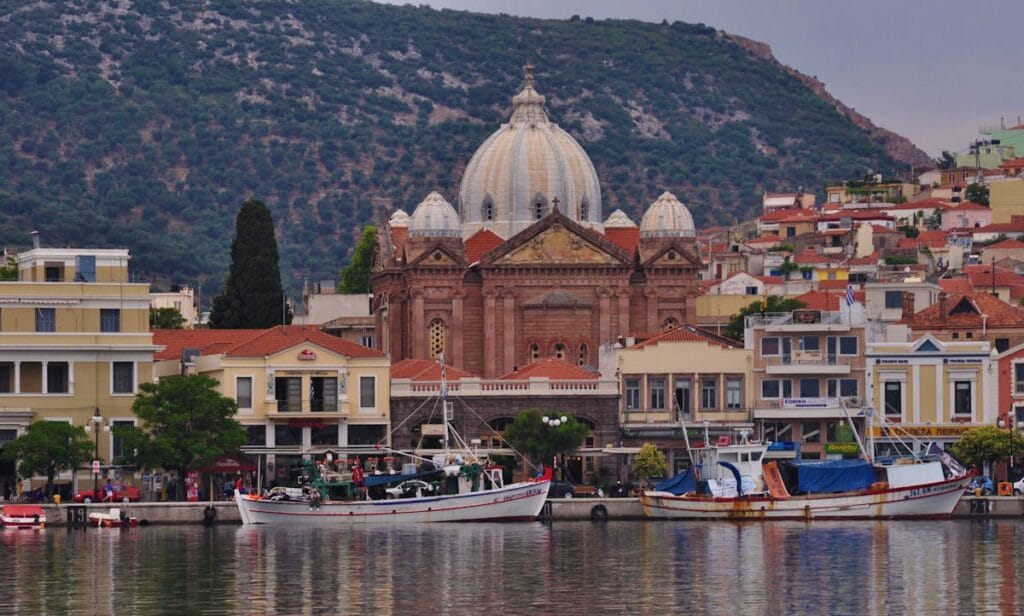
We moored our boat here and, because it was extremely quiet in winter, we could choose almost any spot. The colorful neoclassical buildings, open shops, music from restaurants, and the city’s energy immediately lifted our mood.
Castle of Mytilini
In the photo above you can also see the Castle of Mytilini, visible from almost every viewpoint in the city. Not only because it stands on a high hill, but also because it is one of the largest castles in the Mediterranean.
The first structures date back to the Byzantine period (6th century), likely built on the remains of an ancient acropolis. In the 14th century, the Genoese Gattilusio family greatly expanded the fortress while ruling Lesbos. It was meant to protect the city from pirates and enemy fleets. After the Ottoman conquest in 1462, additional walls, bastions, and storage areas were added, giving the complex its present vast size.
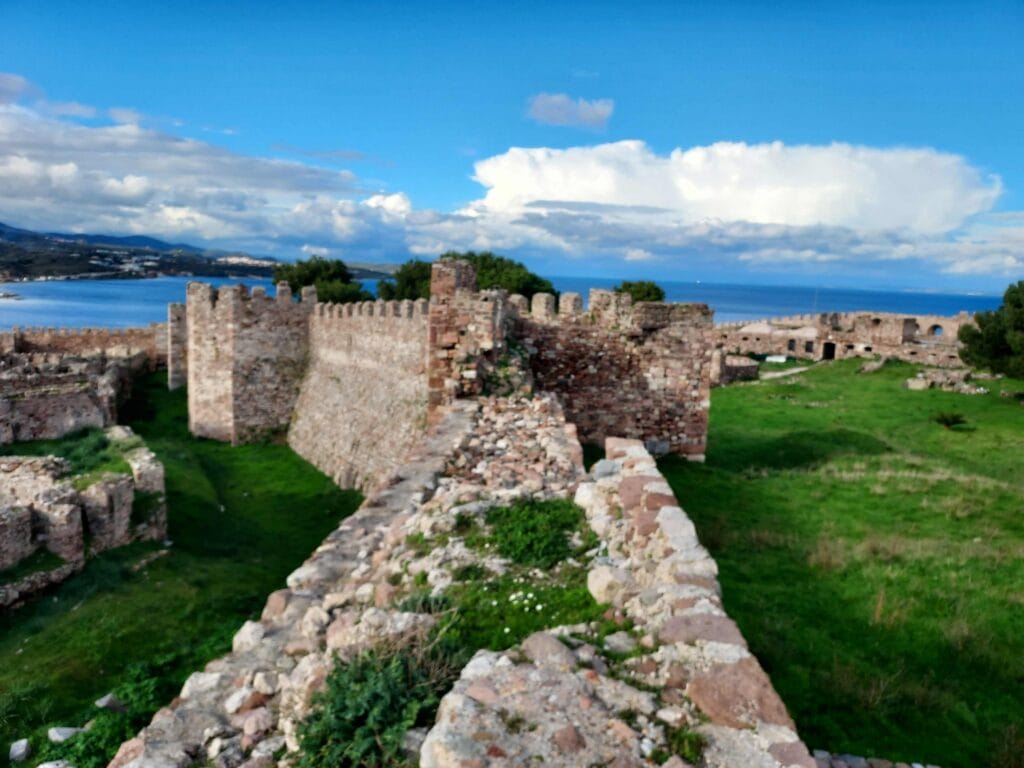
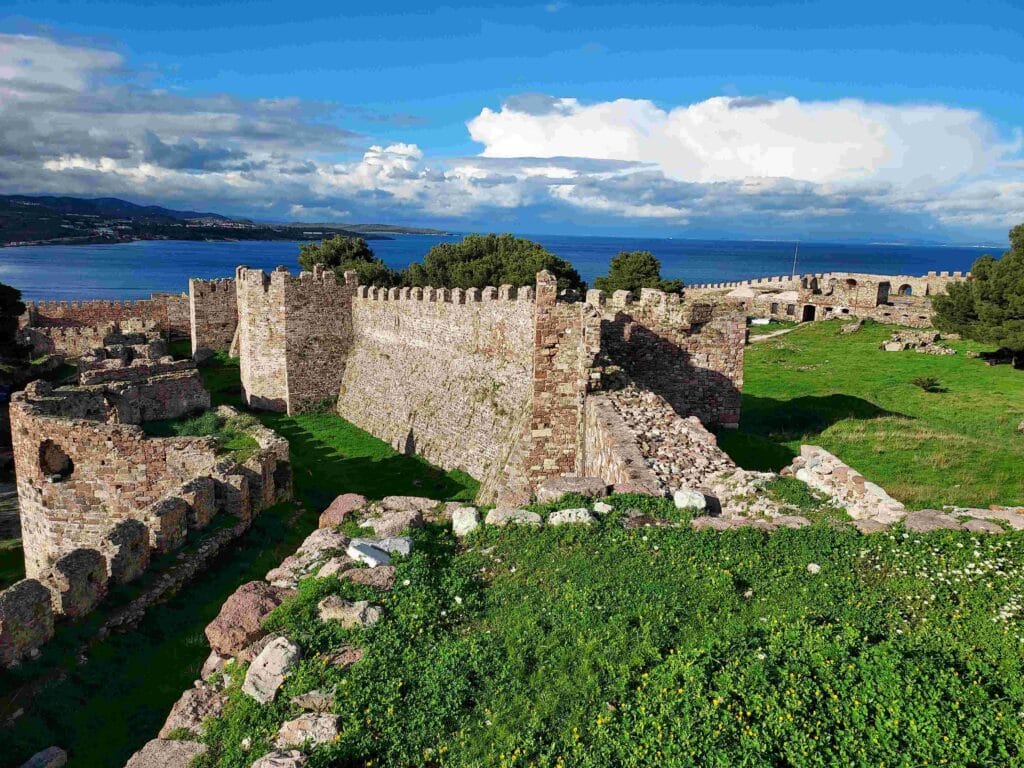
Covering around 60 hectares, the castle reflects Mytilene’s strategic importance as a military and trading center near the Turkish coast.
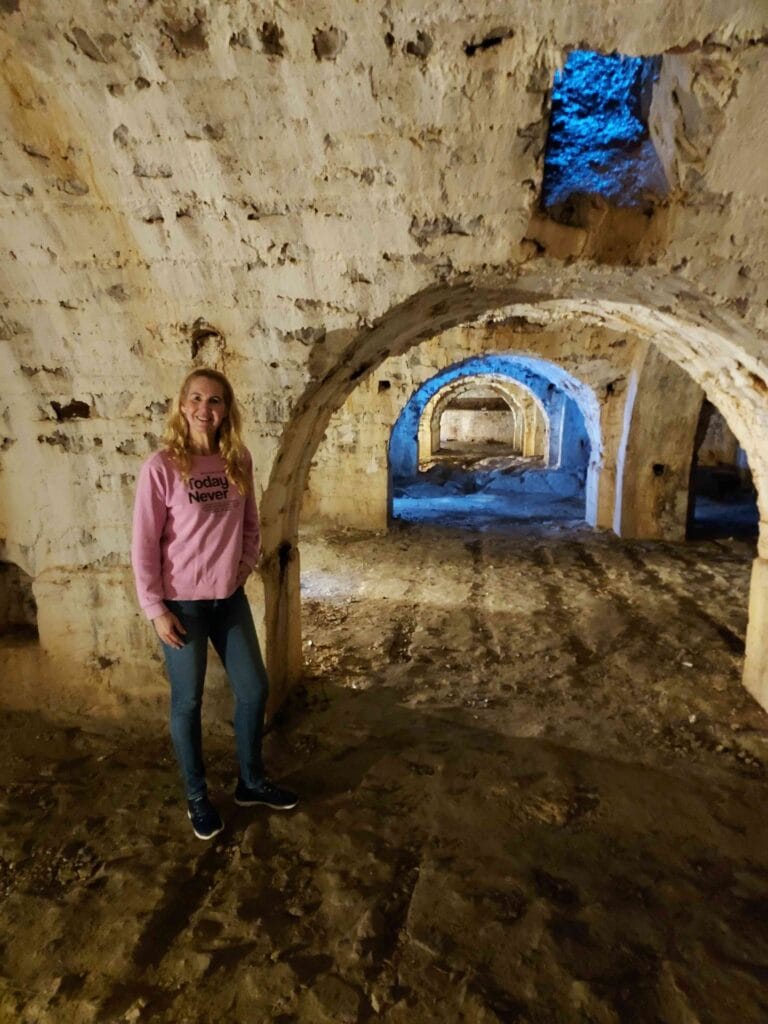
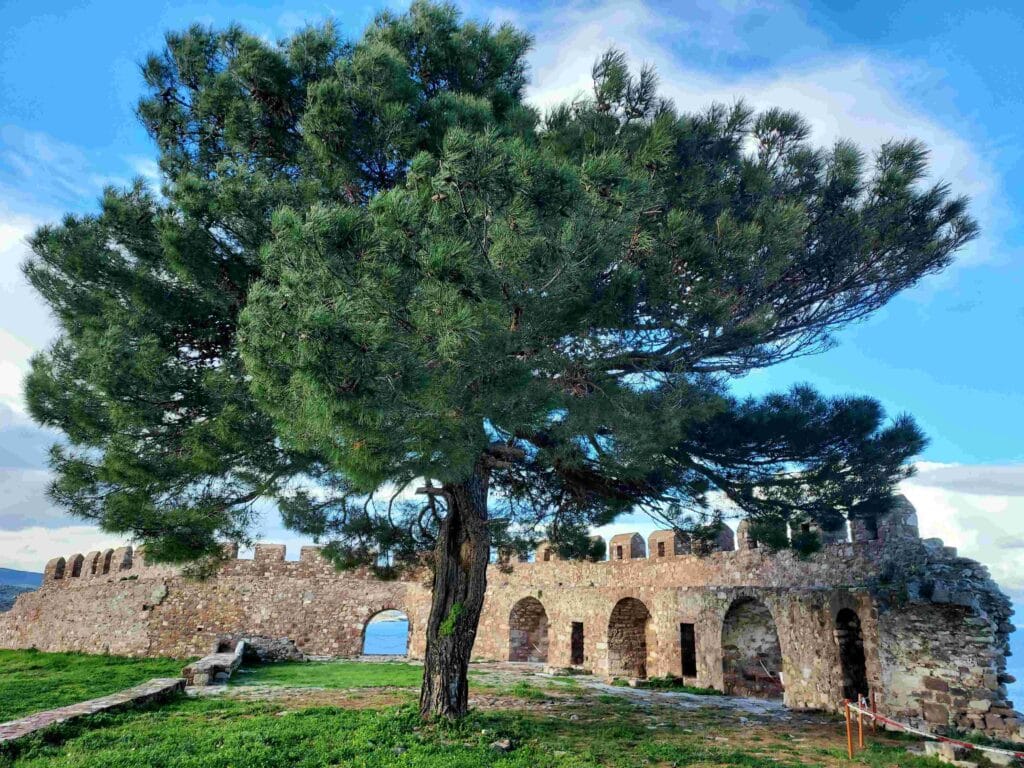
We spent an entire afternoon exploring the grounds, passing Ottoman bathhouses, reservoirs, underground storage rooms, and an old mosque.
Statue of Liberty
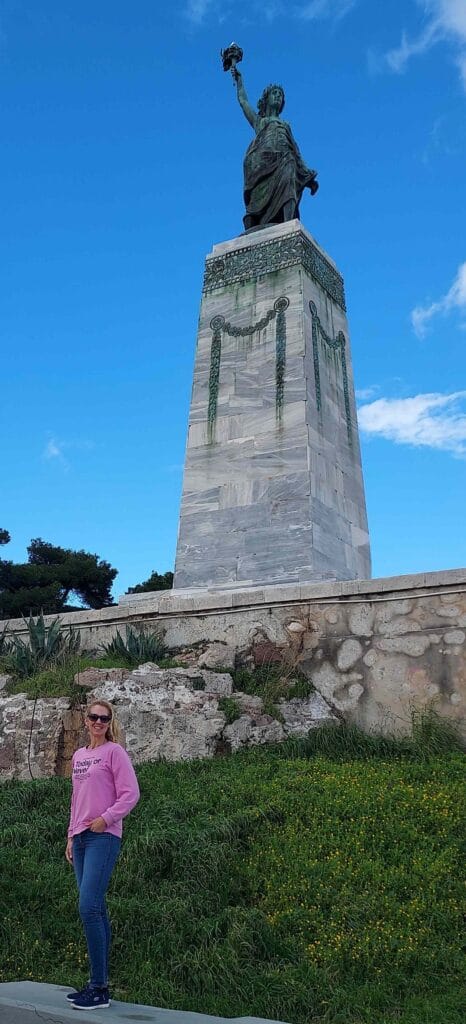
During our preparations for Mytilini, we noticed a “Statue of Liberty,” which we were curious to see. It resembles a mini version of its big sister in New York: both stand at a harbor entrance, have massive pedestals, hold a torch in the right hand, and are made of bronze.
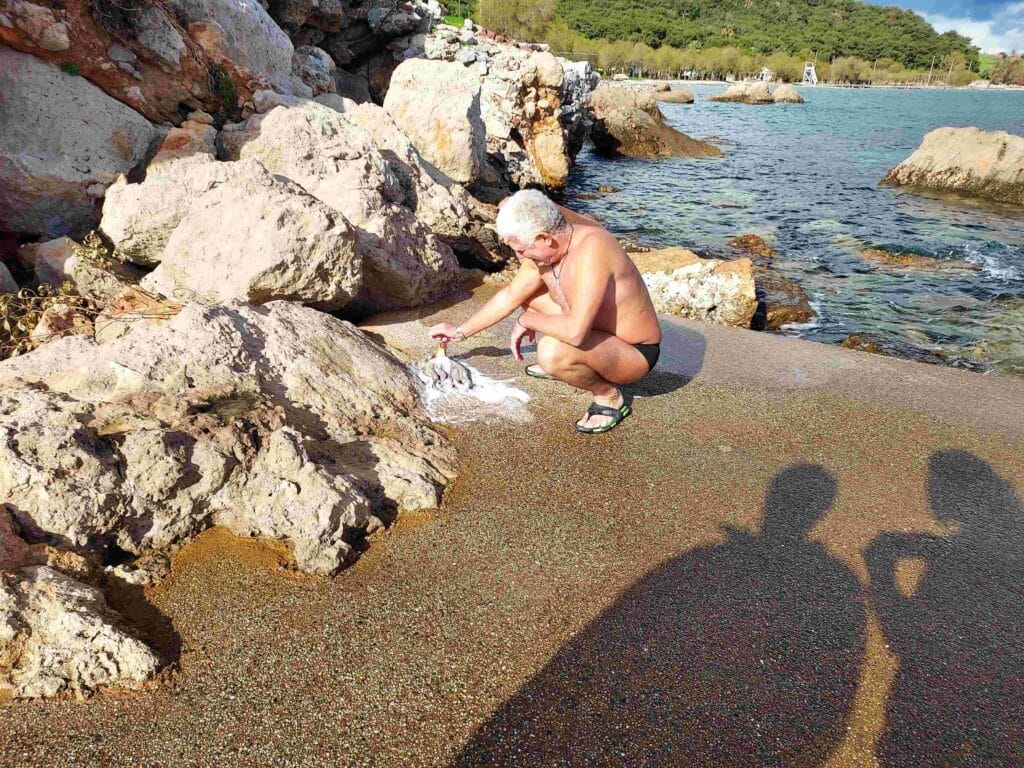
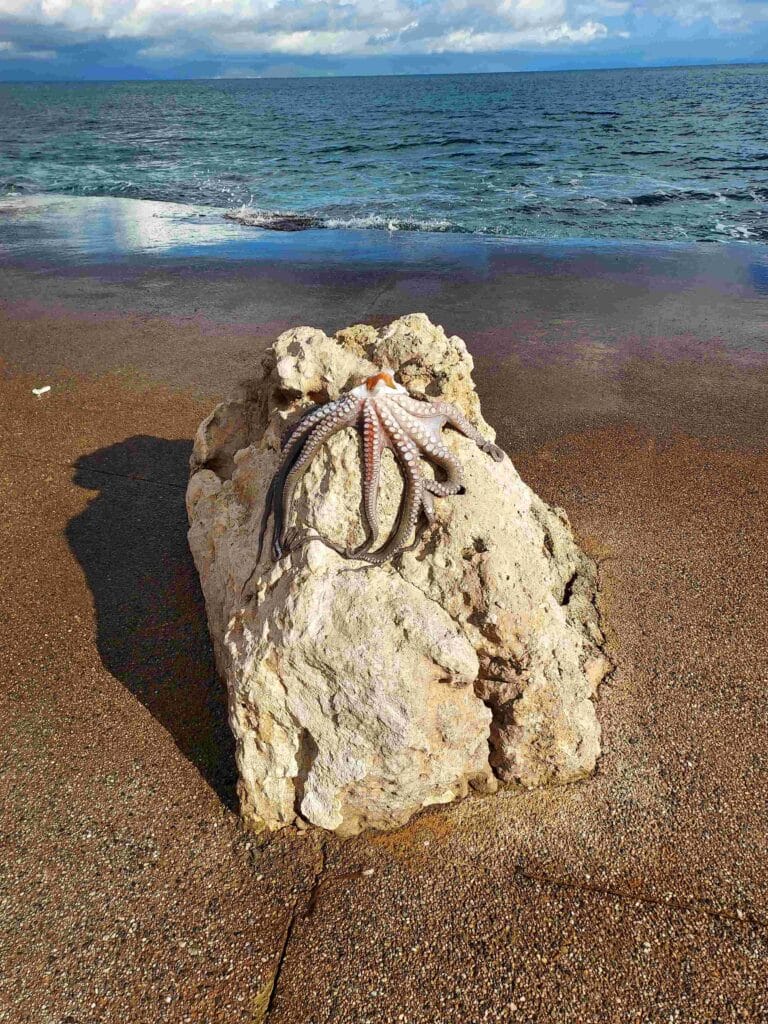
Another moment that caught our attention was a diver washing something at the water’s edge — a large octopus. He rubbed it over the stones to release stress from the body and tenderize the meat. “For the BBQ,” he laughed, laying it out to dry on a rock.
Refugee Camp
Due to its proximity to Turkey, many refugees arrive in eastern Lesbos. The peak was in 2015–2016 when the Syrian war escalated into a major civil conflict, bringing hundreds of thousands of people to the island and global media attention.
Thousands still arrive each year despite stricter border controls. In 2024, about 11,000 refugees reached Lesbos by boat according to local aid organizations. Camps are designed for around 3,000 people, which creates ongoing challenges with shelter and sanitation.
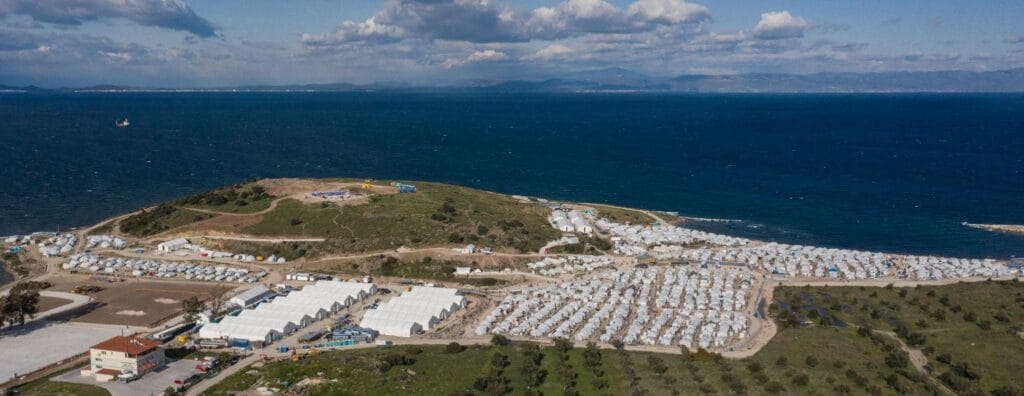
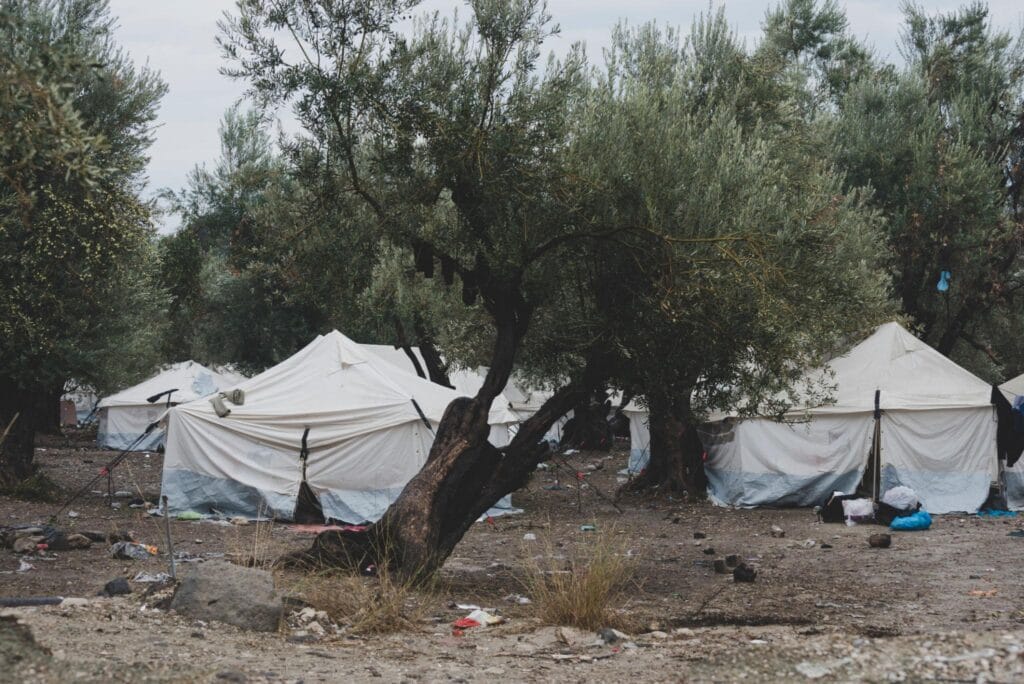
We met several Dutch volunteers on Lesbos who shared how they helped by distributing clothing and food. They often could not enter the Closed Controlled Access Centres (CCACs) but still found ways to support people.
Agiasos
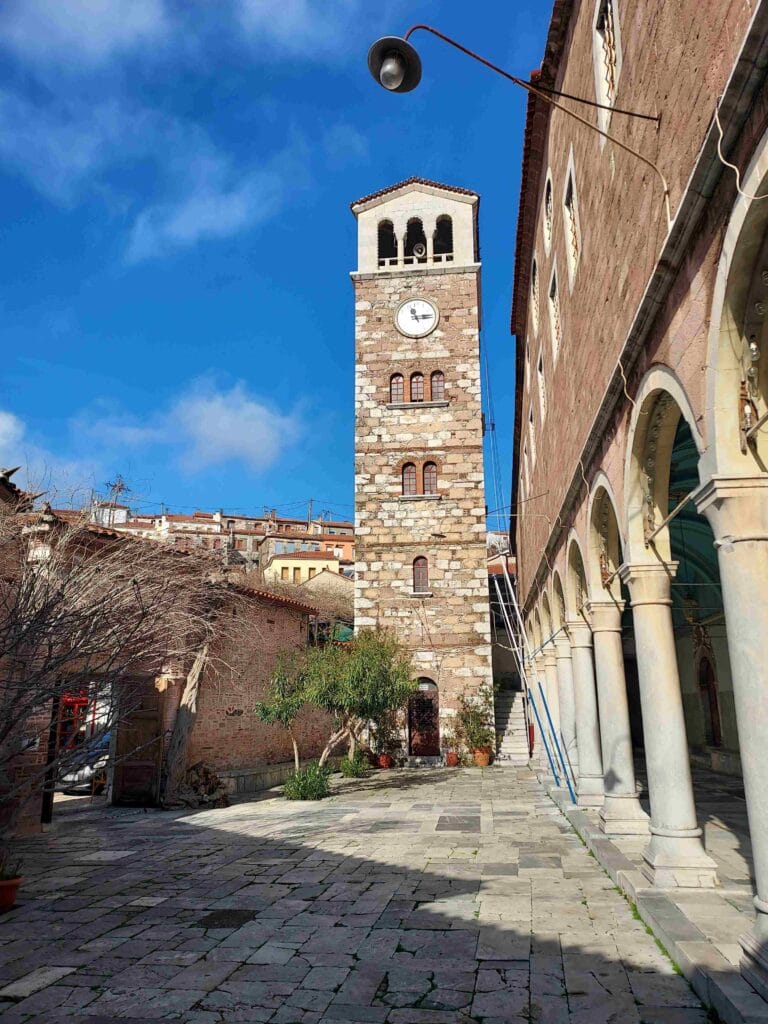
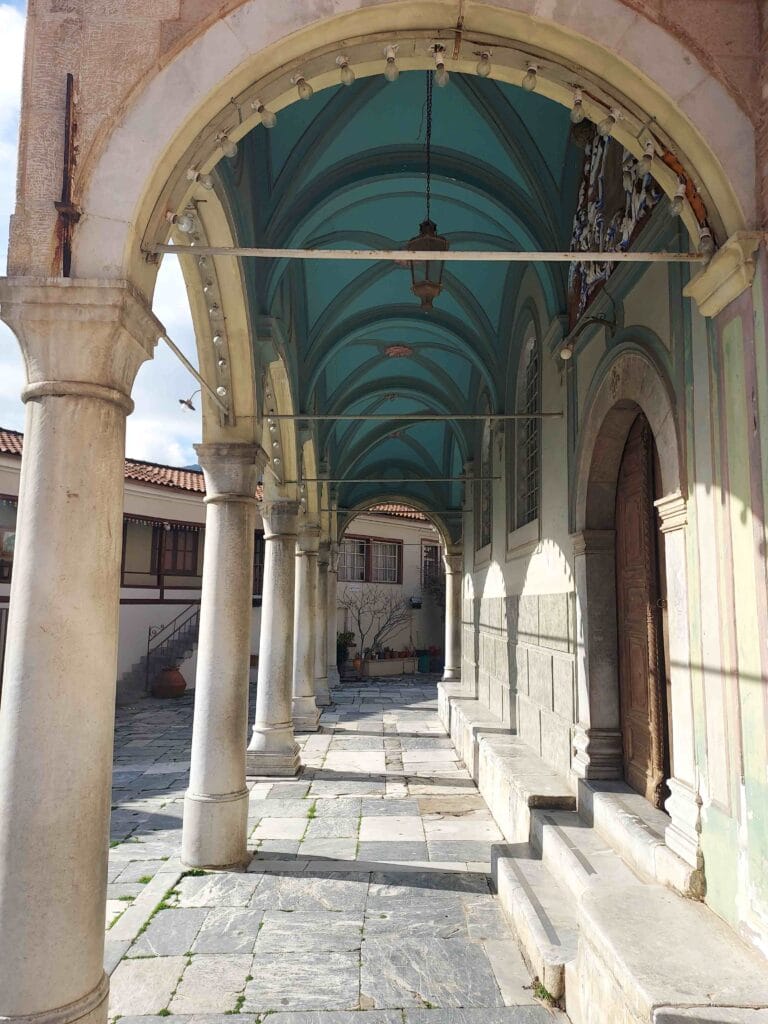
From Mytilini we headed inland to Agiasos, nestled on the slopes of Lesbos’ Mount Olympus — a place that feels completely different from the coastal towns. Historically it was a center of art and craftsmanship, and local artisans are still known for handmade products. Narrow streets are filled with woodwork shops, ceramics, and traditional cafés, and many houses retain an authentic mountain atmosphere.
Plomari
Back on the coast, we visited Plomari, known worldwide as the capital of ouzo. The town flourished in the 19th century through trade and shipping, becoming a hub for distilleries.
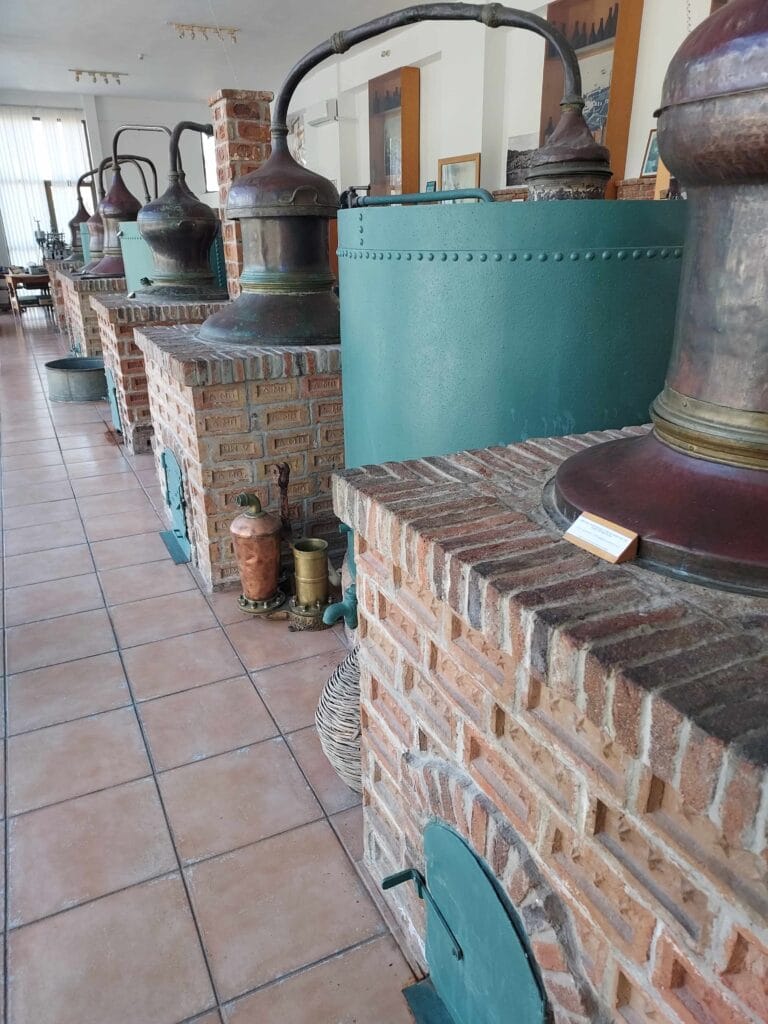
Our visit to the Ouzo Museum showed how the famous anise-flavored drink is made and why its taste is so distinctive here. We saw old copper stills and learned about the production process.
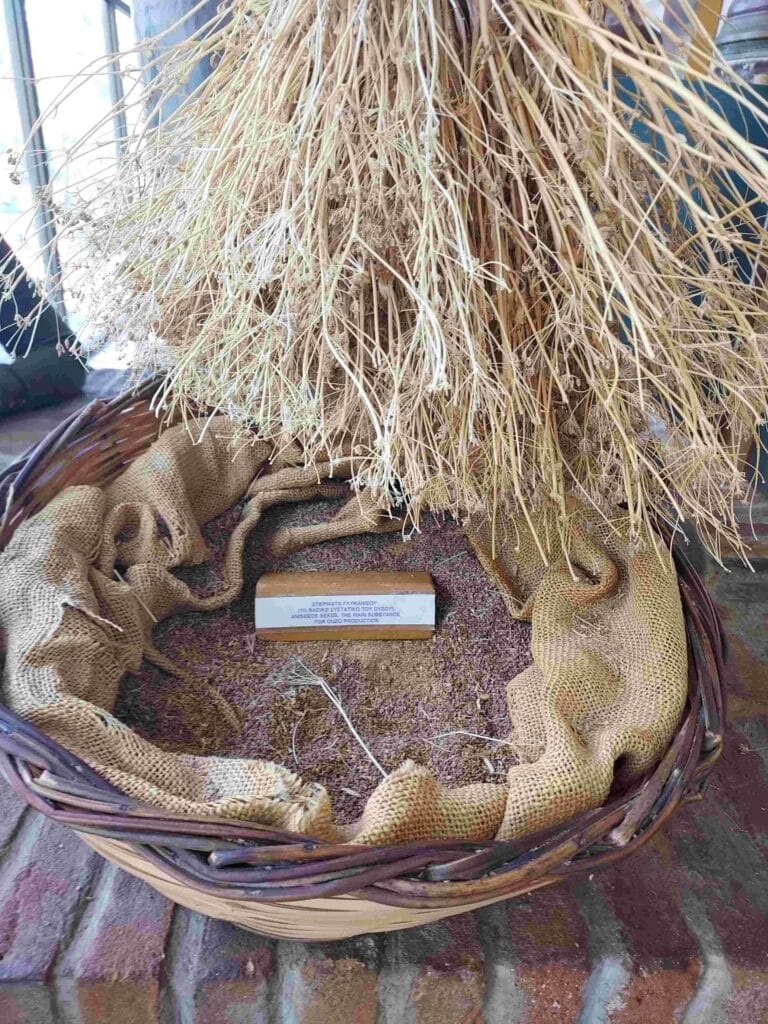
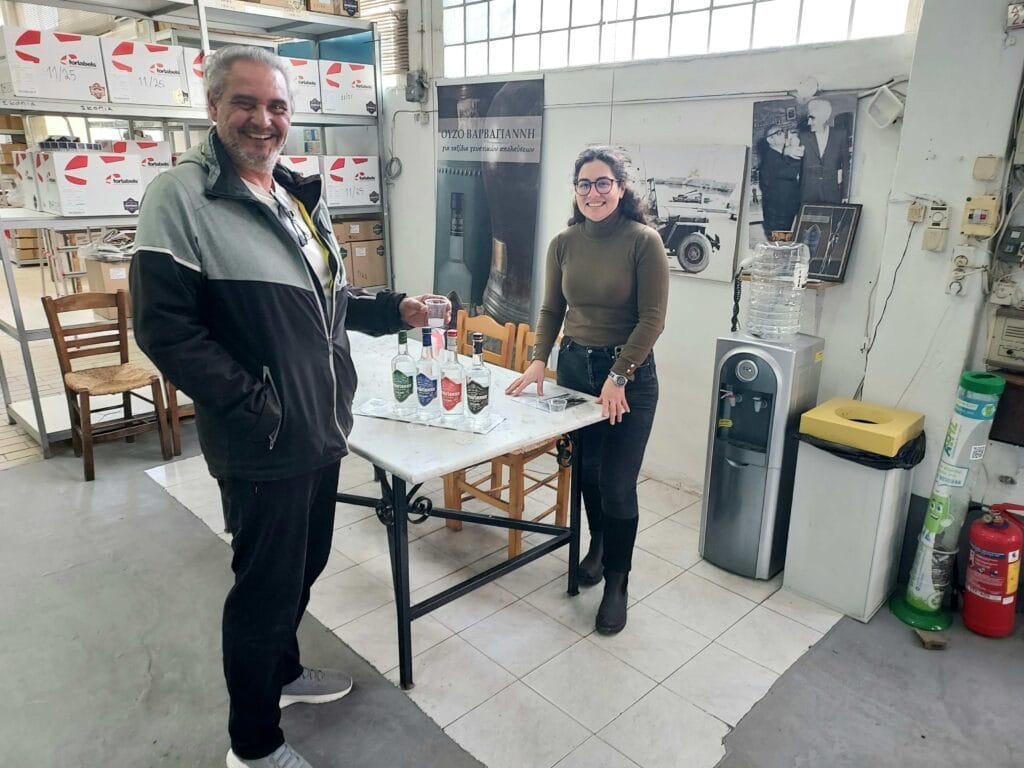
Afterward we toured the modern factory, where four types of ouzo were being produced — ranging from 42% to 46% alcohol — and learned how adding water creates the signature milky color. Greeks prefer to drink ouzo during meals, especially with fish. We tasted all four varieties and, of course, bought a mini bottle of each.
Vathilimno Waterfall in Pterounta
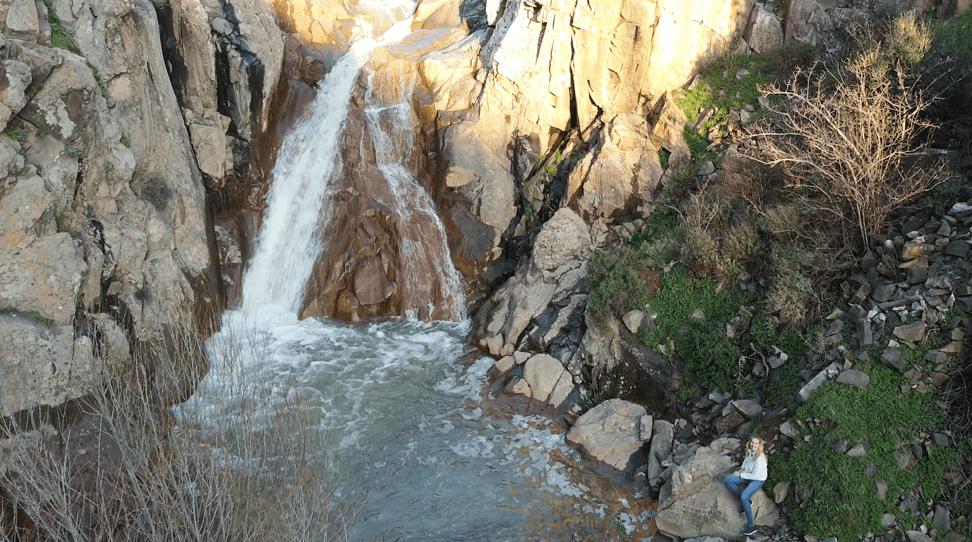
Lesbos is also known for its many waterfalls. They are often dry in summer, but in winter the water flows. After about twenty minutes of scrambling through the forest along a small stream, we reached the waterfall — beautifully hidden, cascading into a natural pool. Our drone captured everything from above.
Lesbos truly impressed us — such a diverse island, with volcanic landscapes in the west, charming mountain villages, a vibrant capital, and hidden green oases along the eastern coast.